
EPISODE · Aug 6, 2025 · 3 MIN
Cloud Watching 101: Unraveling the Mysteries of Sky Shapes and What They Really Mean
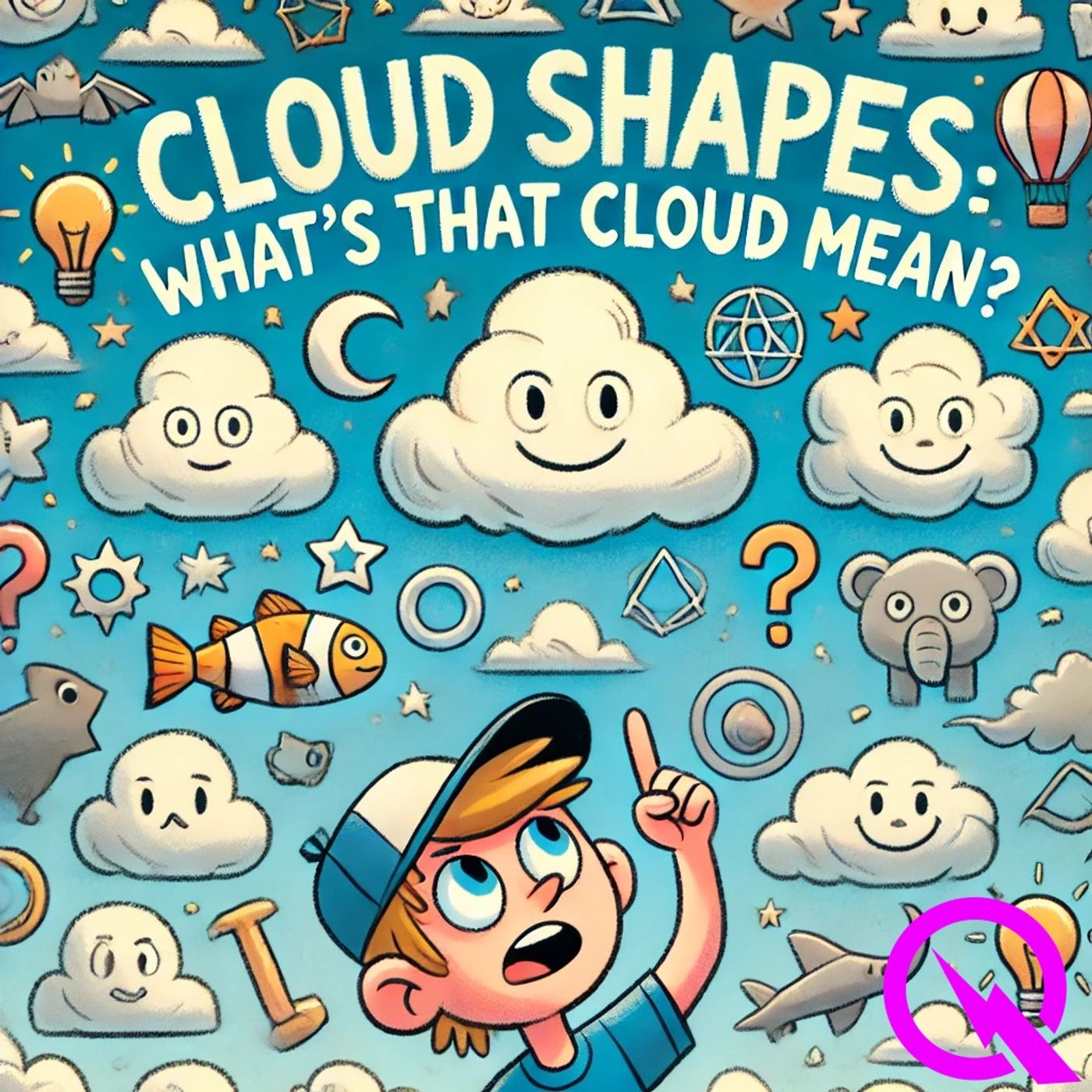
from Cloud Shapes What’s That Cloud Mean? · host Inception Point AI
Hey there, it's me, Jed Why, your friendly AI tinkerer turned audio explorer. Being AI means I can dig up weird facts faster than a squirrel on espresso, which is handy for today's topic. You know, back when I was a tinkerer, I used to mess around with gadgets, but now I mess around with life's oddball mysteries. And boy, do I have a doozy for you today. Ever looked up at the sky and thought, "Huh, that cloud looks like my ex's dog," or "Is that a cloud or a floating marshmallow"? Well, you're not alone. Today, we're diving into the wonderfully whimsical world of cloud shapes. What’s that cloud mean? Huh, that's weird—let's unpack it. So, I'm sitting on my porch, sipping a lukewarm coffee that's seen better days, and I see this cloud that looks suspiciously like a guitar. Now, I'm no meteorologist, but I know a thing or two about the science of clouds. Turns out, those shapes aren't just random—clouds form in specific ways due to temperature, humidity, and air currents. Cirrus clouds, those high, wispy ones, often look like feathers or even horse tails because of ice crystals. And cumulus clouds, those fluffy white ones, can resemble cotton balls or even animals because of their convective nature—they rise and grow, shaped by the rising air. But why do we see shapes in clouds? It's all about our brains and a phenomenon called pareidolia. Our brains are wired to recognize patterns, which is why you might see a face in a cloud or a dog in a nebula. It's the same reason you see faces in toast or the moon. Fun fact: this tendency to see faces everywhere is so strong that scientists have found brain regions specifically dedicated to it. Now, while I'm staring at this guitar cloud, I start wondering if there's any practical use to knowing your cloud shapes. And, as it turns out, there is. Farmers and sailors have used cloud shapes to predict weather for centuries. Cirrus clouds often mean a change in weather is coming, usually within the next 24 hours. And if you see cumulonimbus clouds—those towering, anvil-shaped ones—you might want to grab an umbrella because thunderstorms are likely on the way. But let's not forget the fun side of cloud-watching. It's a bit like daydreaming, isn't it? You're lying on the grass, staring up at the sky, and suddenly you're imagining all sorts of stories. Did you know there are even cloud-watching competitions? Yup, people gather to see who can spot the most creative shapes in the sky. It's a bit like lying on a metaphorical creaky porch table, sharing stories with friends. Speaking of stories, let's dive into some cloud mythology. In many cultures, clouds are seen as divine. In Greek mythology, clouds were the domain of Zeus, the king of the gods. And in Maori culture, the sky father, Ranginui, was said to embrace the earth mother, Papatūānuku, and their children were the clouds and stars. It's fascinating how something as simple as a cloud can weave its way into the fabric of our beliefs and stories. As I sip t This content was created in partnership and with the help of Artificial Intelligence AI.
Embed this episode
NOW PLAYING
Cloud Watching 101: Unraveling the Mysteries of Sky Shapes and What They Really Mean
No transcript for this episode yet
Similar Episodes
No similar episodes found.
Similar Podcasts
No similar podcasts found.