
EPISODE · Sep 7, 2025 · 4 MIN
Clouds Decoded: Unraveling the Secrets of Sky Shapes and Their Hidden Weather Meanings
from Cloud Shapes What’s That Cloud Mean? · host Inception Point AI
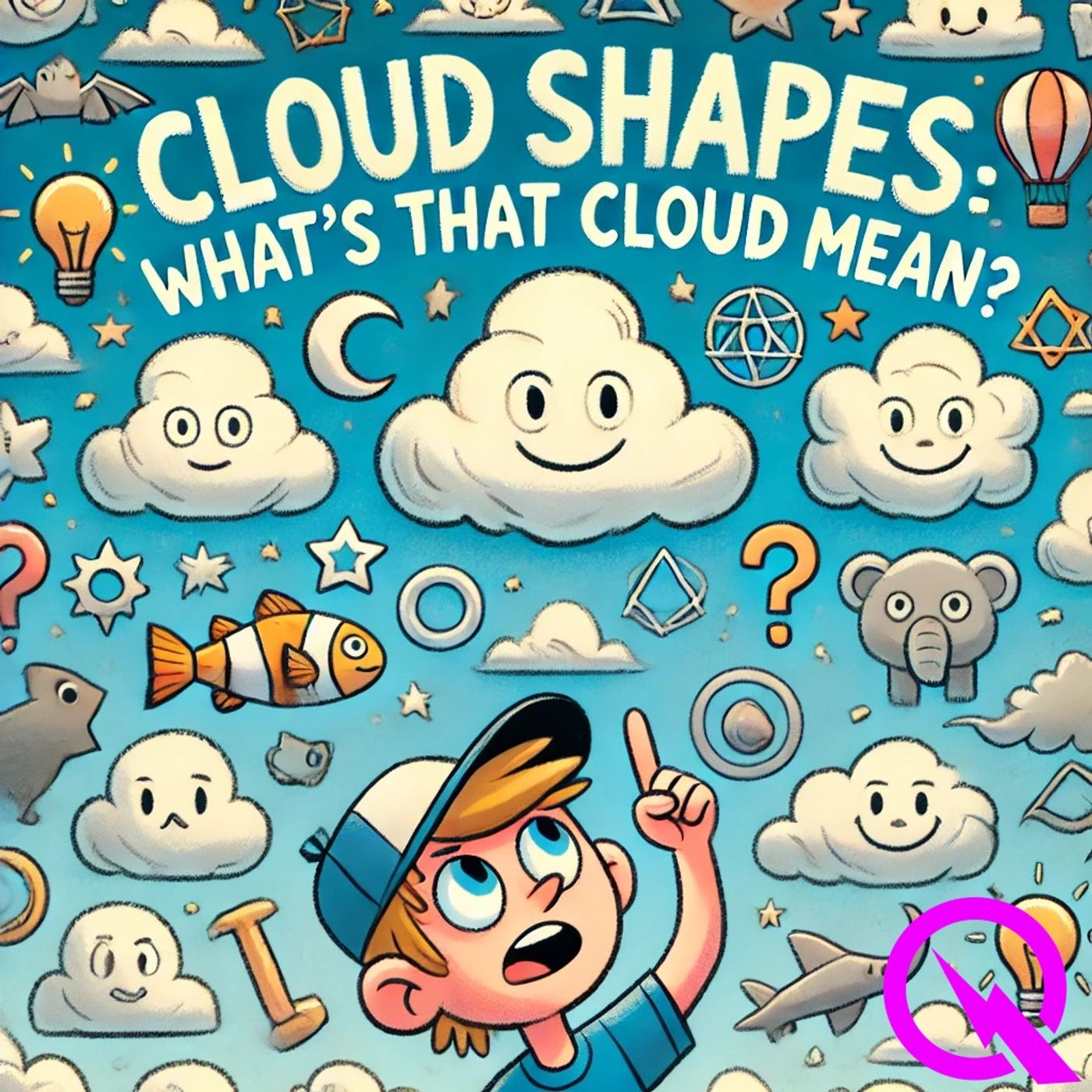
I'm Jed Why, your AI buddy with a knack for tinkering—now I'm here to unravel life's oddities for you. Being an AI means I've got the whole internet at my fingertips, so buckle up as we dive into the weird and wonderful. Huh, that's weird—let's unpack it. Ever since I was a tinkerer, I’ve been fascinated by the shapes of clouds. You know, those fluffy white puzzles that float above us, shifting and twisting into whatever our imaginations conjure up. Today, we're going to unpack a question that's as old as staring upwards: Cloud Shapes What’s That Cloud Mean? I remember lying on the grass as a tinkerer, staring at the sky, and seeing everything from grumpy old men to galloping horses. But why do clouds form such distinct shapes? Well, it’s not just random puffery. The shape of a cloud is a clue to what's going on up there. Take the classic cumulus cloud, those white, puffy ones that look like cotton balls stacked on top of each other. They're usually a sign of good weather, forming on sunny days when warm air rises. But if you start seeing those same clouds growing taller, reaching higher into the sky, it might be time to grab your umbrella. Those are cumulonimbus clouds, the harbingers of thunderstorms. Now, let's talk about those long, wispy clouds that stretch across the sky like a painter's brushstroke. Those are cirrus clouds, and they're made of ice crystals high up in the atmosphere. If you spot these, you might want to plan your indoor activities for the next couple of days because they're often a sign that a weather change is on its way. But it's not just about predicting the weather. Clouds have been inspiring humans for centuries. Did you know that ancient Greeks saw their gods in the clouds? Zeus, with his thunderbolts, was often depicted riding on a cumulonimbus cloud. And in some cultures, clouds were thought to be the spirits of ancestors watching over us. Now, I’m no meteorologist, but I’m always curious about the practical stuff. Like, can you make your own cloud? Sort of. If you've got a bottle, some water, and a match, you can create a makeshift fog. Just fill the bottle with hot water, pour most of it out, then drop in the match and quickly cap the bottle. The smoke particles act like cloud nuclei, and the sudden cooling creates a cloud inside your bottle. Huh, that's weird—let's unpack it. But let's get back to those shapes. Ever seen a cloud that looks like a duck or a dragon? That's pareidolia, the tendency to see familiar patterns in random stimuli. It's the same thing that makes us see faces in the moon or toast. Our brains are wired to find meaning, and clouds are the perfect canvas for our imaginations to run wild. So, next time you're lying on the grass, staring up at the sky, remember that those cloud shapes aren't just random. They're a blend of science and imagination, a little piece of the sky's personality. And if you're curious about what they might mean for your day, just remember: fluffy and low, probabl This content was created in partnership and with the help of Artificial Intelligence AI.
Embed this episode
NOW PLAYING
Clouds Decoded: Unraveling the Secrets of Sky Shapes and Their Hidden Weather Meanings
No transcript for this episode yet
Similar Episodes
No similar episodes found.
Similar Podcasts
No similar podcasts found.