
EPISODE · May 3, 2026 · 5 MIN
'Cluster dynamics' now drive outbound investment for Korean firms, says Cushman & Wakefield
from Korea JoongAng Daily - Daily News from Korea · host LEE JAE-LIM
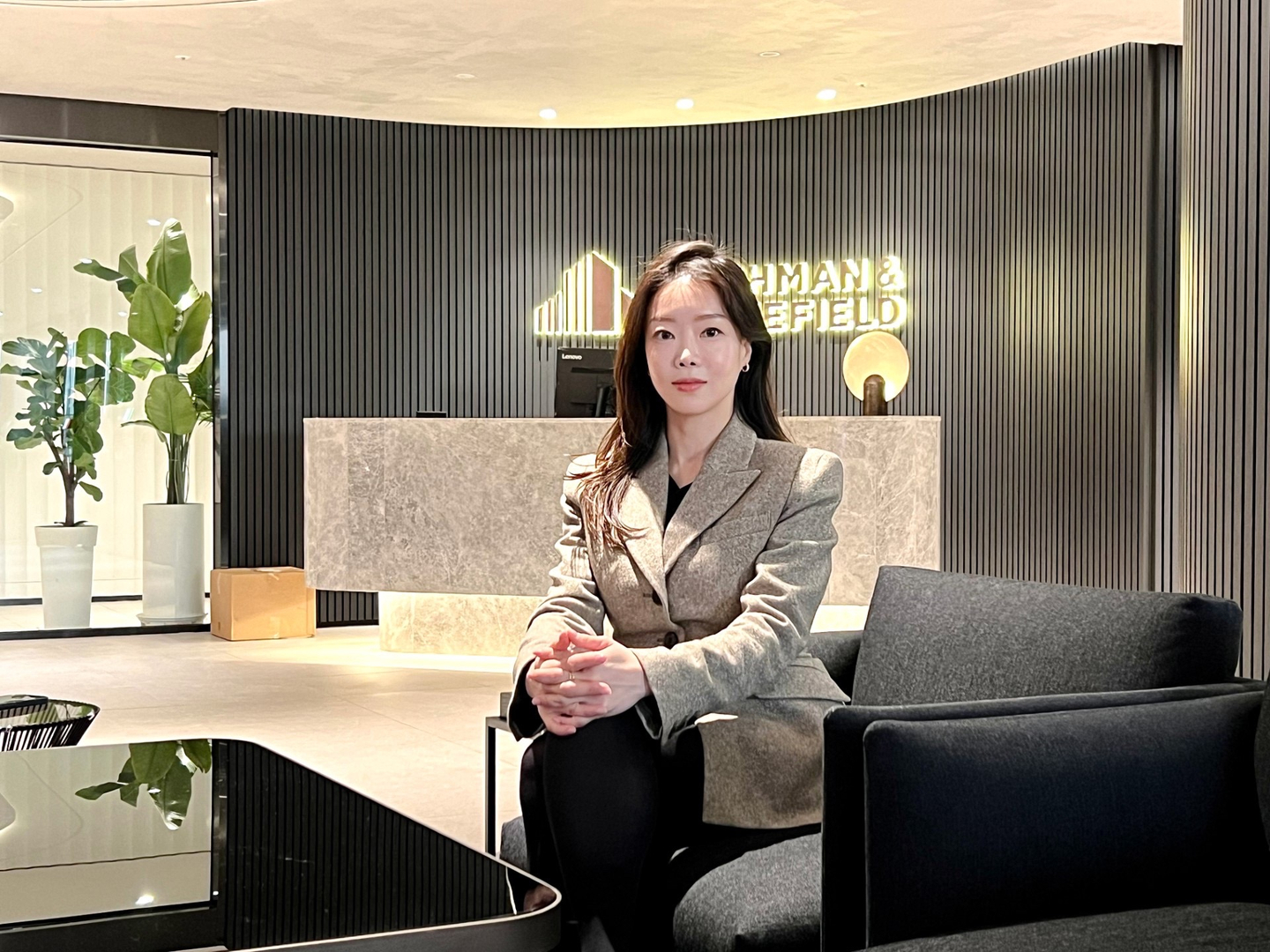
This article is by Lee Jae-lim and read by an artificial voice. [INTERVIEW] Despite semiconductor heavyweights accounting for more than 40 percent of Kospi market value, it is Korean automakers and battery makers that have led the charge in outbound investment, rapidly establishing supply chain footholds across the United States, according to a senior executive at the Korean branch of a major commercial real estate services firm. "Hyundai Motor Group's U.S. and European expansion is the most viable example, but the battery ecosystem around it — SK On, Samsung SDI and LG Energy Solution — has moved with extraordinary speed," said Sydney Chun, head of the Global Korea Desk at Cushman & Wakefield Korea, in a recent interview with the Korea JoongAng Daily at the Korean branch's office in central Seoul. "Semiconductors, on the other hand, are investing heavily but are only at the starting stage. The capital expenditure and planning horizons are longer, and the technology requirements are more complex. Samsung's Taylor investment in Texas is a landmark, but a broader semiconductor supply chain — materials, equipment and packaging — is only beginning to follow." Chun's team supports Korean conglomerates through the entire arc of global expansion from site selection, incentive negotiations and marketing representation to transaction brokerages for overseas offices. Most recently, the team secured a three-year master services agreement with Hyundai Motor in October 2025 under which C & W Korea is managing the restructuring of the automaker's entire global commercial real estate portfolio. The team is also close to finalizing the Washington office setup for a Korean shipbuilder — a move that follows Korea's $150 billion shipbuilding investment pledge to the United States. The Washington trend is broader than a single deal. "There's been a sharp increase in Korean companies wanting to set up offices there," Chun said. "Doing business in the U.S. now requires maintaining good relationships with the administration and making sure the standing of Korean businesses is visible — what our brands are, what kind of businesses we're running. That visibility is directly tied to securing tax incentives." On the question of what is actually driving outbound investment, Chun was direct. The critical trigger is tariffs, not incentive programs. A double-digit tariff on exports makes staying put economically unsustainable, turning localization from a strategic preference into a necessity. Nor is this a uniquely Korean story — European automakers, Japanese chipmakers and Taiwanese foundries are all navigating the same pressure to diversify their supply chains. "Supply chains globally have become more fragile — whether from pandemics, geopolitical friction, logistics disruptions or trade policy whiplash. Every multinational, not just Korean ones, is wrestling with the same localization questions." What distinguishes the current investment cycle from previous ones is the cluster dynamic. "When Hyundai builds in Georgia, it's not an isolated assembly plant — it's an anchor that pulls dozens of Korean tier-one and tier-two suppliers with it," Chun said. "Battery makers, steel processors, logistics operators — they all follow because the finished product must be locally produced to be cost-competitive under the current trade regime. That's a fundamentally different investment model from anything we saw in previous cycles." Cushman & Wakefield Korea also serves as the Korean-side marketing agent for iMarket Korea's Gradiant Technology Park, a 212-acre industrial complex in Taylor, Texas, built specifically to house semiconductor-related companies within Samsung Electronics' broader supply chain ecosystem. The team handles outreach to midsize Korean suppliers as prospective tenants, and Chun points to the Taylor cluster as a textbook example of how a single anchor investment organically generates a manufacturing hub around it. When evaluating potential sit...
Embed this episode
NOW PLAYING
'Cluster dynamics' now drive outbound investment for Korean firms, says Cushman & Wakefield
No transcript for this episode yet
Similar Episodes
No similar episodes found.
Similar Podcasts
No similar podcasts found.