
EPISODE · Oct 29, 2025 · 23 MIN
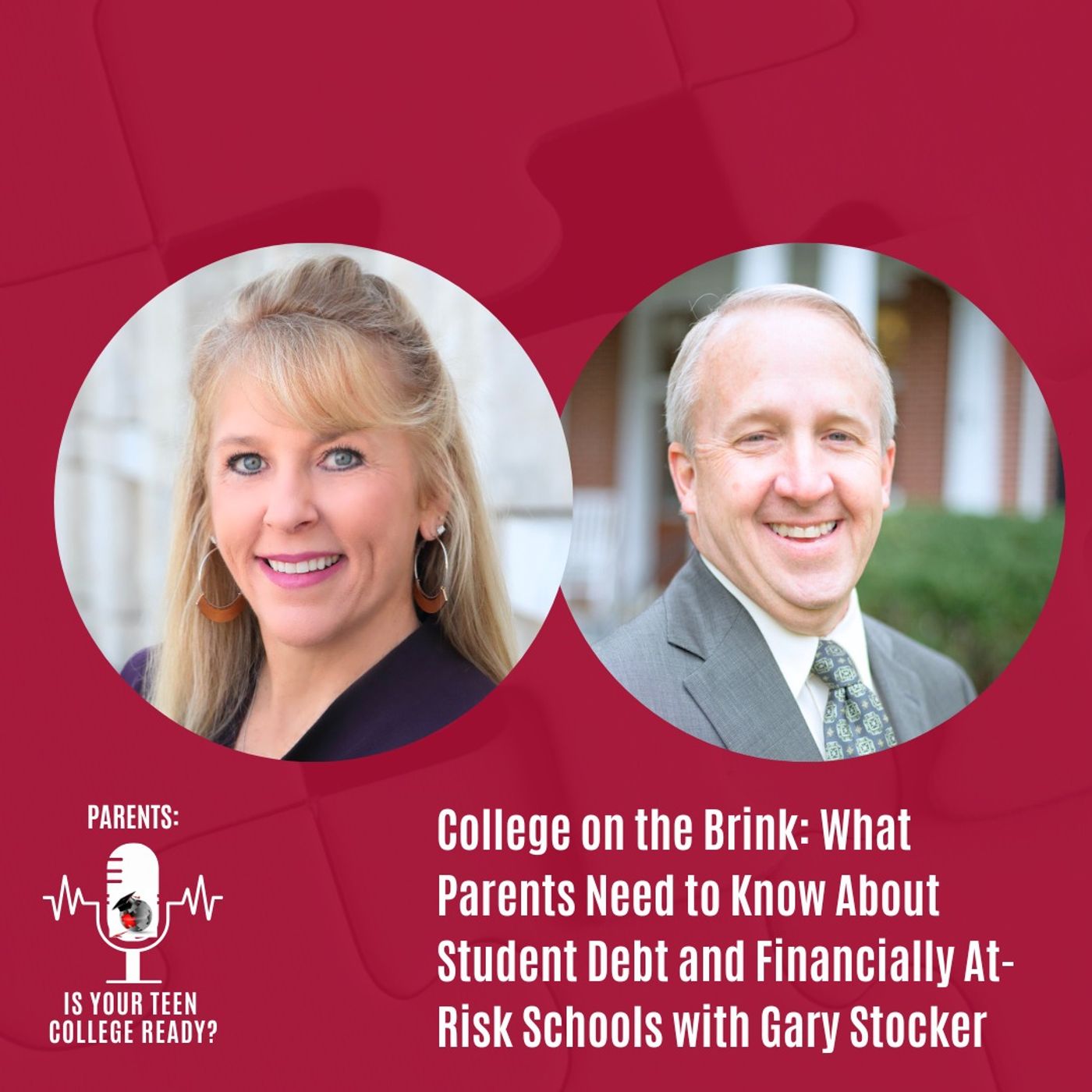
College on the Brink: What Parents Need to Know About Student Debt and Financially At-Risk Schools
from Parents: Is Your Teen College Ready? · host Shellee Howard
In this insightful discussion, Shellee Howard interviews Gary Stocker, an expert on college financial health and viability, to shed light on the often-overlooked financial challenges facing many colleges today. Gary, originally trained as a medical laboratory scientist, transitioned into higher education administration and research, focusing on the financial stability of colleges, especially smaller private institutions. He reveals alarming trends, such as the closure of private colleges at an unprecedented rate, with one closing per week in early 2024. Despite the public perception of wealthy, stable institutions, many colleges, particularly small, rural, and non-urban private colleges, are struggling financially, often keeping these struggles hidden from prospective students and parents.Gary explains how colleges mask the reality of their financial trouble by offering significant tuition discounts, which are often misrepresented as scholarships, to attract students. He warns parents to be cautious and to prioritize evaluating a college’s financial health before considering other factors like campus beauty or program offerings. Gary introduces tools he developed at College Viability, including a free report platform (mycollegeviability.com) that allows families to assess the financial health of over 1,400 private colleges and a college majors completion app that tracks graduation numbers in specific majors to help identify programs at risk of closure.He highlights the risks students face if a college closes mid-education, emphasizing the importance of teach-out agreements that transfer students to other institutions, though these partner colleges may themselves be financially unstable. Gary also discusses the differences between public and private institutions, noting that while public colleges have similar low graduation rates, they rarely close due to government funding. He underscores the importance of transparency and independent analysis for families navigating college choices in a financially volatile higher education landscape. HighlightsOver 50% of private colleges graduate less than half their students on time, signaling systemic issues in higher education. Small, rural private colleges are most at risk of financial instability and closure, often without public warning. Tuition "scholarships" are frequently just discounts, not additional funds, misleading families about the true cost. Parents should make financial health the first criterion when evaluating colleges, not just campus appeal or programs. Teach-out agreements help students finish degrees if their college closes, but quality and stability of partner schools vary. Gary’s tools (mycollegeviability.com and the majors completion app) provide critical data for assessing college viability and program strength. Public colleges rarely close due to state funding but share similar challenges with graduation rates and funding cuts. Key InsightsFinancial Health is the New Priority in College Selection: Gary stresses that parents and students must prioritize the financial stability of colleges over traditional factors like campus tours or program variety. This shift in focus is crucial because financially unstable colleges may cut programs, reduce quality, or close outright, disrupting students' education and costing families time and money. Rapid Rise in College Closures Indicates a Crisis: The fact that one private college closed every week in the first half of 2024 (though the rate has slowed) reveals a deep financial crisis in higher education, particularly among smaller and private institutions. This trend underscores the urgent need for transparency and proactive financial assessment tools for families. Tuition Discounts Mask True Costs and Financial Realities: Colleges use high sticker prices with large discounts framed as scholarships to attract students and impress families. This marketing tactic hides the actual financial challenges colleges face and can create false expectations for families about the value and sustainability of a college education at these institutions. Teach-Out Agreements Are a Safety Net but Not a Guarantee of Quality: When colleges close, teach-out agreements can transfer students to other schools to complete their degrees. However, Gary highlights that many receiving institutions may themselves be financially fragile or unable to provide the same educational quality, potentially compromising students’ outcomes despite the transfer. Data-Driven Decisions Empower Families: Gary’s development of tools like mycollegeviability.com and the majors completion app equips families with objective information about college financial health and program viability. These tools help identify risks such as low graduation rates, declining enrollments, and majors at risk of being cut, enabling informed decision-making rather than relying solely on marketing or reputation. Small Colleges Face Unique Challenges: Small, non-urban private colleges are disproportionately impacted by financial difficulties, facing enrollment declines, increased expenses, and infrastructure maintenance backlogs. Their smaller scale and limited resources make them more vulnerable to closure and program cuts, which parents must consider carefully. Public Colleges Are Not Immune but Benefit from Subsidies: Although public colleges share many challenges like low graduation rates, they are less likely to close due to state subsidies and government support. However, they still face budget pressures that can impact program offerings and campus conditions, which families should also monitor, especially as many public institutions cut programs or raise tuition. Lack of Transparency Harms Families’ Ability to Assess Risk: Colleges often avoid publicizing financial problems or program cuts to protect their image and enrollment. This secrecy makes it difficult for families to assess risks effectively without independent data sources, reinforcing the value of third-party resources like those Gary provides. Graduation Rates Affect Financial and Opportunity Costs: With over half of colleges graduating fewer than 50% of students within four years, many students face extended education timelines, increased tuition costs, and lost income opportunities. This hidden cost significantly impacts families and should be a key consideration when choosing a college. Parents and Students Must Ask Tough Questions on Tours: Prospective students and parents should inquire about the health and future of low-enrollment majors during campus visits. Declining or small programs may be at risk of elimination, affecting students’ ability to complete their desired field of study, highlighting the need for critical questioning beyond surface-level marketing. Independent Fiduciaries Are Needed to Advocate for Families: Gary positions College Viability as an independent advocate for parents and students in a landscape where college presidents and boards prioritize institutional survival. This independent oversight helps balance the interests of families against the colleges’ financial realities. Caveat Emptor (Buyer Beware) Applies to College Selection: The age-old Latin warning is especially relevant for today’s college market. Families must approach college selection with a critical eye and data-driven mindset, recognizing that traditional trust in higher education institutions may no longer be sufficient to ensure a safe investment for their children’s futures. ConclusionThis conversation underscores the critical need for families to adopt a more analytical and cautious approach to college selection. The financial instability of many colleges, especially small private institutions, poses real risks to students’ educational trajectories and families’ investments. By leveraging independent data tools and focusing on financial health first, parents and students can make more informed decisions, avoid surprises like sudden college closures, and better ensure a quality and stable college experience. Gary Stocker’s expertise and resources provide a powerful antidote to the opaque and often misleading narratives promoted by colleges, empowering families in an increasingly complex higher education environment. Connect with Shellee Howard: WebsiteYouTubeInstagram LinkedIn Connect with Gary Stocker: WebsiteFacebookLinkedInYouTubePodcast 🎁 Episode Gift & Contact 🎓 College Planning Support for ParentsWant help organizing next steps and avoiding costly college mistakes? 📘 Workbook Gift:https://go.collegereadyplan.com/podcast-gift-workbook 🤝 Interested in Collaborating with College Ready?Email or call [email protected] (949)235-7350
Embed this episode
Ready to play
College on the Brink: What Parents Need to Know About Student Debt and Financially At-Risk Schools
No transcript for this episode yet
Similar Episodes
No similar episodes found.
Similar Podcasts
No similar podcasts found.