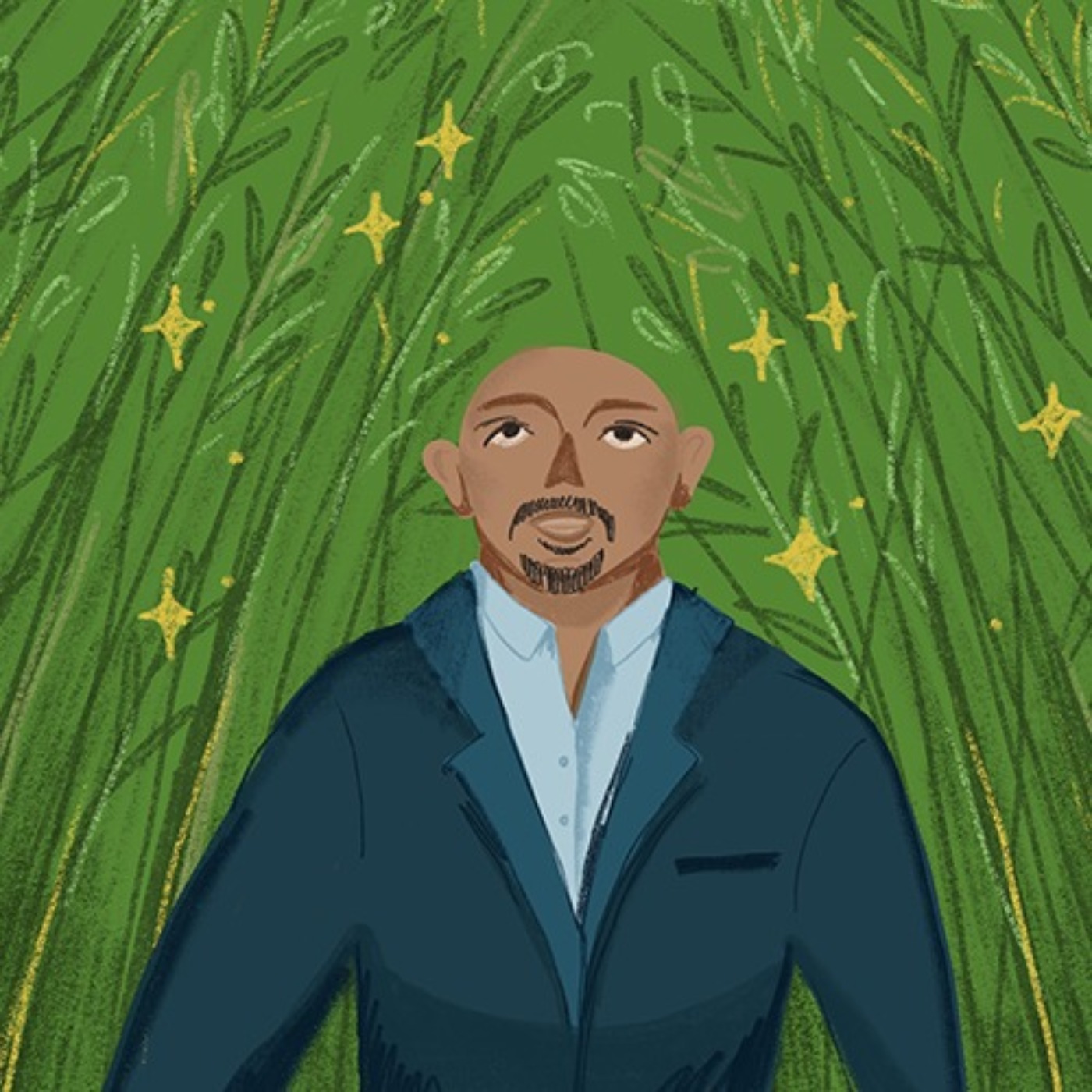
Comedian Maz Jobrani on noticing the good in his life episode artwork

EPISODE · Nov 27, 2019 · 19 MIN

Comedian Maz Jobrani on noticing the good in his life

from Berkeley Talks

Growing up in an immigrant family, comedian Maz Jobrani knew his parents wanted him to be a lawyer or doctor, maybe an engineer. When he became a comedian, he says, the whole community was sad for the family. "They were like, 'Did you hear about Jobrani's son? Yeah, it's a shame. He's almost a drug dealer."Jobrani was recently a guest on the Science of Happiness, a podcast from the Greater Good Science Center at UC Berkeley. In his episode, called "Notice the Good in Your Life," Jobrani talks with host Dacher Keltner, a psychology professor and co-director of the Greater Good Science Center, about his 2017 stand-up special on Netflix, Immigrant."The reason I called my recent special Immigrant was because “immigrant” under Trump had turned into a bad word. It was a derogatory term. And really, people that that grasped onto that xenophobia, it broke my heart because I look around — first of all, I’m an immigrant. And then I look around and I know a lot of really good people that are immigrants, and then I’m looking at people like the Syrian refugees who are trying to come to America and flee hardship or the people come from Central America and I go, 'These people are leaving a really bad situation.' No one’s in a great situation is going, 'Oh we know the economy is great, there’s no violence in our country — let’s go somewhere where we don’t speak the language and we’re not wanted and see how it will go.’ No.""That’s so true, Maz," says Keltner. "You know, what really strikes me about the immigrants who I am friends with and who I work with is not only their perseverance, but their ability to stay focused on the brighter side of human nature in spite of the rise of white supremacy and xenophobia in our country today."In each episode of the Science of Happiness, a guest chooses a practice from the Science of Happiness free online course that’s been shown to increase happiness, connection and kindness. Jobrani chose a practice that focused on positivity — writing about three good things. When Jobrani got the assignment, he was on vacation with his wife and two kids in Japan, so the whole family participated. Each day, they would take 10 minutes to write down three good things, then they'd read what they wrote aloud to each other. It's something that Jobrani says encouraged them to look for positive things throughout the day.Listen and read the transcript on Berkeley News. Hosted on Acast. See acast.com/privacy for more information.

Growing up in an immigrant family, comedian Maz Jobrani knew his parents wanted him to be a lawyer or doctor, maybe an engineer. When he became a comedian, he says, the whole community was sad for the family. "They were like, 'Did you hear about Jobrani's son? Yeah, it's a shame. He's almost a drug dealer."Jobrani was recently a guest on the Science of Happiness, a podcast from the Greater Good Science Center at UC Berkeley. In his episode, called "Notice the Good in Your Life," Jobrani talks with host Dacher Keltner, a psychology professor and co-director of the Greater Good Science Center, about his 2017 stand-up special on Netflix, Immigrant."The reason I called my recent special Immigrant was because “immigrant” under Trump had turned into a bad word. It was a derogatory term. And really, people that that grasped onto that xenophobia, it broke my heart because I look around — first of all, I’m an immigrant. And then I look around and I know a lot of really good people that are immigrants, and then I’m looking at people like the Syrian refugees who are trying to come to America and flee hardship or the people come from Central America and I go, 'These people are leaving a really bad situation.' No one’s in a great situation is going, 'Oh we know the economy is great, there’s no violence in our country — let’s go somewhere where we don’t speak the language and we’re not wanted and see how it will go.’ No.""That’s so true, Maz," says Keltner. "You know, what really strikes me about the immigrants who I am friends with and who I work with is not only their perseverance, but their ability to stay focused on the brighter side of human nature in spite of the rise of white supremacy and xenophobia in our country today."In each episode of the Science of Happiness, a guest chooses a practice from the Science of Happiness free online course that’s been shown to increase happiness, connection and kindness. Jobrani chose a practice that focused on positivity — writing about three good things. When Jobrani got the assignment, he was on vacation with his wife and two kids in Japan, so the whole family participated. Each day, they would take 10 minutes to write down three good things, then they'd read what they wrote aloud to each other. It's something that Jobrani says encouraged them to look for positive things throughout the day.Listen and read the transcript on Berkeley News. Hosted on Acast. See acast.com/privacy for more information.

NOW PLAYING

Comedian Maz Jobrani on noticing the good in his life

0:00 19:05

No transcript for this episode yet

We transcribe on demand. Request one and we'll notify you when it's ready — usually under 10 minutes.

Carnivores Don't Get Sunburn - Carnivore Diet Talks Carnivores Don't Get Sunburn - Carnivore Diet Talks Welcome to “Carnivores Don’t Get Sunburn,” where we have fun and explore the carnivore diet and its transformative power. Join us as we uncover real stories from individuals who have thrived on this diet, defying convention and embracing optimal health. Plus, stay tuned for our upcoming documentary featuring diverse carnivores overcoming health challenges. Learn more at www.carnivoredietdocumentary.com.Excitingly, we’re working on an upcoming documentary where we’ll feature carnivores from various walks of life, conquering diverse health challenges. Join us on this journey and learn more at www.carnivoredietdocumentary.com.Join us in uncovering the power of the carnivore diet. Prepare to be inspired, informed, and empowered to embrace optimal health and well-being.Welcome to “Carnivores Don’t Get Sunburn: Unveiling Real Stories of the Carnivore Diet.” Stay tuned for our upcoming documentary. Discover how this lifestyle can transform lives. Learn more at www.carnivoredietdocumentary.com IT IS WHAT IT IS with SHALLZ - SHALLY ZOMORODI Shally Zomorodi What?  "It is what it is" with ShallZ – Shally ZomorodiWhen? WeeklyHow long? 35 minutesEvery week, Mother of 4, wife, morning TV news anchor and ultimate hostess, Shally Zomorodi talks about life - its up's and downs and how to stay on track in her weekly podcast, ‘It is what it is.’  Known for her high energy, infectious smile and ability to see the cup as half full Shally talks about all things in life and how to work through its challenges. From parenting, marriage, friendships, current events to how to smile when it just seems impossible ‘It is what it is’ is the perfect podcast to help inspire you to dance through the rain. Tracking Nuclear Weapons Programs Center for Strategic and International Studies The CSIS Proliferation Prevention Program talks to experts about transparency and nuclear weapons. Cover Stories with Chess Life US Chess Chess Life Editor John Hartmann talks to the authors of each month's Chess Life cover story.

Frequently Asked Questions

How long is this episode of Berkeley Talks?

This episode is 19 minutes long.

When was this Berkeley Talks episode published?

This episode was published on November 27, 2019.

What is this episode about?

Growing up in an immigrant family, comedian Maz Jobrani knew his parents wanted him to be a lawyer or doctor, maybe an engineer. When he became a comedian, he says, the whole community was sad for the family. "They were like, 'Did you hear about...

Can I download this Berkeley Talks episode?

Yes, you can download this episode by clicking the download button on the episode player, or subscribe to the podcast in your preferred podcast app for automatic downloads.
URL copied to clipboard!