
EPISODE · Mar 6, 2022 · 28 MIN
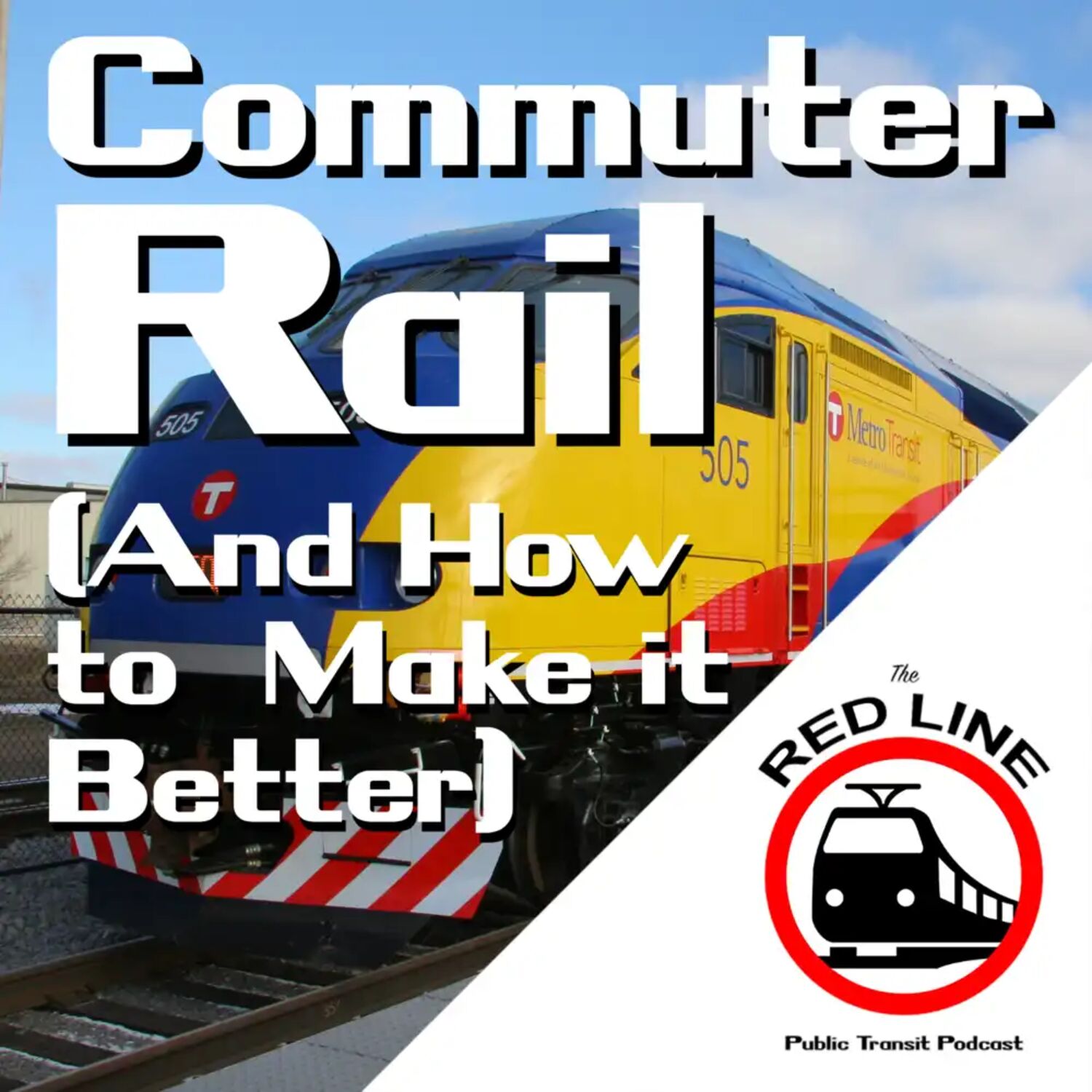
Commuter Rail and How We Can Make it Better: Episode 8
from The Red Line Podcast
Commuter trains nowadays are usually a rush hour service provided to relieve highway congestion—but it wasn't that way pre-WWII! Back then, sprawling rail systems were the preferred way of getting around urbanized regions. Today, we have both legacy commuter rail systems (that survived the post-WWII ridership crash) and "New Start" systems. We discuss history, what these systems look like today, and—most importantly—what we can learn from Europe about building true regional rail, which runs all day and isn't just for commuters. Streetsblog USA: What American Commuter Rail Can Learn From Paris Links and stuffs Merch:https://shop.trlpod.com/ Twitter:@TheRedLine_pod YouTube channel:The Red Line Podcast Spotify:The Red Line Podcast Patreon:https://www.patreon.com/theredlinepodcasters Email:[email protected] Website:https://www.trlpod.com/ Timestamps 00:00 Intro 00:32 The News—MTA trialing platform screen doors[1] 01:29 Theme song 01:59 The history of commuter rail [2] 02:14 The Long Island Rail Road[3] 03:02 Pre-WWII commuter rail[4] 04:17 As usual, the car ruined everything[6] 05:17 Ridership crashed[5] 05:44 The modern era; subsidized service 06:40 Amtrak, Conrail, and municipal takeover (Northeast Corridor) 08:16 The rest of the country (like California) 09:01 The PATH train & the Port Authority[7] 10:49 Canada & GO Transit, RTM 11:25 New commuter rail movement (in response to highway congestion) 12:57 "New Start" commuter rail [2] [9] 13:47 Many systems only ran rush-hour commuter service 14:53 Massive park-and-rides[10] [17] 15:50 2000-2017: America was all over new commuter rail 16:39 FrontRunner's (Utah) all day service: regional rail 17:11 Commuter rail today [2] [9] 17:19 Lacking service frequency :( 18:14 Radial layout, lacking ring and inter-suburban connections 18:31 The Long Island Rail Road runs 24/7/365 19:41 Low ridership[11] 20:52 Building true regional rail 21:15 Comparison of transit to roads (tiers) 22:33 How can we turn our commuter rail into regional rail? 22:44 The Paris RER[12] [13] [14] [16] 24:08 Berlin S-Bahn, London Overground, etc. 24:41 GO Transit electrifying and tripling service[15] 25:45 Taking steps toward all-day regional rail 26:51 Outro References & notes [1]TimeOut: The MTA will trial platform doors at three subway stations [2]The National Academies Press: History of Commuter Rail [3]Wikipedia: Long Island Rail Road [4]History to Go: The Bamberger Electric Railway [5]streets.mn: Chart of the Day: US Transit Ridership over Time [6]EDSITEment: Building Suburbia: Highways and Housing in Postwar America [7]Wikipedia: Port Authority of New York and New Jersey [9]Wikipedia: Commuter rail in North America [10]Not Just Bikes: The Trains that Subsidize Suburbia - GO Transit Commuter Rail [11]streets.mn: Chart of the Day: US Rail Transit Ridership per Mile [12]Wikipedia: Réseau Express Régional [13]Paris by Train: Paris RER [14]Paris by Train: Paris Metro [15]GO Transit: Our Vision [16]Streetsblog USA: What American Commuter Rail Can Learn From Paris [17]Toronto bus & rail map
Embed this episode
Ready to play
Commuter Rail and How We Can Make it Better: Episode 8
No transcript for this episode yet
Similar Episodes
No similar episodes found.
Similar Podcasts
No similar podcasts found.