
EPISODE · Feb 21, 2021 · 12 MIN
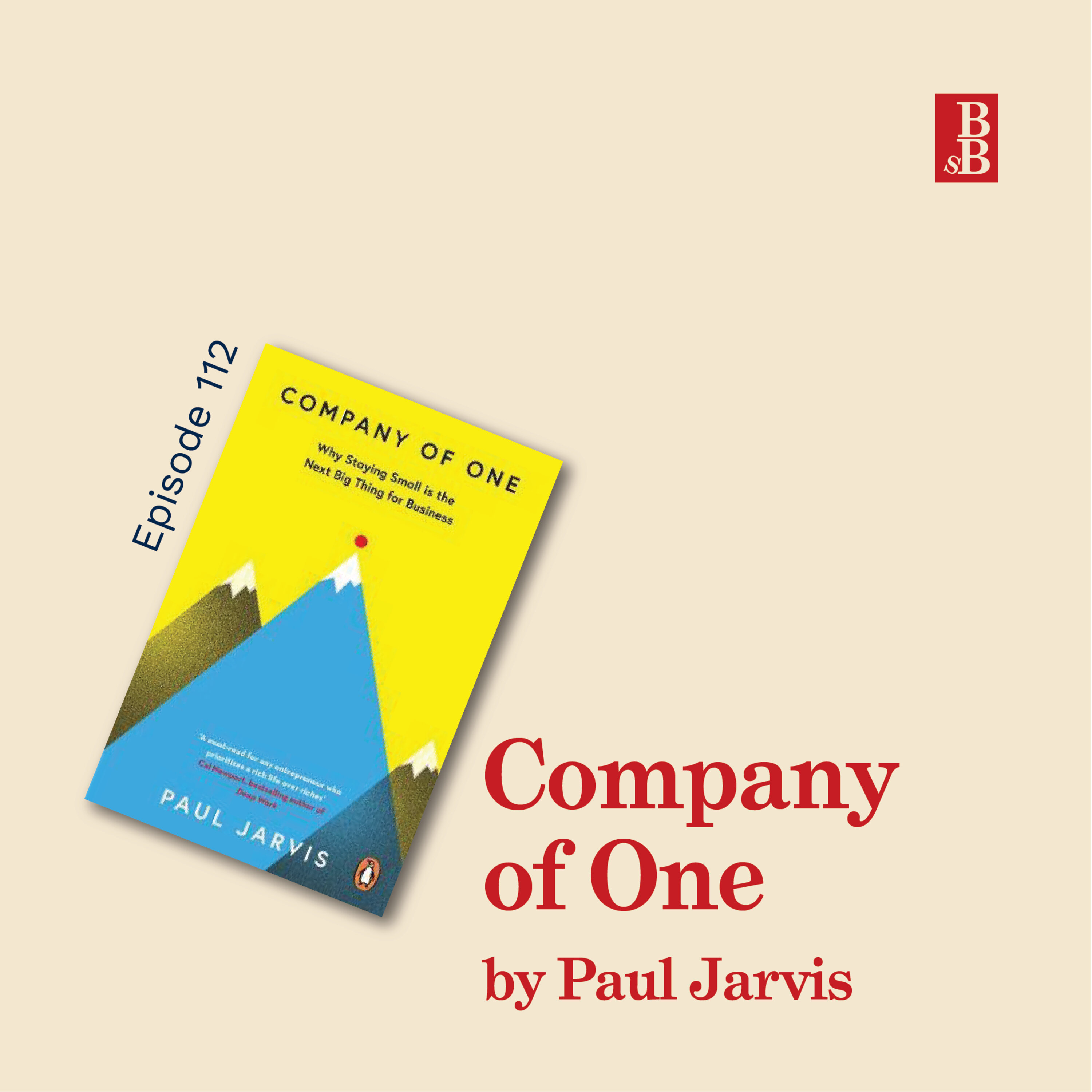
Company of One by Paul Jarvis: why you need to be better, not bigger
from Steph's Business Bookshelf Podcast · host Steph Clarke
About the book The only person you need to start and run a highly profitable and sustainable company is you What if the real key to a richer and more fulfilling career was not to create and scale up a new business, but rather, to be able to work for yourself, determine your own hours and become a (highly profitable) and sustainable company of one? Suppose the better-and smarter-solution is simply to remain small?Company of One is a refreshing new approach centered on staying small and avoiding growth, for any size of business. Not as a freelancer who only gets paid on a per piece basis, and not as an entrepreneurial start-up that wants to scale up as soon as possible, but as a small business that is deliberately committed to staying that way. By staying small, you can have freedom to pursue more meaningful pleasures in life, and avoid the headaches that result from dealing with employees, long meetings, or worrying about expansion. Company of One introduces this unique business strategy and explains how to make it work for you, including how to generate cash flow on an ongoing basis. Source: Penguin Books About the Author PAUL JARVIS is a veteran of the online tech world, and over the years he has had corporate clients such as Microsoft, Yahoo, Mercedes-Benz, Warner Music and even Shaquille O'Neal. These days, he teaches courses online and does consulting from his home on a remote island off of Vancouver. Source: Google Books Idea #1 – Start small, define growth, keep learning First, you need to be clear on what a company of one is, and isn’t. The most important thing for a company of one is knowing what constitutes ‘enough’. Enough revenue, enough customers, enough profit. This was demonstrated in the book when Paul met a friend surfing who told him that he’d made enough money to now take the rest of the year off to go climbing. This clarity on ‘enough’ meant the friend’s business fit into his lifestyle. Knowing what is sufficient will aid your decision making and in turn build, and retain, your resilience and autonomy in your business. The overall aim is to become smaller, smarter, more efficient and more resilient. Many companies solve problems by doing MORE. Throwing more money or people at a problem, which generally results in more problems in the long term. A company of one ultimately has small as an end goal, it’s a company that questions growth, rather than chases it. A couple of notes; Freelancers aren’t technically companies of one, although this is a good model to start with. As they are usually still trading their (finite amount of) time for money, this doesn’t provide the efficiencies or resilience required for a company of one. Contrary to the name, a company of one mindset doesn’t have to just apply to companies of one person. The book gives the example of Buffer, which had ~70 employees at the time of the book being written, who have rejected typical start-up style growth goals and work with a mindset of better, not bigger. Idea #2 - The company of one mindset The question should always be ‘how do I make my company better, not bigger’. It’s a focus on stability, simplicity and independence. This might mean avoiding external funding and favouring internally generated / organic growth when it’s self-sustaining, not just spending in the hope it will fuel growth. There was a painful example in the book of Pets.com who paid $17m for an advertising campaign in 2000, a year they made just $8.8m in revenue. They were over-spending in the hope it would fuel growth. This same mindset also requires rejecting unnecessary overheads such as fancy offices. And only when you find yourself at capacity of work (which will happen at some point), is it the time to consider sourcing additional help. This could be in the shape of employees (if sustainable) or contractors/freelancers. Raising prices is another very effective way of bringing work back to sustainable levels. The bonus of raising your prices is that it forces you to focus on becoming better not bigger, to justify the new prices. Idea #3 – Be fascinating I love this idea. A company of one is more likely going to be a small fish in a big pond, and therefore needs to stand out. It needs to be more like pistachio ice cream, and less like vanilla ice cream (which often happens as companies grow). Retaining your independence and creative control by staying small, means you can make best use of this approach; identifying what makes you quirky, unique and fascinating and using this to stand out. Amplify these traits in your business and don’t be a ‘one size fits all’ type of business / service / product. “Don’t just ask consumers to pay attention to your business. Instead, start doing the kinds of unique and unusual things that attract attention in order to make your business distinct.”Support my book habit: https://www.buymeacoffee.com/stephsbookshelfSee omnystudio.com/listener for privacy information.
Embed this episode
NOW PLAYING
Company of One by Paul Jarvis: why you need to be better, not bigger
No transcript for this episode yet
Similar Episodes
No similar episodes found.
Similar Podcasts
No similar podcasts found.