I usually let these stories unfold and allow the listener to make the discovery as we go without kind of tipping the scale. And the reason for that is I don't want to tell you that something is extraordinary and amazing because it ruins it for you. You're supposed to take the journey and you have the aha moment. That's kind of the way it works.
Nevertheless, I would say that today's podcast, I think it's something I've been sitting on for years that I've been waiting to divulge. And I think it is like if you followed Quebec Unsolved Murder for some time as I have, it kind of changes the landscape. This is Undiluted Hocus Pocus on Who Killed Teresa. Last week, the podcast Crime Junkie put my sister's Unsolved Murder back up for discussion with their episode Conspiracy, Teresa Allure.
The program brought close to 4,000 daily hits to the website Who Killed Teresa. And that's a lot for a little website that focuses on Quebec crime. I want to associate myself with everything in that podcast. It's excellent.
It's factually accurate. And I found their investigative efforts inspiring. I didn't in any way assist really Ashley and Britt with that. I think there was maybe two email exchanges.
They asked me about what charity I wanted to support, which is what comes in the end. But in terms of anything else, I think I gave them a copy of Wish You Were Here, like a digital copy, and said, go for it, run with it, which they did. Again, in fine form, I'm often slightly critical of the arena of true crime, you know, murder solving or whatever, but not in this case. I'm not really aware, quite frankly, of everyone's podcast.
I think all of us would say we don't really listen to each other. And it's not because I don't care. I think we all were too busy with our own thing. I don't have the time to listen to everybody.
But yeah, I listened to a full hour of Crime Junkies podcast. And again, you know, I'm not going to... But I thought it was excellent. And I was particularly interested in their discussion about a composite drawing made in the early 1980s by this survivor of a sexual assault in eastern townships.
On this podcast, it's become known as the female jogger attacked composite made by this survivor who was both an accomplished athlete. She was out running that afternoon and an artist. It's called female jogger attacked because that was one of the headlines in the Sherbrooke record. And that picture bears a striking resemblance to a man named Luke Gregoire.
Gregoire grew up in the townships and had a history of arrests for assaults and burglaries in the Sherbrooke area. In 1977, he enlisted in the Canadian military doing his training in Saint-Jean-sur-Richoux where in the fall of 1977, Denis Vazenet was found strangled and dumped near a highway off front. Gregoire soon moved to Alberta and was eventually convicted in the 1993 slaying of Calgary 7-11 clerk Lanny Silva. Gregoire died serving a life sentence in Archambault Prison in 2015.
And to this day, the Calgary police suspect Luke Gregoire of having committed several downtown murders of sex trade workers on the stroll. And I have not ruled him out. Let's say that as a suspect in the murders of Teresa Laura-Louis Cameron-Manon-Dubay. The book Wish You Were Here, I'd say the third act, is primarily about Gregoire.
And then last year, I did a whole series called Quebec Seek to kind of profile a second suspect who may have had an association with Luke Gregoire. Ashley and Britt discuss the composite uncoined junkie. Britt describes a man with thick, dark brows, a duck-tailed beard, and hair kind of like a bowl cut. And Britt describes viewing this composite next to a photo of Luke Gregoire.
And I'll just play a snippet from that. Oh my god, the resemblance is uncanny to that sketch. Yeah, yeah, like they have the same face and chin shape. You can even see, like, his dark, thick brows.
And Ashley, the hair is spot on. It looks, okay, maybe a little longer in the front. And his mustache is fuller, the beard is shaved. But this is really similar to that sketch.
Yeah, it's super eerie. You can judge for yourself, but I don't believe Britt and Ashley's response is unjustified. There's a lot of visuals here. I'll do my best to describe them.
But you would be better served going to the website TeresaLaur.com, T-H-E-R-E-S-A-A-L-L-O-R-E.com. And so side by side is that composite in the article. Police Seek would be rapist. It's next to an article from the 90s after Gregoire's arrest for Lenny Silver's murder entitled Profile of a Predator.
It's a little like a visual pun. Say in Charles Allen Gilbert's, everybody's seen that painting all this vanity, where a woman is seated at her vanity looking in a mirror. She's very beautiful. But if you look at the photo again, it kind of transmortifies into a skull.
Or the picture book games, which one is different? You know, where you have to look closely at a set of pictures of chickens or Alexander Hamilton to finally see that one of the chickens has a third toe, or Hamilton has this glowing spot on his brow. Now, it's a very subjective exercise. The eye sees what he wants to see, and that's the nature of cognitive blind spots.
For instance, and I'm going to put on the website a picture of another man who also looks like the sexual attacker composite. And this isn't just any man. This is Robert LeBlanc. Like Gregoire, LeBlanc was convicted of only one murder, the 1992 strangulation death of 22-year-old Montrealer Chantal Brochoux.
So we have these murders, Lenny Silver in 93, Brochoux in 92, happening almost contiguously in Calgary and Montreal. Also like Gregoire, LeBlanc had a prior history of sexual assaults, but not in Montreal, in Sherbrooke. The same place at the same time as the sexual assaults and unsolved murders that occurred in the eastern townships. The female jogger attacked composite could also be a portrait of Robert LeBlanc.
He, too, sort of has this scruffy little beard and kind of like a bowl cut. I'd say the only difference is that LeBlanc appears to have a mullet. He's got the long hair at the back. But it is similar to the female jogger attacked composite.
Now, to confuse things even further, the jogger who made that composite was such an accomplished artist that she made a second drawing. And the second composite ran in the local eastern townships newspapers the week after the first composite. And she's then, therefore, describing the same attacker. But the second picture looks a lot less like Gregoire and more like Robert LeBlanc.
The one distinguishing thing that I would note is the beard looks fuller. And indeed, LeBlanc's beard is fuller. And the hair appears longer, almost like mullet hair. Now, I would say the female jogger attacked offender is probably not Robert LeBlanc.
After all that, and the reason I say that is that Robert LeBlanc, from what we know, didn't have a car and didn't use a car. When he murdered Chantal Brochu, it is known that he took a bus from downtown Sherbrooke to the Voyager bus station near Barrie, across from the Banque, a library. And he, where he proceeded to the bar to pick up women. It was a bar where women were known to, the beautiful women would go there and have drinks.
He followed her out. When she left with two or three friends, she broke off from the group and started walking alone. And LeBlanc followed her. I won't go too much into the details except to say that he began hitting her and then strangling her unconscious.
All during this, he ejaculated. So by the time he dragged her into the churchyard to rape her, he had already ejaculated. When she was finally dead, he hitchhiked back to Sherbrooke. And that's, and how do I know that?
How do I know that? I know that because I'm really, I have a skill with finding information that is seemingly classified, but is not, and unlocking it. That's how I know that. And the point of that is to say that LeBlanc didn't, from what we know, have a car.
He used public transportation, which is in itself interesting. He used buses. He hitchhiked. Luc Gregoire very definitely used cars.
There's descriptions all through his rap sheet of, I mean, the offenses in Calgary all involve cars, an offense in Montreal that we'll talk about involved a car, and all of the attacks, primarily, and murders that I looked at in the eastern townships involved cars, and most particularly the female drugger attacked events, if anybody knows the details of that, which I've talked about on the website and in which you were here, while the offender, the attacker was waiting in prey in the bushes. He came out and threatened her with a screwdriver, then dragged her to the backseat of his car. But here's where it gets even trickier, because there's still yet another composite. And this is the part that I've been sitting on for years.
We tried to fit this into Wish You Were Here, but there were last-minute discussions about how we do that with the publisher, and it was too close to the release date to kind of change the pagination. It would require major changes. And ultimately, we kind of decided that inserting the photo and the story about the photo would probably confuse readers. So we left it out.
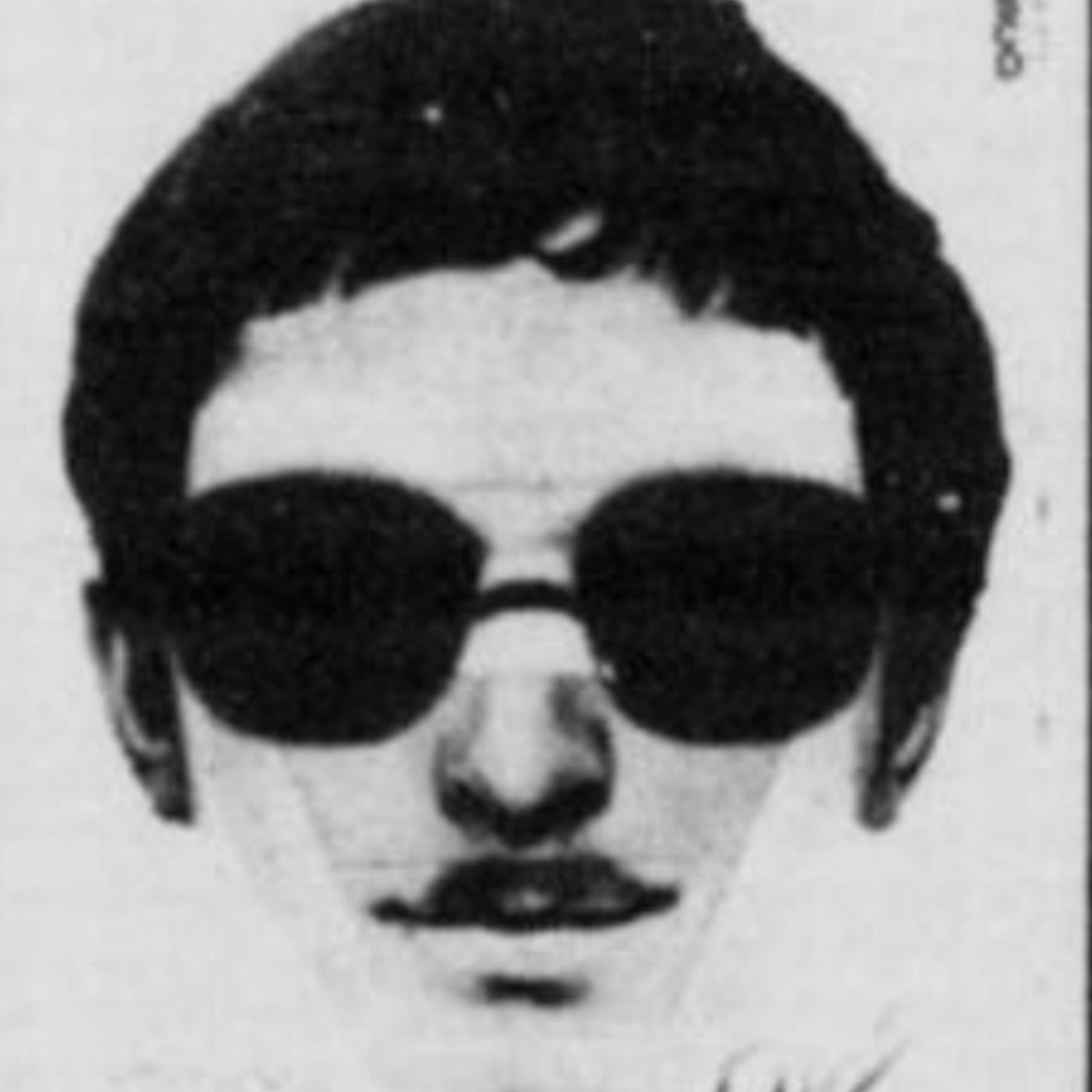
So this composite is, again, it's on the website, TeresaLaur.com. It's from a newspaper called La Patrie, a weekly Montreal newspaper, very Montreal-centric, that ran from 1957 to 1978. And in the summer of 1977, La Patrie publishes this composite, asking for the public's assistance in tracking down a man wanted for attempted murder. The man was described as being between 25 and 30 years of age, white, about 5 foot 11.
Not really short, but not really tall either. Gregoire was short, with brown eyes and hair, and weighing approximately 150 pounds, so slight. He spoke French and wore sunglasses, which are very prominently featured in the composite. The notice in La Patrie asks that the public phone a detective de Lausanne, and from the number left, we know Detective Lausanne worked for the Montreal Urban Community Police, CUM, what today is known as the SPVM, or just the Montreal Police Force.
So despite the age being wrong, Le Gregoire was only 17 in 1977. But everything else is uncanny, the dark hair, the duck-tail beard, kind of a bowl cut. We can't see his brows because of the sunglasses, but it looks very much like a young, slight Luc Gregoire. And here's the kicker.
When Gregoire was finally arrested in 1993 for the murder of Lani Silva, police described him as wearing army fatigue pants. Many township sexual assault survivors described their attacker as wearing combat gear. The female jogger attacked victims certainly described him that way. And he was also wearing large, oversized sunglasses.
Now tracking that over 15 years, I know, but you know what? This is endgame here, right? This is Hail Mary pastime. It's not going to conclusively solve the case, but it is provocative.
A particular interest is the run date of the composite, July 17th, 1977. The summer of 77, as some know, was clustered with sexual assaults and disappearances and murders in the vicinity of Montreal. We've long kind of talked about the connection between the eastern townships and the Montreal area. Is there a connection?
Is there an idea possibly of an offender shuffling back and forth in that corridor? But we've never had anything substantive to nail that to a particular offender. And I say that because there's no one saw murders more provocative than those of Joanne Dorian and Chantal Tremblay. Both disappeared less than 10 days after the running of this composite drawing on July 29th, 1977.
Tremblay was last seen getting off a bus at a Montreal metro station. Dorian worked in Montreal near the metro station, the same metro station, and was last seen getting off a bus near her home in Laval. Dorian was found 10 days later, strangled near the St. Lawrence River.
Tremblay's remains were found almost two years later in a wooded area owned by the Department of National Defense. And if you think I'm not crazy, you can go click on the link. It's not me saying that. That's the Serté de Quebec saying that.
That's what their notice says on the cold case website. I didn't know that. Now, buses and metros? Yeah, again, we could bring up Robert Laplante, I suppose.
I would say that the Dorian murder, where she's found next to St. Lawrence River, could certainly be somebody following her on a bus. Just the way that process unfolded to her getting off the bus in Laval to making her way home, she would have walked. The Chantal Tromlay disappearance is a little more problematic because she gets off the bus near Cartierville to the metro station.
She's intending to go, I believe, Bury de Montigny downtown and take another bus to Quebec City to meet her sister. And there's a blackout period there. We don't know what happens. And two years later, she's found off the island of Montreal near Terrebonne, not even in the time.
Laval, further north off Laval, near the Rosemere area, almost near where she started from. Trombley left that day from her home, her parents' home in Rosemere. Back to Gregoire, the first townships murder for which Luke Gregoire is potentially a suspect, possibly committed with the assistance of an older partner, hence the Feliad de Theory. There's a link to that if you don't know what that is.
The first one is the March 77 death of Louise Cameron. Cameron was serving with the Quebec military unit, the Sherbrooke Assars. She was strangled with the military, Boudlés. It's very possible that the Montreal police were looking for a sexual predator in Montreal who was Luke Gregoire, and that Gregoire was shuttling between Montreal and Sherbrooke in 1977-78, committing a series of sexual assaults and murders in the corridor, most of which, most of which were to remain unsolved to this day.
I think one of them is solved. You know, the big elephant in the room is Gregoire's age, 17. If you're thinking Gregoire too young for such a violent pedigree, a reminder that Richard Bouillon, who confessed to the murder of Julie Ciprana, had committed over a dozen sexual assaults before he reached the age of 16. But that's hence, that's why I tag on the possibility that he was assisted by an older offender in Feliad de Theory.
The other compelling thing I would add is that Gregoire, we know, traveled between Montreal and Sherbrooke. He was eventually stationed at the military base CFB Peroua, up the river from Montreal, and would have had to pass through Montreal at Urban Center on trips home to visit his family. Finally, Gregoire had a record of assaults in Montreal. We know that.
Certainly the ones we know didn't occur until later. The record shows in 1983, he was paroled to a community residential center in Montreal, where he quickly found himself in trouble again, arrested for assaulting a sex trade worker in a liquor store parking lot. So with all of that, you'd say, so the La Patrie composite is Luc Gregoire, right? To which I say, eh, maybe.
I decided to do one last scan of the newspaper archives to see if I could learn anything more about this attacker who preyed on Montreal in the summer of 77. And sure enough, the Journal de Montréal Matin had the goods. Because 10 days earlier, the Montreal Daily ran a story on this attempted murder suspect. At around 1 in the afternoon, the young man gained entry to the home of a 63-year-old woman in Ville-Saint-Laurent by pretending to be an employee of golf oil.
After surveilling the residence, he pulled a revolver and announced he had come to kill this woman. He then took a dog leash and began strangling her. The woman lost consciousness. The man left her for dead, but did not rob her, sexually assault her.
The notice again describes a man between 25 and 30, 5 foot 11, about 150 pounds, and French speaking, blah, blah, blah. It's the same guy. It's the same guy as the La Patrie article. And again, there's a photo of that on the website.
Apart from the sunglasses, which in this composite have been taken off, it's the man from this article, except the artist took the sunglasses off, which leads me to believe the attacker left his glasses on, but police removed them in the Montreal, the Montréal Matin composite to assist the public with identification. So this means no one really knows precisely what the 63-year-old woman's attacker's eyes were like. The eyes in the composite are open, they're direct, they're clear. In a few photos we have of Gregoire, his eyes always appear less alert, kind of squinty.
Interestingly, the attack occurred in Ville-Saint-Laurent. Two months later, Catherine Hawkes was murdered in the same Montreal neighborhood, but the M.O. is off. Gregoire was not known for fooling sexagenarians to gain entry into their homes and then attacking them in the middle of the afternoon.
That sounds more like William Fyfe. The problem is that the composite doesn't look like William Fyfe. Gregoire occasionally attacked in interiors as opposed to outdoor spaces, and he did sometimes use guns in some of his assaults. So is it Gregoire?
Well, again, the eye sees what it wants to see. If Gregoire was criminally active on the island of Montreal as early as 1977, it casts a whole new perspective on a catalog of the city's unsolved murders. This is Who Killed Teresa. If you like the podcast, you can follow us on social media.
I'm at JusticeGuy on Twitter, J-U-S-T-U-S-G-U-Y. There's a Facebook page, Teresa Lohr, the podcast, or the Undiluted Hocus Pocus Facebook page, which is admittedly a mouthful to type in. We're on Substack. It's JohnLohr.substack.com.
Subscribe to us. You get all the updates, all the information. If you upgrade to paying, you get extra goodies and a commercial-free version of this podcast. We're also on Instagram, and there's a feed to YouTube.
I'm even on TikTok now, but for very limited parlor games. That's all for this week. This has been Undiluted Hocus Pocus on Who Killed Teresa. I'm your host, John Allure.
Have yourselves a great, great day. And I'm your host, John Allure. And I'm your host, John Allure. Let's do it for more time.
Life.