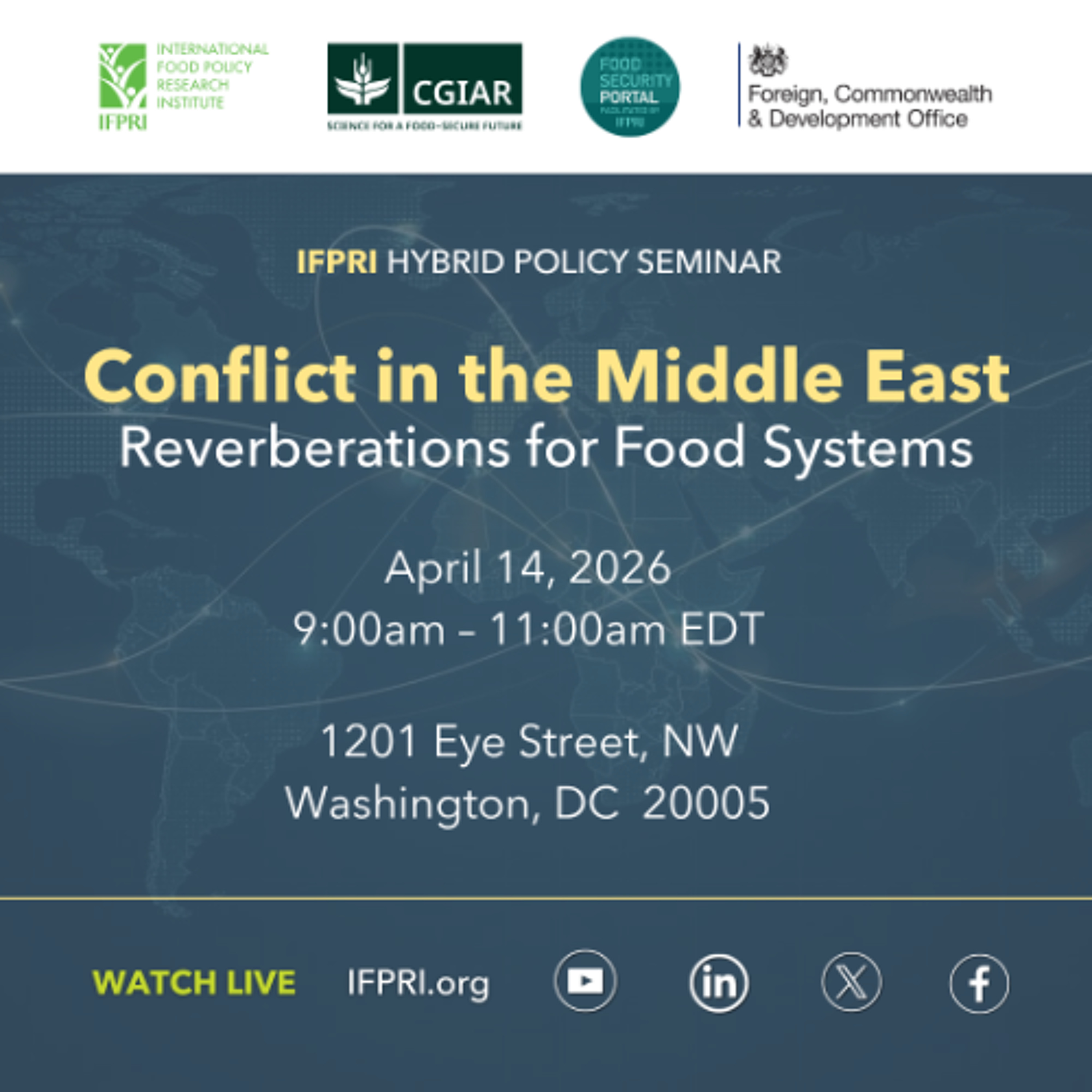
Conflict in the Middle East: Reverberations for Food Systems episode artwork

EPISODE · Apr 13, 2026 · 1H 59M

Conflict in the Middle East: Reverberations for Food Systems

from IFPRI Podcast · host International Food Policy Research Institute

While the global food system has largely adjusted to the disruptions in agricultural commodities and fertilizers following the invasion of Ukraine, the new conflict in the Middle East introduces a new set of challenges at a time when markets and supply chains remain vulnerable to geopolitical shocks. Disruptions to shipping in the Strait of Hormuz, through which a significant share of the world’s oil and natural gas, as well as fertilizers, transit. Concerns about potential impacts on production sites in the region have added to the uncertainty. These developments have implications for countries heavily reliant on Gulf producers for oil, gas, and fertilizers, as well as for food-import dependent economies in the Gulf, should agricultural shipments to the region face prolonged delays. While the immediate effects on trade flows and prices are still unfolding, higher energy and fertilizer costs can influence agricultural production decisions and, over time, shape food security outcomes. Understanding these dynamics early is important for anticipating where pressures may emerge and how they may interact with existing vulnerabilities. As global food systems become increasingly exposed to conflict-related and geopolitical risks, timely analysis is essential for informing both rapid response and longer-term resilience efforts. Clear insights into potential stress points and market adjustments can help governments, value chain actors, development partners, and humanitarian organizations prepare and respond effectively. The event will feature: Presentations from IFPRI experts, who will provide an up‑to‑date assessment of these developments and discuss their implications for vulnerable low‑ and middle‑income countries. A second panel of senior representatives from governments, international organizations, and the private sector, who will reflect on how they are addressing the immediate effects of the crisis and share perspectives on priorities for strengthening resilience and improving risk management strategies going forward. An opportunity for questions, comments, and discussion. Moderated by: Charlotte Hebebrand, Director of Communications and Public Affairs, IFPRI Opening Remarks Ismahane Elouafi, Executive Managing Director, CGIAR Johan Swinnen, Director General, IFPRI Ramifications for Asian Economies Albert Park, Chief Economist, Asian Development Bank Food Security Considerations and MDB toolkits Renaud Seligmann, Director for Strategy and Operations, World Bank Planet Vice Presidency Early Analyses Market Responses to the Conflict in the Middle East: Joseph Glauber, Research Fellow Emeritus, IFPRI Understanding Vulnerabilities at the Country Level: James Thurlow, Director, Foresight and Policy Modeling, IFPRI Comments on Rapid Analysis: Mark Diamond, Economist-IBRD Lead, World Bank Group Team, International Financial Institutions Dept., Foreign, Commonwealth and Development Office (FCDO) External Panel on Rapid Response and Risk Management Moderated by: Anna Gawel, Managing Editor, Devex Humanitarian Needs: Rania Dagash-Kamara, Assistant Executive Director, Partnerships and Innovation, World Food Programme (WFP) Considerations for Food Import Dependent Gulf Countries: Josef Schmidhuber, Chief Sustainability Officer, Pure Harvest Smart Farms, UAE Considerations for India: Rakesh Kapur, Joint Managing Director, Indian Farmers Fertilizers Cooperative (IFFCO) Food Security Investments in Times of Conflict: Jonah Gold, Managing Director of Insurance, US International Development Finance Corporation More about this Event: https://www.ifpri.org/event/conflict-in-the-middle-east-reverberations-for-food-systems/ Subscribe IFPRI Insights newsletter and event announcements at www.ifpri.org/content/newsletter-subscription

While the global food system has largely adjusted to the disruptions in agricultural commodities and fertilizers following the invasion of Ukraine, the new conflict in the Middle East introduces a new set of challenges at a time when markets and supply chains remain vulnerable to geopolitical shocks. Disruptions to shipping in the Strait of Hormuz, through which a significant share of the world’s oil and natural gas, as well as fertilizers, transit. Concerns about potential impacts on production sites in the region have added to the uncertainty. These developments have implications for countries heavily reliant on Gulf producers for oil, gas, and fertilizers, as well as for food-import dependent economies in the Gulf, should agricultural shipments to the region face prolonged delays. While the immediate effects on trade flows and prices are still unfolding, higher energy and fertilizer costs can influence agricultural production decisions and, over time, shape food security outcomes. Understanding these dynamics early is important for anticipating where pressures may emerge and how they may interact with existing vulnerabilities. As global food systems become increasingly exposed to conflict-related and geopolitical risks, timely analysis is essential for informing both rapid response and longer-term resilience efforts. Clear insights into potential stress points and market adjustments can help governments, value chain actors, development partners, and humanitarian organizations prepare and respond effectively. The event will feature: Presentations from IFPRI experts, who will provide an up‑to‑date assessment of these developments and discuss their implications for vulnerable low‑ and middle‑income countries. A second panel of senior representatives from governments, international organizations, and the private sector, who will reflect on how they are addressing the immediate effects of the crisis and share perspectives on priorities for strengthening resilience and improving risk management strategies going forward. An opportunity for questions, comments, and discussion. Moderated by: Charlotte Hebebrand, Director of Communications and Public Affairs, IFPRI Opening Remarks Ismahane Elouafi, Executive Managing Director, CGIAR Johan Swinnen, Director General, IFPRI Ramifications for Asian Economies Albert Park, Chief Economist, Asian Development Bank Food Security Considerations and MDB toolkits Renaud Seligmann, Director for Strategy and Operations, World Bank Planet Vice Presidency Early Analyses Market Responses to the Conflict in the Middle East: Joseph Glauber, Research Fellow Emeritus, IFPRI Understanding Vulnerabilities at the Country Level: James Thurlow, Director, Foresight and Policy Modeling, IFPRI Comments on Rapid Analysis: Mark Diamond, Economist-IBRD Lead, World Bank Group Team, International Financial Institutions Dept., Foreign, Commonwealth and Development Office (FCDO) External Panel on Rapid Response and Risk Management Moderated by: Anna Gawel, Managing Editor, Devex Humanitarian Needs: Rania Dagash-Kamara, Assistant Executive Director, Partnerships and Innovation, World Food Programme (WFP) Considerations for Food Import Dependent Gulf Countries: Josef Schmidhuber, Chief Sustainability Officer, Pure Harvest Smart Farms, UAE Considerations for India: Rakesh Kapur, Joint Managing Director, Indian Farmers Fertilizers Cooperative (IFFCO) Food Security Investments in Times of Conflict: Jonah Gold, Managing Director of Insurance, US International Development Finance Corporation More about this Event: https://www.ifpri.org/event/conflict-in-the-middle-east-reverberations-for-food-systems/ Subscribe IFPRI Insights newsletter and event announcements at www.ifpri.org/content/newsletter-subscription

NOW PLAYING

Conflict in the Middle East: Reverberations for Food Systems

0:00 1:59:49

No transcript for this episode yet

We transcribe on demand. Request one and we'll notify you when it's ready — usually under 10 minutes.

That Hoarder: Overcome Compulsive Hoarding That Hoarder Hoarding disorder is stigmatised and people who hoard feel vast amounts of shame. This podcast began life as an audio diary, an anonymous outlet for somebody with this weird condition. That Hoarder speaks about her experiences living with compulsive hoarding, she interviews therapists, academics, researchers, children of hoarders, professional organisers and influencers, and she shares insight and tips for others with the problem. Listened to by people who hoard as well as those who love them and those who work with them, Overcome Compulsive Hoarding with That Hoarder aims to shatter the stigma, share the truth and speak openly and honestly to improve lives. The Small Business Startup School – Business Notes | Financial Literacy | Retail Psychology – For Professionals & Entrepreneurs The Small Business Startup School Inc. Starting or buying a small business? While personal circumstances may vary, business patterns remain timeless. On The Small Business Startup School, we explore strategies, insights, and practical solutions to help entrepreneurs confidently navigate their journey.Hosted by Ola Williams—a retail entrepreneur, fintech founder, and financial coach with over two decades of experience—this podcast marries financial awareness and retail psychology with optimism to deliver actionable takeaways.Join us to learn, grow, and connect as we uncover the keys to business success.Let’s continue to learn together and be encouraged to keep on connecting! DIOSA. Carolina Sanper This podcast is a sacred space created by Carolina Sanper where you connect with your inner wisdom and embody your magnetic feminine power.It is the realization that the mystical realm is where you plant the seeds of your desired reality.It is a portal to your true essence: awareness, presence, and receiving with ease. Welcome home, DIOSA. 🖤 XXX Tech by SOVRYN Dr. Brian Sovryn The crossroads between technology, sensuality, and metaphysics - and the longest running anarchist podcast in the world! Brought to you by Dr. Brian Sovryn.

Frequently Asked Questions

How long is this episode of IFPRI Podcast?

This episode is 1 hour and 59 minutes long.

When was this IFPRI Podcast episode published?

This episode was published on April 13, 2026.

What is this episode about?

While the global food system has largely adjusted to the disruptions in agricultural commodities and fertilizers following the invasion of Ukraine, the new conflict in the Middle East introduces a new set of challenges at a time when markets and...

Can I download this IFPRI Podcast episode?

Yes, you can download this episode by clicking the download button on the episode player, or subscribe to the podcast in your preferred podcast app for automatic downloads.
URL copied to clipboard!