Constitutional revision should proceed through bipartisan agreement episode artwork

EPISODE · May 7, 2026 · 3 MIN

Constitutional revision should proceed through bipartisan agreement

from Korea JoongAng Daily - Daily News from Korea

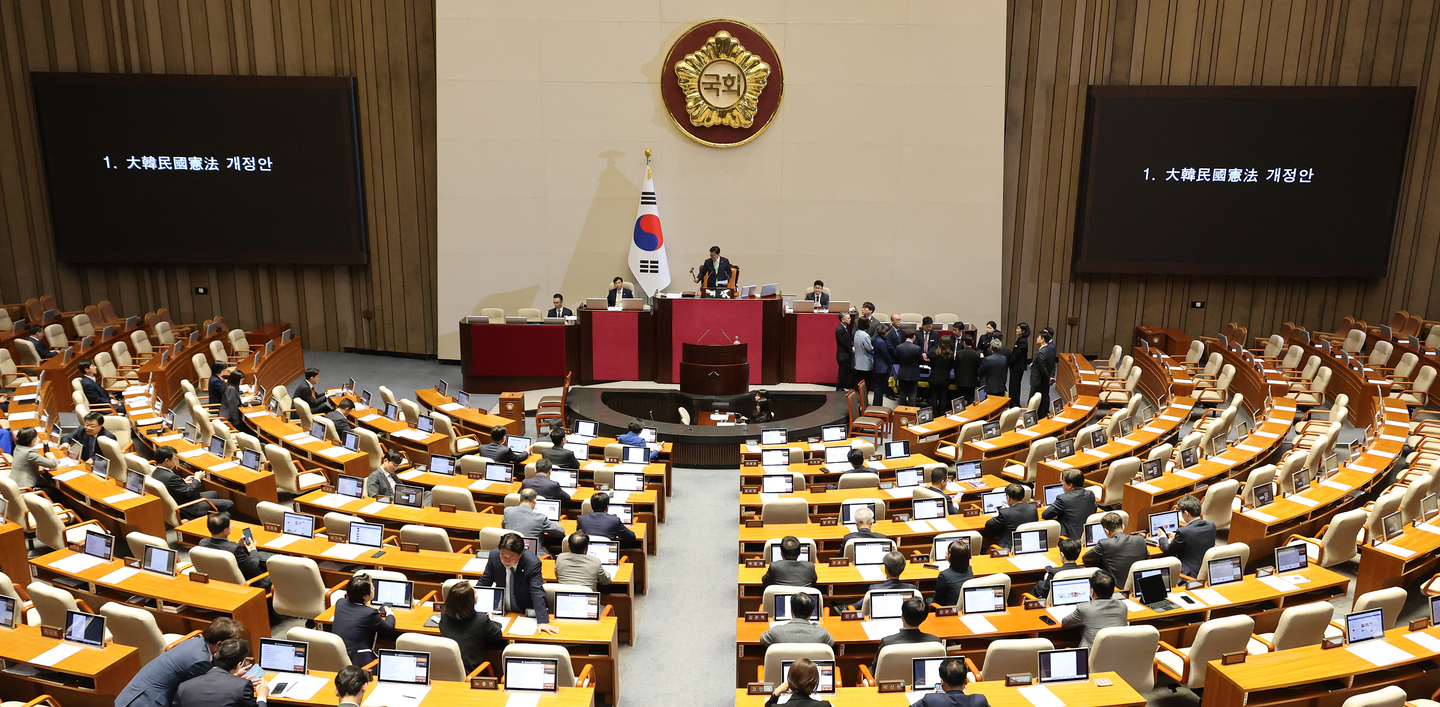
The National Assembly convened a plenary session Thursday to vote on a constitutional amendment proposed jointly by six political parties. The vote, however, collapsed after the People Power Party (PPP) boycotted the session in line with its official position. Although the ruling bloc says it will attempt another vote, the prospect of holding Korea's first constitutional referendum in 39 years alongside the June 3 local elections now appears unlikely. The proposed amendment would add the 1979 Busan-Masan pro-democracy protests and the May 18 Gwangju Democratization Movement to the Constitution's preamble while strengthening parliamentary oversight over declarations of martial law. The PPP did not strongly oppose the content itself. Instead, it objected mainly to holding a constitutional referendum simultaneously with the elections. The entire process, from proposal to collapse, leaves much to be regretted. Both constitutionally and politically, it is difficult to pass a constitutional amendment without support from the largest opposition party. The key question was therefore whether the ruling camp could demonstrate the political leadership needed to secure bipartisan cooperation. National Assembly Speaker Woo Won-shik proposed a sequential and partial constitutional revision, arguing that achievable reforms should come first. Yet from the proposal stage onward, the process moved forward without the participation of the PPP. If there had truly been determination and sincerity regarding constitutional revision, broader social discussion and persuasion of the opposition should have preceded the formal proposal. The PPP also deserves criticism for opposing the plan without clearly explaining how holding a referendum together with elections would undermine the political process. At the same time, Woo's remarks that "if constitutional revision is blocked, who would believe the sincerity of opposition to the Dec. 3, [2024], martial law declaration?" did little to encourage cooperation. President Lee Jae Myung further complicated matters during a Cabinet meeting when he suggested that those opposing stronger parliamentary control over illegal martial law were effectively defending it. Such remarks only intensified resistance from the opposition and made passage of the amendment more difficult. Korea's ninth constitutional revision in 1987, which introduced direct presidential elections, won overwhelming approval of 93.1 percent in a national referendum because the ruling and opposition parties reached an agreement based on broad public consensus. If constitutional revision is to be pursued again, the ruling bloc should first create conditions for opposition participation. The PPP, meanwhile, must abandon its refusal to engage in discussion itself. Whatever disagreements may exist elsewhere, constitutional revision at least should proceed through bipartisan agreement. This article was originally written in Korean and translated by a bilingual reporter with the help of generative AI tools. It was then edited by a native English-speaking editor. All AI-assisted translations are reviewed and refined by our newsroom.

The National Assembly convened a plenary session Thursday to vote on a constitutional amendment proposed jointly by six political parties. The vote, however, collapsed after the People Power Party (PPP) boycotted the session in line with its official position. Although the ruling bloc says it will attempt another vote, the prospect of holding Korea's first constitutional referendum in 39 years alongside the June 3 local elections now appears unlikely. The proposed amendment would add the 1979 Busan-Masan pro-democracy protests and the May 18 Gwangju Democratization Movement to the Constitution's preamble while strengthening parliamentary oversight over declarations of martial law. The PPP did not strongly oppose the content itself. Instead, it objected mainly to holding a constitutional referendum simultaneously with the elections. The entire process, from proposal to collapse, leaves much to be regretted. Both constitutionally and politically, it is difficult to pass a constitutional amendment without support from the largest opposition party. The key question was therefore whether the ruling camp could demonstrate the political leadership needed to secure bipartisan cooperation. National Assembly Speaker Woo Won-shik proposed a sequential and partial constitutional revision, arguing that achievable reforms should come first. Yet from the proposal stage onward, the process moved forward without the participation of the PPP. If there had truly been determination and sincerity regarding constitutional revision, broader social discussion and persuasion of the opposition should have preceded the formal proposal. The PPP also deserves criticism for opposing the plan without clearly explaining how holding a referendum together with elections would undermine the political process. At the same time, Woo's remarks that "if constitutional revision is blocked, who would believe the sincerity of opposition to the Dec. 3, [2024], martial law declaration?" did little to encourage cooperation. President Lee Jae Myung further complicated matters during a Cabinet meeting when he suggested that those opposing stronger parliamentary control over illegal martial law were effectively defending it. Such remarks only intensified resistance from the opposition and made passage of the amendment more difficult. Korea's ninth constitutional revision in 1987, which introduced direct presidential elections, won overwhelming approval of 93.1 percent in a national referendum because the ruling and opposition parties reached an agreement based on broad public consensus. If constitutional revision is to be pursued again, the ruling bloc should first create conditions for opposition participation. The PPP, meanwhile, must abandon its refusal to engage in discussion itself. Whatever disagreements may exist elsewhere, constitutional revision at least should proceed through bipartisan agreement. This article was originally written in Korean and translated by a bilingual reporter with the help of generative AI tools. It was then edited by a native English-speaking editor. All AI-assisted translations are reviewed and refined by our newsroom.

NOW PLAYING

Constitutional revision should proceed through bipartisan agreement

0:00 3:14

No transcript for this episode yet

We transcribe on demand. Request one and we'll notify you when it's ready — usually under 10 minutes.

No similar episodes found.

No similar podcasts found.

Frequently Asked Questions

How long is this episode of Korea JoongAng Daily - Daily News from Korea?

This episode is 3 minutes long.

When was this Korea JoongAng Daily - Daily News from Korea episode published?

This episode was published on May 7, 2026.

What is this episode about?

The National Assembly convened a plenary session Thursday to vote on a constitutional amendment proposed jointly by six political parties. The vote, however, collapsed after the People Power Party (PPP) boycotted the session in line with its...

Can I download this Korea JoongAng Daily - Daily News from Korea episode?

Yes, you can download this episode by clicking the download button on the episode player, or subscribe to the podcast in your preferred podcast app for automatic downloads.
URL copied to clipboard!