
EPISODE · Jun 5, 2026 · 40 MIN
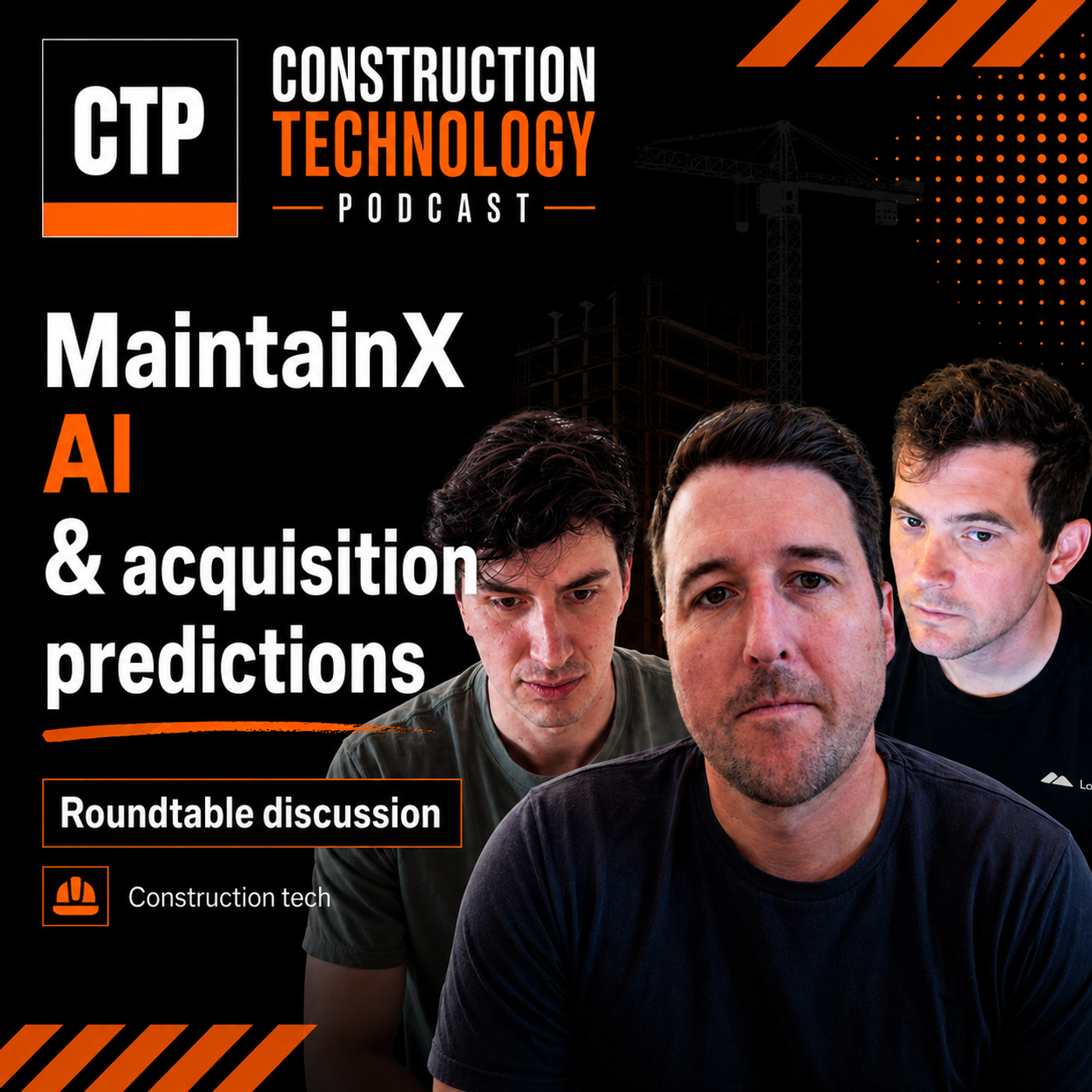
Construction Technology Podcast - Episode 017 - MaintainX, Palantir & McCarthy and AI Predictions
from Construction Technology Podcast · host Luigi La Corte, Mike Powers, Andrew Zukoski
Here’s a cleaner version:In this episode, we break down Autodesk’s acquisition of MaintainX and what it signals about the future of construction technology.The conversation starts with Autodesk’s broader strategy: its move toward full lifecycle ownership, the role of acquisitions in expanding its platform, and how MaintainX could fit into its existing customer base. We also look at Autodesk’s business mix across AEC, media and entertainment, reality capture, and construction technology.From there, the discussion moves into AI infrastructure and the economics behind it. We cover token spend, budget pressure, open source models, edge computing, electricity costs, hyperscalers, and the role of foundation models in shaping the next generation of software.The episode closes with a deeper look at Palantir’s potential impact on construction. We discuss how Palantir could compete with Procore and Autodesk, where it may gain share, and what the next few years could look like as AI-native platforms move further into construction workflows.TakeawaysAutodesk’s acquisition of MaintainX signals a deeper push into construction operationsAutodesk is expanding toward a broader full lifecycle platformAI infrastructure costs will shape how software companies build and price productsEdge computing and open source models may change the economics of AIHyperscalers remain central to the foundation model landscapePalantir could become a more serious player in construction technologyThe competition between Autodesk, Procore, and Palantir is worth watchingChapters00:00 Introduction and Baby Talk06:19 Autodesk’s Expansion into Media and Entertainment17:07 Budgetary Issues and Token Spend in AI22:34 The Future of Infrastructure Cost28:36 Palantir’s Impact on the Construction Industry39:02 Palantir vs. Procore and Autodesk
Embed this episode
Ready to play
Construction Technology Podcast - Episode 017 - MaintainX, Palantir & McCarthy and AI Predictions
No transcript for this episode yet
Similar Episodes
No similar episodes found.