
EPISODE · Jul 9, 2026 · 50 MIN
Conversación del Maíz, The Art of Nixtamalization
from Industry Night with Nycci Nellis · host Nycci Nellis
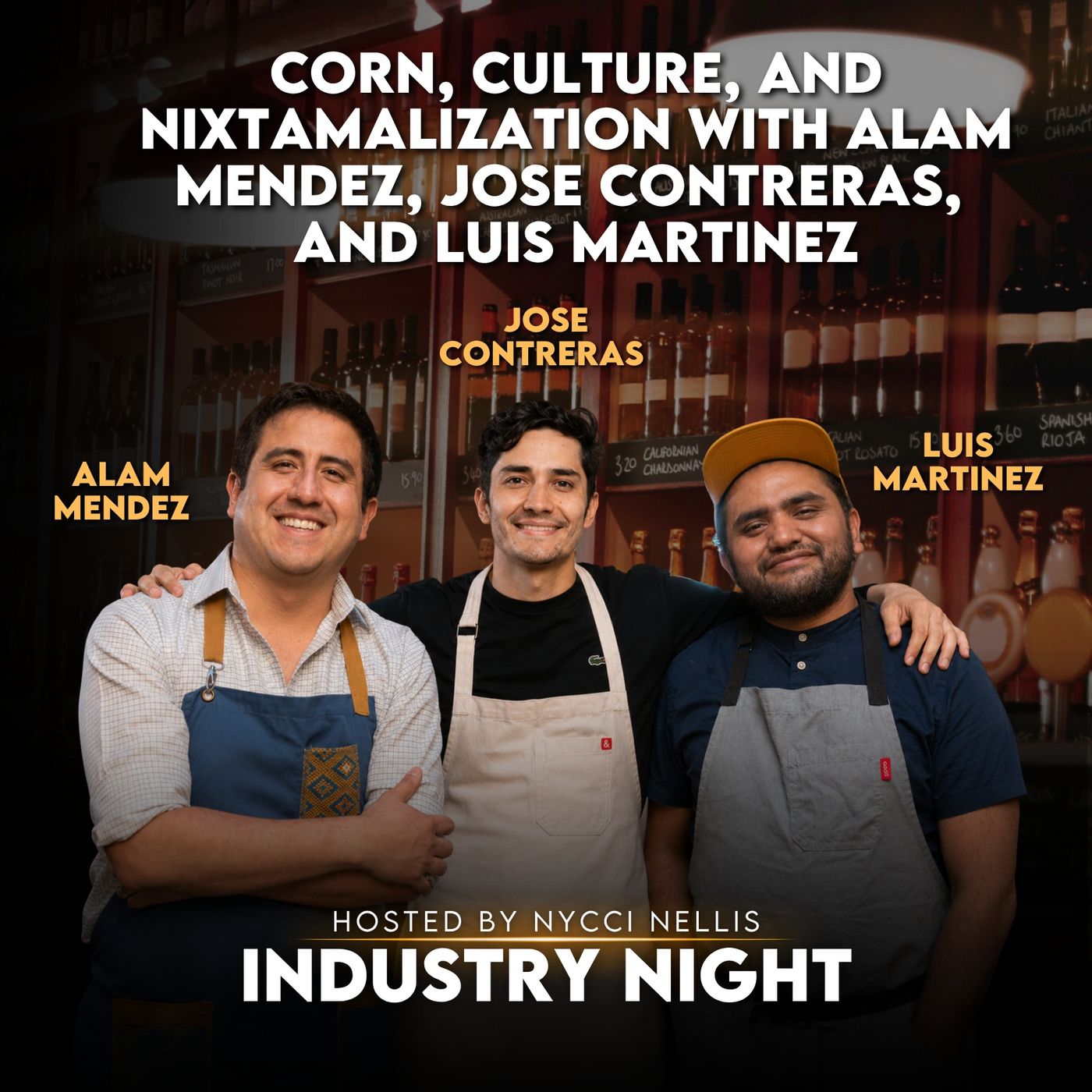
Three chefs. One ancient process. And a tortilla that could change how you think about Mexican food.3,500 years ago, someone in Mesoamerica figured out that soaking dried corn in an alkaline solution unlocks nutrients and transforms the starch into something workable. That process, nixtamalization, sustained entire civilizations. And most people eating corn tortillas today have no idea it exists. That is the conversation your girl Nycci Nellis is having on this episode of Industry Night, the DC food podcast that goes deep on the hospitality industry and the people driving it.This episode matters because food is political, food is social, and the story of corn is the story of indigenous knowledge that Europe ignored, that factory tortilla lines diluted, and that a new generation of chefs is fighting to restore. If you care about DC dining, the restaurant industry, or just being a human who wants to know where their food comes from, this one is for you.Joining Nycci are three chefs who each carry that weight differently. Chef Alam Mendez, who learned to cook in his mother's kitchen in Oaxaca and now grinds corn in house daily at Apapacho Taqueria in DC. Chef Jose Contreras, a 2025 James Beard semifinalist and owner of Amelia's in Tucson, who is about to open Carizal, a fine dining restaurant built entirely around nixtamalized corn. And Luis Martinez, born in a Zapotec pueblo in Oaxaca, now based in Asheville running Takio Foods, sourcing heirloom corn directly from indigenous farmers and bringing it into kitchens across the American South.Key TakeawaysNixtamalization Is Science, Not Trend. The process adds calcium and niacin to corn that otherwise lacks nutrients. Without it, Europeans who brought corn back to their continent developed pellagra, a disease caused by nutritional deficiency, because they refused to learn the indigenous technique.Mexico Has 64 Varieties of Corn. 61 are endemic to Mexico. Each region, each variety, requires different limestone ratios and cook times. The corn you use shapes the masa, the flavor, and the tortilla. It is not interchangeable, and it is not an afterthought.The Process Takes 24 Hours. You cook the corn, add limestone by weight, check it by hand, then let it rest overnight before grinding. You do not have to be awake for 24 hours, but the corn does. That is what you are paying for when you pay for a real tortilla.Immigrant Food Is Not Cheap Food. Luis Martinez put it plainly. People in the US have a problem paying for a taco the same way they would pay for French or Italian food, even when the process, the sourcing, and the labor behind that taco is just as rigorous. That double standard is something all three chefs navigate daily.Luis Martinez Brings the Molino to the People. Through his Compa Molino project, Luis drives a corn grinder to trailer parks where Oaxacan farm workers live, offering them access to fresh masa and nixtamalized corn. North Carolina is the third largest Oaxacan population in the country. These are the people picking our food, and they deserve access to it.Luis Martinez said, "Food is political and food is social. We are immigrants telling people who we are and what we do. In a way, sometimes they like our food but they do not like us."Host Nycci Nellis said, "The reconciliation of that, that somebody could love a taco and not understand the history of that taco and how it wound up in their hand, and they are having a problem with the people who make it, is so ludicrous I do not even know how to answer it."Timestamps00:00 Nycci introduces nixtamalization and why it matters.02:17 Meet the three chefs: Alam Mendez, Jose Contreras, and Luis Martinez.04:03 Luis Martinez on growing up Zapotec in Oaxaca and founding Takio Foods.07:27 Alam Mendez on his mother's kitchen, Las Quincertas, and cooking around the world.12:05 Jose Contreras on Hermosillo, grandma Amelia, and Carizal coming to Tucson.15:15 Luis breaks down the nixtamalization process, calcium, niacin, and why Europeans got sick.19:18 Nycci connects indigenous agricultural knowledge to the founding of America.23:21 Choosing corn varieties, 64 in Mexico, 61 endemic, and how region shapes masa.31:31 How do you explain the value of a real tortilla to a consumer raised on factory corn?34:47 Nycci on immigrant food, fine dining, and the price of a pizza in New York.43:05 Luis on Compa Molino, farm workers, and bringing fresh masa to Oaxacan communities in North Carolina.46:44 Where to find each chef and what is coming next.Connect with Alam MendezInstagram: https://www.instagram.com/apapacho_taqueriaInstagram personal: https://www.instagram.com/alanmendezConnect with Jose ContrerasWebsite: https://www.ameliastucson.comInstagram: https://www.instagram.com/ameliastucsonInstagram personal: https://www.instagram.com/chefjose_tucsonConnect with Luis MartinezWebsite: https://www.takiofoods.comInstagram: https://www.instagram.com/luismartinezcreativeInstagram: https://www.instagram.com/takiofoods
Embed this episode
Ready to play
Conversación del Maíz, The Art of Nixtamalization
No transcript for this episode yet
Similar Episodes
No similar episodes found.
Similar Podcasts
No similar podcasts found.