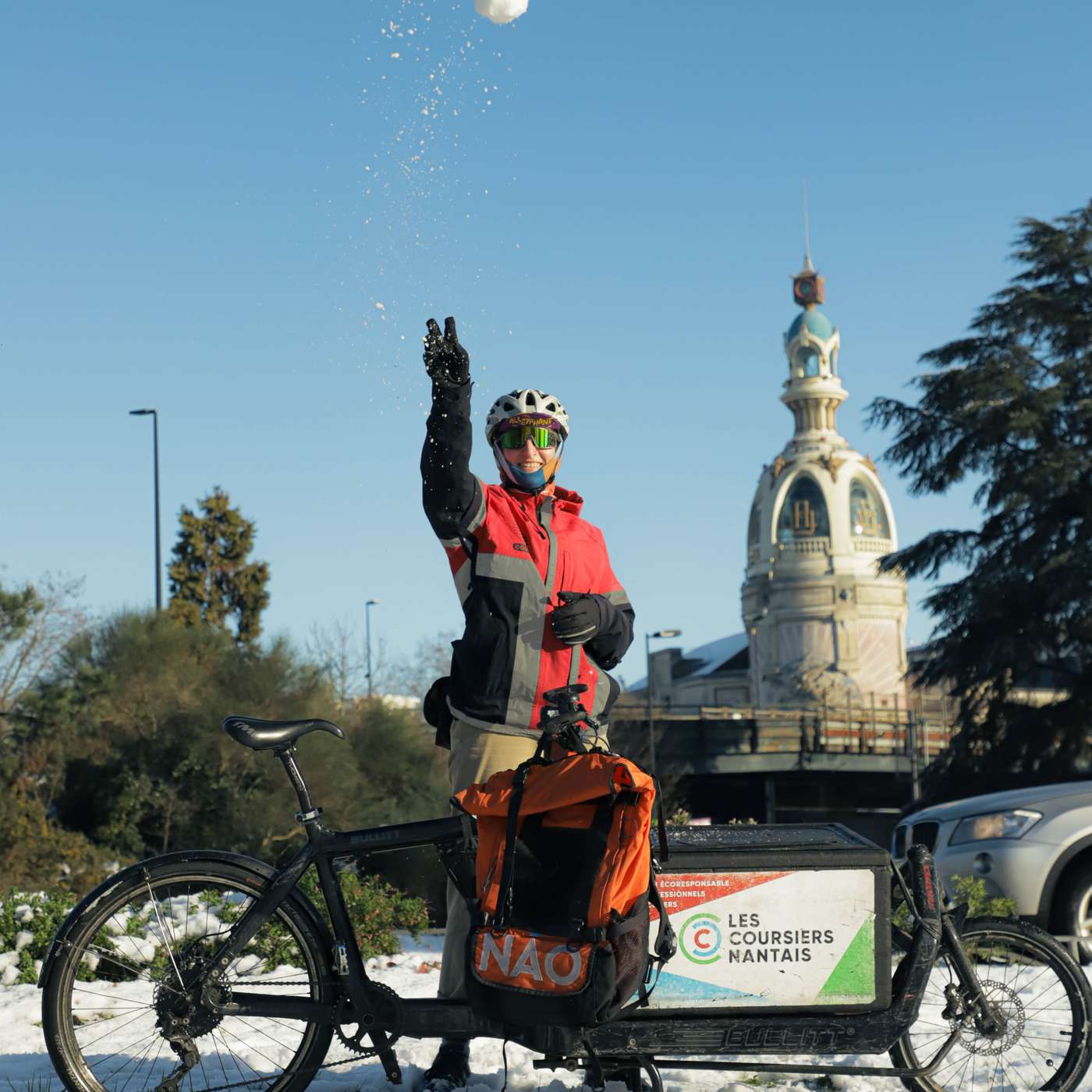
CoopCycle (Paris, France)
from On the Ground Hosted by LONG FEI
In 2017, a group of young French people opposed to the "Uberization" of food delivery met each other during a street movement and decided, instead of accommodating the platforms, to build their own delivery software — the starting point of CoopCycle, a federation of bike-delivery cooperatives. All of the federation's code is open, but the right to use it commercially is reserved for cooperatives that meet "social and solidarity economy" (SSE) standards and operate on an employee model rather than as gig contractors, governed by a one-cooperative-one-vote rule. A new cooperative doesn't have to build anything from scratch: paying 49 euros a month in membership fees in year one, then 2 percent of platform revenue afterward, is enough to start using the federation's shared, maintained software. By August 2025, the federation had grown to 57 cooperatives and collectives, spanning from Europe to the Americas. In 2018, a group of Barcelona riders whose accounts had been deactivated by delivery platforms used this model to found Mensakas — Catalonia's first rider-owned, employee-based delivery cooperative, where riders work ten to twenty-five hours a week at Spain's minimum wage. In August 2023, CoopCycle's general assembly in Grenoble, France disclosed that roughly 23 percent of hours worked inside the cooperatives go unpaid, and that riders' "ideal but realistic" wage is 1.5 to 2 times what they currently earn; to keep order volume up, Mensakas also joined a second-tier cooperative, Som Ecologística, subcontracting for large logistics companies — what researchers call a "grey zone." Taking this software beyond Europe has proven harder than expected. Argentina's Central Salta cooperative tried the software from 2022 to 2024 without ever truly putting it to use, citing the difficulty of building trust around a "foreign" project; Chile's Por La Chita cooperative spent months getting the platform installed, then dissolved before ever actually using it. A programmer interviewed in Chile said the license only permits clean-energy vehicles — a real constraint in a country where delivery is dominated by motorcycles (this reflects the interviewee's own understanding of the license, not the license's actual text, which Desktop Lili re-verified against the original on 2026-09-11). By contrast, two small cooperatives in Santiago, Chile used the software temporarily — for about six months — purely to coordinate delivery routes, giving rise to a new "route coordinator" role; their goal was never to compete with Uber or Rappi for orders, but to do neighborhood-level "last mile" work that doesn't need a digital platform at all. Mexico City's volunteer food-delivery network became an official CoopCycle pilot, Rodando Juntas ("riding together"), in 2021, and by 2025 was building a regional union to pursue financing and labor rights. CoopCycle's founders have progressively handed control to a board democratically elected by its members, and its guiding principle remains growing "wide, not tall" — not one platform swallowing every city, but every city having its own rider-owned cooperative.
Embed this episode
No transcript yet.