Do you keep hearing podcast ads like this one, for example? But always wonder how you actually get involved with them for your own brand or organization? Well, it's easier than you think. We're Acast, and we give you the platform to do it all yourself.
Browse thousands of popular podcasts, choose the shows that match your perfect audience, set your budget, and launch. And if you want to hand, our podcast specialists are there to help you launch with confidence. This is Podcast Advertising Without Barriers. Get started at acast.com slash advertise.
Hello, and welcome to episode 19 of Caged in Presents. Coppola Connections brought to you by the Breadcrumbs Collective and hosted by me. Petros Pat Silvers. And this week on the podcast, we are going back to school.
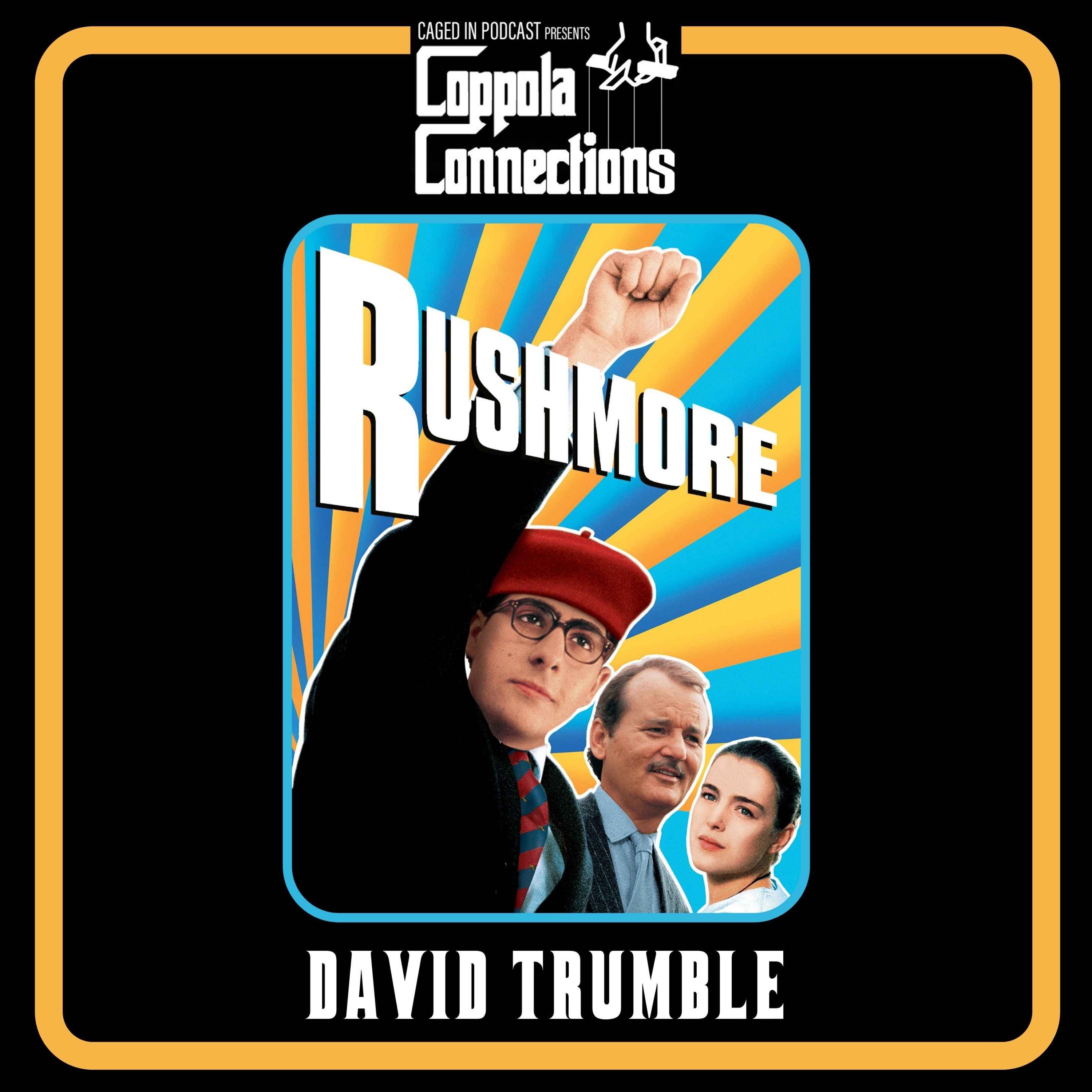
Happens to be around the same time that schools go back to school. So call that kismet, baby, because the film we are talking about is Wes Anderson's 1998 coming of age comedy drama Rushmore. Did you join me for this conversation? Is David Trumball?
A fair time return guest, but we'll get into that in due time. If this is your first time with the podcast, we watch every single film in the collective Coppola filmography to determine are they the greatest film family of all time? We will obviously be talking about this film in all its gory details. There'll be spoilers, appliances.
If you haven't seen it, head on over to a handy document in the show notes that will tell you if and where this film is streaming. I'll give you a hint. It's Disney Plus. And as always, if you'd like to support the podcast you can do so by heading over to patreon.com forward slash Caged in Pod or hit a link in the show notes that you buy me a nice cup of coffee.
So all that's left to do is to join as many clubs and societies as you can. The friend and old businessman fall in love with your high school teacher. Get kicked out as we head over to Rushmore Academy and make some Coppola Connections. 1998 was a busy year for the Coppola Clan.
Nick Cage was busy taking chances and snake eyes and city of angels. And his then wife Patricia Rakett was in both high low country and goodbye lover. Jonathan Swartzman was busy helping Michael Bay capture his world saving oil crew in Armageddon. Whilst his younger brother took his first steps into acting.
The younger brother in question is Jason Swartzman. And the focus of today's episode is Wes Anderson's coming of age comedy Rushmore. Help me navigate the world of private schools, extracurricular activities and forbidden love. His animator, story artist, bombardment club founder, fencing team captain, the Kung Fu Yellow Belt and third time return guest David Trumbull.
How are you David? As always it is a pleasure and privilege to be among the Petros Pet syllabus players. Yes, and today's performance will be a very small black box theatre version of Rushmore. But it will be a here plane.
Of course, of course. We're firing on all cylinders within the Max Fish away. No, all the stops have been pulled out. Yeah, we've got a model train in the background.
It's going to go faster with them. Well, before we get into talking about Rushmore too much, when did you first become aware of the Coppola family? Yeah, that's an interesting question. I was trying to trace my memory back and it actually, I was aware, like a first Coppola family member, I was aware I had to have been Nick West Cage.
But the first time I was aware that Coppola was a dynasty was conveniently enough through Jason Schwartzman in that I read an interview with him in the MP magazine shortly after he blew up from Rushmore. And he was basically making a running joke in his interview about dropping the names of all of his family members. Like, I was talking to my aunt, that's this and I was talking to my cousin, Nick West Cage. And my mother, it was just really the first time that I was aware of.
Oh, okay, so not only is it really interesting because Jason Schwartzman tells story on David Letterman from 1999, kind of on the press tour for this film, that it was at a party at Francis Ford Coppola's house that one of the casting agents for this film was there and kind of said to him, you kind of look like a kid we're looking for for this film Rushmore. Like, do you want to audition for it? Like, already you've got that kind of like unknowing nepotism. I'm like, there's a lot of like, there's a lot of like, knowing nepotism in the Coppola family.
There's some unjustified, like people go like, Sophia Coppola in the Godfather III, I think, is like unjustified nepotism because I think it was kind of like a fact of they were struggling, like all of that, they were kind of tragedy, that kind of like the casting of that, like, yeah, one of the, one of the actuallys has like a tragedy in their life and then when O'Rida pulled out at the last minute, I think it was kind of like, Francis Ford Coppola was like, Sophia, you do it. It actually feels weirdly human and understandable to think that after those setbacks, you would just go with somebody who you trusted, you know, irrespective of whether or not they were necessarily right, but the role would be like, well, I know Sophia, Sophia, I can have a material or whatever. It just feels like an unfortunate perfect storm of like everyone and their dog wanted the third Godfather movie, you know, and it was like, it probably ended up being underwhelming in that sort of like, crystal skull kind of like mentality of like, don't actually get what you want at full time because it's not necessarily what you actually really need. So yeah, like I just got sympathy for her because she probably had to live that down for a very long time.
But yeah, with Schwartzman, I don't necessarily think of it as nepotism because of the fact that like, they, they interview like thousands of people for that role. So, so the fact that he got it over those sounds of people doesn't necessarily feel like it was because he was a Coppola because he doesn't even have the family name, you know, he's not even Jason Coppola. So, so I don't know how much it played into it, you know, but it is kind of funny considering, you know, obviously we're discussing where's Anderson's movies. He's worked with Roman Coppola as well on his scripts and things.
And it's like, where's Anderson is not married into the family, but he is as close as you can get to the family without being a Coppola in my mind. Like, it's like, if this was something for Elie B, the Kramer who would just walk in to the apartment without she and himself as something in the fridge. That's how I think he basically is a Coppola in anything but name, you know what I mean? Yeah, I will get into it.
Like, I think he kind of like knew the connection as well because there's something hard baked into the script of this film that is like a reference to There are two little dots of the cat. Yeah, yeah, yeah. And it's really interesting, you kind of think that he is like an honorary Coppola and it's and the thing with yeah, with Roman, but like it was, it was Jason who's the first Coppola to work with him. So obviously like he kind of Roman hadn't hadn't come onto his radar and that like that casting of Jason Swarford, like you said, like there were thousands of kids and it's on the moonrise kingdom like commentary track they say like that wasn't the kid that I would Wilson and was answered had in mind they kind of had this like image of this like Mick Jagger looking kid kind of scrawny like and then you got Jason Swarford.
You know, a million miles away from what was answered but like when he was 15, you know, he popped style, you know, light figure. But it's only because like Jason Swarford, he I think my my relationship to this movie is really specific but it was obviously everybody's first introduction to him, you know, all told. And I think regardless of whether or not any net system had anything to do with it, he's so fantastic in that role that consequently, even when I see him in like Scott program versus the world, I never really think of him as anything other than Max Fisher. Like he is Max Fisher for all time.
Whenever I see him playing another part, I'm like, oh, it's Max Fisher being this guy. I still feel like I'm watching what a Max Fisher's plays because he's just so indelible on that. Well, what's wonderfully perfect about that kind of like life outside of the film and like kind of Max Fisher character living on. I said it's a while ago and anyone who's kind of listening to seek out these amazing like MTV like Sting Lady for the MTV Music movie awards, 1999, like is the Max Fisher players putting on some of the biggest films like.
Yeah, that was really funny. I love that. And it's funny how you mentioned that like they had a different look in mind for the character of Max because if you look at, I just re-watched bottle rocket, which is Aniston's first movie that he made with Owen Wilson. And it was important for me to watch because it was the only Wes Aniston movie I had yet to see.
And it actually really informed my experience of this because it was like the second movie, the second feature, the second album kind of like taking all of the things you learned from that first scrappy entry. But the funny thing about watching it was that Luke Wilson is the main character and Luke Wilson's haircut. That kind of slightly longer sort of like the curl, but will haircut that he has is just 100% Wes Aniston's haircut. So I was just like, it reeks of that.
He is the hero is the filmmaker, just dramatized, you know what I mean? And so it makes perfect sense that their idea for Max Fisher would have been slightly different. Well there's like running themes throughout Wes Aniston films and there's kind of things that inform the films beyond that. We'll get into some detail a bit further down the line, but you kind of see things in Rushmore and you're like, oh, that's kind of like built upon then in the Royal Tenenbounds and it's like there's something else like in Rushmore.
And obviously there's the Jacques Cousteau connection of the fact that there's a book and documenting the entry, the footage that you see of underwater reefs and diving, that obviously will be touched upon in Life of Quiet It. And then you have the character of Max Fisher's father who's played by Seymour Cassell. He's so sweet now. He plays the explorer that gets killed.
He plays the guy that gets killed at the beginning of the... Yeah, he plays Esteban at the beginning of the... Esteban! And it's that thing, like kind of there's the Max Fisher players, like Wes Aniston is Max Fisher in a way because he's kind of built this repertory theatre of actors that he kind of uses over an over 100% other Wes Aniston player.
Yeah, you're in a Wes Aniston movie, it's almost like you've got an in for all time with his catalogue. He'll put you in a tiny role even if you show up for like a second or in a voiceover. You know what I mean? I can't be kind of telling an entire filmography post, you know what I mean?
Like a certain point is just showing up in Wes Aniston movie. Yeah, and there's like, I love the kind of like smaller characters who kind of pop up from here and there. So there's the groundskeeper in this film who's got a fantastic name, which is like Miss the Little Genes or something like that. And then he turns up in the Royal Tenenbounds as per Goda.
And the guy who keeps having Gene Hackman. Yeah, yeah, yeah. Out of some like weird sets of honour. I love it.
Is it fair to say that Rushmore would have been your first introduction to Jason Swartzmann? Yes, and my first introduction to Wellington obviously. I mean, it's what we're going to go into it in detail, but like this is when I agreed to do this, this part about it was because Rushmore is my favourite, was Aniston movie. And I had not watched it in many years because it was a very formative film of my teenage years.
And I actually must confess when I sat down to rewatch it for the cause, I had a lot of trepidation because I was worried I didn't want it to have aged poorly or to have dated or to become like, I don't know, like I was just worried that maybe my impression of it because I felt so close to the characters and specifically my experience of growing up, you know, as reflected in the film, that like I was worried like, I really hope it's not like underwhelming when I watch it again. I hope it's still my favourite and I'm very pleasantly surprised to say that it is actually ruining my estimation. And that's really saying something considering how truly beautiful was Aniston's films have become, obviously his style has become truly impeccable, you know. And so this is nothing against how like absolutely beautifully conceived and constructed his other movies are, but Rushmore just hits so many truthful beats to me that hit me on emotional level.
I'm very interested to talk about it because you know how the last few times I've been on with you, it's been me indirectly causing you to get emotional about being that. Like it basically just me starting to get you to cry every time. It's like it's my turn. You know what I mean?
This is like, this is a movie that has a huge emotional resonance with me because it speaks a lot to my teenage years and like, you know, not to sound, you know, like overly editorialising, but I feel a lot like I'm recovering Max Fisher myself, you know. And so it'll be very interesting to unburn myself with some stories and really dig into why this makes so beautiful. And so to that point, I think what's fantastic about this and kind of many of the Western films, I think, Moonrise Kingdom, as I spoke to Jeanette from Southern Double Deep about, is that like, they kind of work on two different levels and like depending on how old you are when you watch them. So like, when you first watch Moonrise Kingdom, like for me, it's kind of like a thing I was like, oh yeah, like, I'm relating to this almost like remembering what it was like to be a kid.
But then like watching it now, like, you know what I mean? 30 years old and like being a father. I'm like, oh, I'm very much watching this through the eyes of Bruce Willis, Bill Murray and Francis McDormand and even like Edward Norton. I think it's that thing with Rushmore.
Like, if it hits you at the age of 15, like the same age as Max Fisher, you're very much kind of aligned with the way he is and kind of like the way he is. Whereas like, as you get older, you start to look at it through the Herman Blum, like the Bill Murray character and kind of like, because it's very much this tale of kind of one child wanting to be a man and one man wanting to recapture something from his youth. Yeah, well, a lot of Wes Anderson's movies are about children trying desperately to be adults and adults acting like children. Everyone is a master of self-deception in his stories.
But I think what sets apart Moonrise Kingdom and Rushmore specifically to me is that they are the two films of his that I think feel the closest to real life. I don't mean that to disparage the other movies, but the other movies are about very heightened things. So like, Owen Wilson and Wes Anderson described Rushmore's reality as being a bit like, I run up to me now that I'm working on the role of series and Netflix, like a role dog, like something out of a book. And obviously that gets more and more pronounced in Wes Anderson's film all the way through directing Fantastic was to Fox, you know, which is a real dog book.
But what's interesting about it is that even though his style is all the DNA of that of that stylized approach is there and present in Fantastic in Rushmore, he still has about handheld and he's still graduating from bottle rocket. And consequently, it still feels like it's mostly taking place in the real world, like Max Fisher himself is heightened and stylized. But there's an awful lot of times where he hits up against reality and jarringly and fantastically so. But I think what makes this movie and Moonrise Kingdom particularly powerful to me is that I just feel like they're more relatable to the audience as things that could have actually happened to you in that like, not everyone in the world is going to be a tenon, but not everyone in the world is going to be an oceanographer like Steve Zissu.
Those are elevated heightened realities about people who are true projibis and like people who are narcissistic parents and like distant mothers and not everyone has that experience. But I think everyone, or at least, you know, most people, most sensitive people who had a, you know, who lived through their teens has been Max Fisher at some point or had crushed, you know, the out of control. I think it's the same with Moonrise Kingdom because everyone can remember a young love and being a kid and just like trying to be like an adult even though you'll know where close to being one. You know, I think that's why they're particularly believable to me.
Well, I think Rushmore is the last film that like, Wes Anderson made before it departs into Wes Anderson land. Like, it's similar to Kubrick. It's like, if you look at Pass of Glory, you know, that is a movie that's like, you know, actually really, really tightly paced movies before he becomes super indulgent. And like, I think this movie Rushmore is under 90 minutes if you don't, if you don't build the credits, you know.
So, so it's like, gravity is also present because he's just figuring out his style and stuff. So, you know, then it becomes this massive, like, you could tell that the next movie he's making that's about to come out, you know, once the pandemic is going to be massive, you know, just the scope of it, the scale of it, the cast, it's probably incredibly long, you know, because he's grown accustomed to being able to have lack of the audience. But it is interesting to watch these early movies, especially this one, but there's just no vat on it. It's a perfectly paced structured story, you know.
So do you mind telling us a brief synopsis of this film? But for anyone who out there may not have seen it, I don't know why you're listening to the fuck up. Who do you give us a brief synopsis? So the plot of Rushmore, it's so simple.
It's just a story about this kid, Max Fisher. He's the son of a barber, comes from humble beginnings, but he wrote a little one act about Watergate when he was a kid because he's a precocious writer, if nothing else. And his mother, who's now David Departid, loves his place so much that she submitted it to this private school, Rushmore Academy. And so he was like, he was like a moonshot, you know, working class student who got it in it.
And so the story begins with Max excelling in all these extracurricular activities at Rushmore because he's trying so desperately to be something that he isn't. He's trying to be this brilliant genius academic. And yet it's revealed that he's one of their worst students and is failing miserably in all of the tests and essays and papers that actually require a correct answer. You know, he's actually not as bright as he thinks he is or says he is.
And so the film is all about him. His entire life in Rushmore is thrown into jeopardy when he develops an infatuation with a teacher called Miss Cross, played by Olivia Williams. And that brings him into conflict with everyone else including his friend, her bloom played by Bill Murray. And the story charts this absolutely perfect infatuation stage story, where it charts the charts every single stage of first love, of becoming hyperbolicly obsessed and then being shut down and losing it all and realizing that you have to build yourself up out something true, something imagined.
And so it's a story of coming of age but done in Wisconsin's trademark, for Snicketty style. And it's just glorious. It's really interesting that they got Jason Swartzman for the lead in this one. You mentioned about the playwriting of a key thing throughout this film is that Francis Ford Coppola, when the kind of couple of children were young during like summer holidays and stuff like that, would set them a task of like writing a one-app play.
And the main, because he kind of had this like grand estate in the Napa Valley, would get them to like go, right, you've got you've got three days, you've got a couple of days to kind of like get your play written and then we're going to perform it. We've got like a kind of fit set up. That sounds simultaneously awesome and terrifying. Like, can you imagine being a kid having a panic attack because you're like the least writing inclined Coppola?
But then like, so Jason Swartzman, like it's one of the many interviews I've listened to. Like, it's mentioned that he kind of wrote this one act like Tennessee Williams inspired play. So like, he has that element of a Max Fisher very much inside of him. But there's like, there's an interesting meta-text role irony of the fact that he's probably more in real life a tenon-vahm than he is a fisher.
You know, like he actually doesn't come from a barber's shop. You know, like he's someone who's a legacy artist. And so that's an interesting like dynamic because he does, he is perfect for this role of Max. Yet his experience in real life is probably much more, is it Margo tenon-vahm played by Gwyneth Paltrow who actually is an exceptional player?
Yes, yeah, yeah. The adopted daughter of Gene Hackman in that film. Like, weirdly, I wonder if Wazan isn't actually bringing anything from his experience with Swartzman for that movie because, you know, that's probably more of what it must be like to be in a couple of family is the tenon-vahm. Well, there's like, this is probably the only chance I get to say on the podcast.
But Jason Swartzman was supposed to be the character Mordecai in the Royal Tenon-Vam's, which was written as an actual character instead of a Falcon. But like, I think because there was too many moving parts in that film because you've kind of got that like all-star cast and kind of everyone's got their individual friends and stuff like that. They were kind of like, we haven't got time for another thread and kind of dropped him. And it's very interesting as well because there's a lot of speculation online.
So there's a scene of one of Richie's tennis matches in the Royal Tenon-Vam and the commentator sounds exactly like Jason Swartzman. And it's been revealed that it's actually Wes Anderson, which kind of makes me think that like, as much as there is that thing that you mentioned earlier of like, Wes Anderson being like a kind of surrogate copala, it's almost like very much, it's around this time as well, like Jason Swartzman would have lost his father, Jack. So like, it's almost like Wes Anderson took him under his wing and kind of like Jason Swartzman's affectation, the way he speaks, like even in interviews, kind of like, feels like he's born out of this kind of relationship he's developed with Wes Anderson, which I think is like wholly fascinating. Yeah, it definitely speaks to the themes of all of Wes Anderson's movies, which is like people trying to paper over big voids in themselves, like absent cities and absent parents or an absent child.
And it's like, who he really could be as opposed to what he thinks he should be, but it is fascinating to see that there are these themes of fathers and sons and sisters and daughters and mothers all throughout his house and films, but it seems to definitely, I think there are elements of that in real life without us, clearly. He clearly understands those dynamics. Yeah, I think there is like a kind of like 10 part podcast area it's called like, Wes, are you okay with your dad? Like, in that like all of this films kind of have this like thing of people, either whether it's like looking for the actual dads or like kind of looking for these surrogates for father and just want to see a freak in support group with Anderson, Noah Bonbach and Stevens Spielberg is the leader of it.
Like he's running the table and who else who else? Oh, Tiger White's team, they're all the main movies about their fathers. Yeah, I'm trying to think it's almost like a kind of like live action scene of that Wreck-It-Ralph kind of like beating up of all of the villains, like. I just want to see Stevens Spielberg clutching Wes Anderson as he weeks saying tonight.
I see a justice cap is like, is something bad? Okay. Yeah. And I guess we're going to see the kind of the gestation and the amalgamation of Stevens Spielberg's daddy issues in a film where he's actually shout outs to our boys.
It's all okay. Yeah, before trade by the legendary Paul Deano. Yeah, it's going to play Stevens Spielberg's dad like, yeah. But back to Rushmore and I think the opening scene to this film really just kind of like perfectly paints the picture of who Max Fisher is that kind of like we open with that like daydream of him solving that maths equation.
Who hasn't had a daydream? Exactly. And I imagine being way smarter or with me and my brother, I think we both agree, it's our daydreams that we can sing, you know, that we have a beautiful sing voice on playing instrument. But yeah, with Max it's that he solves this impossible equation.
And the way it's done as well, it's like, like, but it's not just the fact of like he solves the equation. It's more to the fact that he is like the bell of the ball in the school that he has the kind of like, utmost. Yeah. Constantly holding a cup of tea in his hand while he's doing it and just like, he's in this amazing blazer that he wears throughout, which is like his costume, like his superhero costume.
He wears it even when he's not, even after he's been kicked out of Rushmore, he wears that blazer like it's his superhero suit. Like he's trying to actualize himself through this, this, this sort of symbol of what it is that he's meant to be, which is what he is in his fantasy, which is like some brilliant genius, the cult of the great man. You know, I mean, even the way he directs his plays is obviously he's had internalized into him from just like seeing how great men across history who are creators, directors, writers, playwrights, treat their staff and treat their actors, you know, like he's basically playing a role the whole way through because, I mean, it's really cool to me, someone who, you know, clung to the fact that he was a good drawer all the way through school and often he's there to become, you know, seeming deficits for like, you know, not having a girlfriend or not being particularly popular or whatever, like, you know, trying to overcome the bubble I have been in, of being a twin brother, which meant that I was in like a world my own for a long time. Suddenly you become a teenager and it's like, oh, I need to do something to stand out against this crowd, not only to stand out against the other students, but to stand out against the person who's exactly like me, you know what I mean?
And so, like, you know, I'm actually related to an all-optimist picture because, where's Anderson is a genius at writing people who are basically like, they are the stars of their own self-written stories. Yes. And that's all teenagers in a nutshell. Like, you might not be like Max Fisher, but everyone when they're about 15 is writing a narrative for themselves and trying to present that to the world as fact.
And they think that if they present that exterior, that that will then just become true. Like, if people believe you enough, then you will become that person and it's built on all this insecurity. And I certainly had that same thing. I didn't wear a blazer like Max Fisher does, but I wore all black and emoed up and I got a goateed beard, like, with a tiny caterpillar on my chin.
And it was just like, I basically spent the last two years of my high school life drawing a graphic novel in recess and in lessons even. Like, it would be confiscated all the time. And it was like my way of doing something on value, which was I had to create a work, a piece, something that had my name on it. And it actually won a prize in the school for creativity.
And then it was like my one-act play. It was like my one-act Watergate play. And it got published as a graphic novel in books stores, but it obviously didn't make any money because it's a graphic novel about nothing. Like, it was a 265 page that me and I don't really like handbook people ever read.
But for me, at the time, it was such a huge deal because it was all I had in my mind. And what's funny is looking back on the man I was then, or the boy trying to be a man. And, you know, an awful lot of that. I haven't come with Max, which is he thinks that he needs to be important so badly.
So much so that he tells Bloom that his father is a brain surgeon. He basically lies about everything. And one thing I think is that I didn't notice the first time I watched the movie, but I did notice now is that actually a really lovely theme about everyone in the story who's young at least is like even the people who aren't like Max. So it's like we meet her later like Margaret Yang when he goes to the public school, you find out that she actually faked the results to her, you know, trans women science project that she did because she wanted to hit some standard that was imagined.
And then even the bully, is it Bucken? Yeah, the Scottish bully who keeps being totally horrible to him all the way through. It's revealed at the end that like one of the reasons why he picks on this is he just always wanted to be in one of his plays. Yeah.
You know, like everyone's not like this front that they're trying to live up to and none of them can because you just can't do that. That's just like, but I think that's one of the reasons why it's such a believable film compared to Anderson's other work because in all of Anderson's other movies, people are lying to themselves. But Max is one of the only Wesley Anderson characters who is at the exact right age where it's 100% appropriate that he's lying because everyone fucking did. You know, like that was me when I was a kid.
I was just constantly walking around trying to sound smart, trying to sound academic and I grew up in Oxford and Oxford was a real great university town. I had an awful lot of like impressions of feeling like I had to be brilliant in order to matter and that's just a ridiculous feeling. As soon as you could get on with some like the actual substance. Well, yeah, your thing to the point of like lying, even we get it with Mason Gamble's character Galloway where it's like, you get that thing where like even comes to Max later on in the film for like a truce.
But even that is like kind of there's an underlying deception to that because it's for him to relay a message for him to go see Guggenheim in the hospital. And then we kind of realized that that was all a ploy. So him and Bloom would like kind of reconnect after this kind of big like breaking up. Hey, he's got some of the funniest moments and so I think he's just a little kid and just there's that moment when Miss Cross, I can't believe we haven't mentioned yet, but we'll get to have like Miss Cross and Bloom are starting their relationship and they go for a walk and it's just one of those perfect sound cues in all of film where it just hard cuts, you know, smash cuts to Callaway, seeing them and this organ music goes down.
So it's the comedy equivalent of a jump scare. It's so fucking good. And every time he can always on screen, he takes everything so seriously that it's just like, it's just hilarious. And his relationship with Max is with him.
Well, it's that thing is a thing about like the dirt Callaway character is, well, one, he's played by Mason Gamble, who was Dennis in Dennis the Menace from 1993. So do you remember the other kind of Dennis the Menace with Christopher Lloyd? I watched it once, it was a very weird experience. Yeah, so like, like, and Wes Anderson said he basically didn't want the kid who was Dennis the Menace, I think that's the kind of like snobbery of Wes Anderson coming through.
A little elitist. Yeah, I don't want that kid, but he doesn't completely escape from the trappings of the characters, that's what you like. But he is like, he is fantastic and like looking through his time, he hasn't really done much else, which is a real shame because like, yeah, like the character is really interesting. Like, there's somebody else who's really interesting and they're not named, they're not named at all in the script, but there's, there is a character of like a small boy who just, I'm not sure if he picked up on this, who crops up throughout the film.
He's just there, he's got like big eyes. He always got so miserable. He's the boy who like, when, when Bloom has like, really, like, it's a really great moment in the film. Like, to a kink song where Hal Bloom's throwing, Herman Bloom's throwing, like, and then like, gets up and then like, like dives off the diving board.
Yeah. Under the water. And like, if you notice, like the Greek chorus of the film. Yeah, that little boy kind of like, like, pops up all the way through, like, kind of facial expressions, almost like, tell you like, oh, like, he's always like listening into everything that's going on.
He's in the, like, he's in the party after the show at the very end, next to all the New Girl pictures that are just like really inappropriately put up in the set dressing and make it look like Vietnam. He looks like he's so traumatised. He's everywhere. There's even a moment when, like, the police turn up to Bloom's like door and asking for like the description.
That kid's just there. That kid's just on the doorstep as well. And he's just there. You don't know his relationship to anybody.
He could be in Mrs. Cross's class. Maybe I don't think so. He's just there.
He's just like a hangarata. Yeah. And it's very interesting. I find that really fascinating.
But obviously, yeah, once we get that kind of like, when Max snaps out of that daydream and we get that introduction from Bloom telling that kind of, he's got off script, basically, of what he'd written. And I think it perfectly plays into what you were saying earlier. Like, he is a made man because he's kind of like, giving this speech, which is all about like the privilege of these kids and like, you should keep the rich ones in your crosshairs. Take them down.
And a great bit of trivia is that is based on an actual speech that Owen and Luke Wilson's father gave and like the character of Bloom, like a lot of like the kind of lines that he says. I think there's a line later on in the film where he's like, how did I end up with like boys like you? Yeah. It's directly lifted from Richard Wilson.
I think his name is like. That's so interesting. Well, I mean, that is something I'm really glad you brought up, which is that, you know, obviously, Wes Anderson gets an awful lot of press with this film, but you know, it's easy to forget that the script is covered in bioin Wilson. You know, that Owen Wilson, you know, despite also being very like a whole star, you know, has a very good talent.
You know, the script for the world 10 months is just as amazing. You know, these guys collaborated and there must be an awful lot of Owen Wilson's life in this story, as well as just Anderson who obviously brings all of the visual pizzazz and all of the personality. But you know, it's nothing without that combination too. Well, yeah, you can kind of see it in like that, though, there's that frustrated dad who like, or obviously like Wes Anderson aesthetic sake, he's just given him twin sons, whereas like Owen Wilson's real life would have been free boys because the other brothers as well.
But it's like, yeah, you very much get that sense of like, they're drawing upon that. I think it's very much like drawn upon Wes Anderson and I mean, Wilton's childhood. It's like the film is even filmed at St John, which is Wes Anderson's old school. Because apparently they were looking like globally, they were looking in America, Canada and the UK schools, essentially they could film that.
And Wes Anderson's mum said to him like, well, why don't you go to your old school? It'd be perfect for this story, I tell you, which even that point tells you how kind of like, this is personal, do you mean, you can then you can very much like see. Wes Anderson's mentioned, I think he's honest, Charlie Rosen, if he that he used to put on plays at school and even try to mount a version of Star Wars. So like very much with the same ambition as Max Fisher, where he's trying to like do these kind of like cinematic roles.
I'm sure if he could have, you know, pyrotechnics, all over the state, he would add, right? Yeah, yeah, yeah. Or it's like, I'm sure if he could have, he would have done Surpaca as well. Exactly.
So we quickly talk about, so we get this amazing like kind of introduction, like, and this great storytelling in this film that you kind of get to know Max through that amazing opening with the daydream. And then that kind of, I think it's Bloom's talking to Guggenheim about Max. And he says, like, who is it? He's the worst student we've ever had.
And then we get that like montage of all the things that Max does. Yeah, the things he does to make up for the fact that he's a terrible student. So I've got them listed here. So he's the Yankee Review Publisher, French Club President, UN Model Russia, Stampin' Coin Club Vice President of 18, Captain La Crosse Team Manager, Calligraphy Club President, Astronomy Club Founder, Fencing Team Captain, Trackin' Field, JV DeCathlon, Second Corel, Qui Master, Barbman Society Founder, Kung-Fu Club Yellow Belt, Traponski Club Founder, Rushmore Beekeepers President, Yankee Racers Founder, Max Vicious Players Director, and the Piper Club 4.5 hours logged.
I think the saddest shock of that whole montage is the running track. And it's just him running. He's just completely alone. There's no one else on his team.
That just makes me so sad for him. It's a great montage. It's probably one of the most iconic shots in the movie is him in the car, with the big goggles. Apparently that's a model- An inscription, right?
An inscription that she wrote in the margins of a joke-cous notebook that's obviously thinking about her husband, I guess, who drowned. And it's like it leads him to her. And that's when we meet Olivia Willem. Who is fantastic?
For a character who is basically just like the object of affection, but for the two characters, she does really well with what she's got essentially. Jeremy, like... 100% agree. One of the things I was so struck by in this film on this rewatch was just how hard of a line she has to walk the whole way to the film.
Because she's basically a conglomerate of what must have been the first love of both Owen Wilson and Wes Anderson. And the stand-in for every member of the audience's first crush as well. And so that's a massive massive like cipher essentially, that she has to be whilst also being a real character. And she has to walk this line of seeming like...
She has to walk the line of clearly seeing something in Max, clearly liking him, clearly caring for him. And actually, you know, they have some kind of chemistry that is deep and personal. You know, you see it in her face a lot of the time that she sees things in him that remind him of her late husband. But at the same time, she has to do it in a way that is never unseemly.
And in a way that feels like she's always being appropriate. And so one of my big fears when I was going to rewatch the movie was like, I really hope this movie actually isn't like a movie that I thought was brilliant at the time, but actually did the disservice to the female characters. And I was very relieved when I saw some of like, Williams' scenes, you know, like in the context of now being older and wiser. I was like, holy shit, she knows exactly how to deal with it as well as work.
Like she basically like, she shuts him down really early when she notices that he's interested. She says all the right things, she's super gentle with him. And then when he starts pushing his luck, she really shuts him down in firm ways that are still kind. And it's like, I wish that every person who people get infatuated with reacted like as gracefully as she does.
But I think it culminates in one of the most important secrets, which is just brutal, which is the scene midway through the film after he's been expelled. And after he's tried to get her expelled and she's resigned because of pressure of him, like basically helping her. And he tries to kiss her, which is like, oh my god, what a problematic thing to do. You know, like what a dicey thing to do.
And the movie goes there. And it's perfect because she literally throws him across the room to sub boxes and then calls him on all of his bullshit. Because basically like when you think about infatuation, like I say earlier, that we're all the writers of our narratives when we're young, you know, even when we're adults, but maybe with a bit more perspective. And Max is always hilariously borrowing from films and plays and books and TV that he knows.
So it's like when he first meets her, he likes her cigarette, because it must have been something he sees people do in plays, you know. He sees a bane with each arm and people do that. So that's what he does. And then, you know, you get this feeling that Max smokes all the way through, but you get the feeling Max doesn't even like cigarettes, but it's just something he thinks he has to do to be sophisticated.
And then even when he goes to war with Bloom, when he finds out Bloom is now dating Miss Cross, like he shows up in the back of his car in shadow because that's what would happen in a noir. Like he's, and everything he says is like written in his own head for you. You can tell that he rehearsed everything he was going to say. You can tell that he's dramatized every single detail of his suffering, because that's the way he feels he has control over it.
And it's hilarious, but it's also like cringe-worthy embarrassing, because it made me think about times when I dramatize things in my head when I was kid, because when you fall in love, everything is hyperbolic and you start to sort of like, cast yourself as the victim. And then when he tries to kiss her, it's hilarious because it basically proves that the saddest thing about having a crush on the young, which is that in your mind, you plan everything, you write everything, including what the other person is going to do in your head. Like here's how I'm going to get it. And then I'm going to kiss her.
And then the funniest thing is that he has nothing after that point in his head. He has no idea what to do once he tries and fails. Like the moment she literally says, oh fuck no, go away from me. He's completely blindsided.
And it just brings home how completely unprepared he is for life. And then she basically says what he thinks is going to happen if we didn't have sex. Like and he says, well that's kind of like a crude way to put it. And she's like, well not if you've ever fucked it.
And like she just like says, you know, flat out, you're a boy. She puts him in his place. And clearly he's just terrified by this, because it's like when you're a kid and a teenager and you fall in love with people, you fall in love with Abbom. And it's like the joke of the dog chasing cars.
He wouldn't know what to do with her if he caught her. And so that scene is so brilliant. And so fantastic at walking that really dicey line. And I think a lot of it is down to Williams because she takes that character that could just be, like you say, the vessel for everyone's desire.
And she makes a real cat right of it. And even towards the end when there's this whole ridiculous plot line of Max and then Bloom creating an aquarium for her, you know, out of love to prove their devotion to her. And she says in the simplest, calmest way. Like, you know, I never actually asked anyone to build me an aquarium.
You know what I mean? Like you realize that your infatuation with me is entirely to do with you. It's not really to do with me. And yeah, it's a shame because you can tell that she really does care for Max.
You know, what's really interesting about that as well is you kind of like at that point, you've realized like how kind of Bloom, Bloom almost looks up to Max as well. Like in the fact that they are almost equals in this film, whereas like one of them is on like the precipice of adulthood. And one of them is kind of like been around the block a few times and just kind of wants to be back at the stage that Max is. And I think like Owen Wilson says it on the commentary that when that kind of scene on the diving board is Bill Murray's characters.
Once in a lifetime moment, that kind of like, this is not my beautiful house. This is not my beautiful wife. Like, it's like, he's kind of realizing like, what the fuck am I doing here? Like, clearly my wife doesn't love me.
Like, she's like flirting with the tennis coach and like, his kids, his kids fucking hate him. Like, and he doesn't, he doesn't relate to them in any way. Like, the reason he likes Max so much is that that's what he thinks his child who was born into privilege, that he is now, he's a millionaire. He's, he's had children born into privilege and therefore they have none of the get up and go that he had when he was young.
So Max actually fits that mold some better. So he just sees these, these Neanderthals that he's raised, that he's sired, just living up in his life about a privilege and obliviousness, you know, then, you know, clearly cruel and bullish. And, and I believe Bill Murray himself disliked the actors of the two boys who played the sons. So a lot of his microaggressions, all of them are just Bill Murray being like, fucking hate these guys.
But this is a good opportunity to talk about Bill Murray because this is, this was the first movie of his I watched that put him back on the map for me after like, obviously he's in Ghostbusters, he's this, he's that and it's like, you know, round up day. But this is probably, I looked back at his IMDB and it's like, this is before I lost in translation before he works with another Capola. Oh, go on. You know, he's got, he's got Capola connections about, but it's like, this is like the beginning of the Morissants.
Yes. You know, his first big role in an indie that set him apart from being like, oh, he's a washed up guy. Because like, what have he done, you know, the year before or so, like what, what things? Like he's the best thing in one of things.
Yeah. That's what he could say about it. In exactly like, it's like, but this is the beginning of him, religitimising himself. Yeah, the 90s is kind of weird thing where he's saying like, what about Barb?
He's doing that film with the elephant in it. He's doing that osmosis Jones and stuff like that. But like, he really like took to the script of this and there's this great anecdote that he tells about like, he was, he read the script and he was like, I love it. And I'm like, oh, yeah, well, send you bottle rocket.
And then like, he's like, yeah, yeah, send it to me. Like, send him over a copy of bottle rocket. Then he speaks to the West, he's like, I want to do, I want to do the film. It's like, I want to do it.
Like, I'll even take it. I even take no paycheck for this film. Like that's how much film I like, that was amazing. That was Wes Anderson, like really reverent the first time they were filming together.
Like, he almost like was afraid to direct him because he looms so large in his estimation. Obviously, there's a little bit of the Max Fisher hero worshiping from Wes Anderson towards Bormari. Yeah. Well, there's that thing as well that I think like Bill Murray, like as much as he's kind of seen as this like, almost like Jovial uncle of like, Cidamar and like, you hear all these great stories about him.
Like, he does have a mean streak to him and there are these kind of Hollywood stories of him like, not liking what people are doing and kind of like, I don't know, like, I think he's like, fretting through someone in a lake in like, do you know what I mean, whilst filming and stuff like that. I mean, like, Bill Murray has darkness in him and that obviously a vein that adds some taps over and over again in his movies with Murray, which is the Murray, this is not only the beginning of the Moraisans, it's the beginning of Bill Murray is the sad sack, the sad clown, because he was just a clown before. He really wasn't, he was at best in Groundhog Day. He was like a Scrooge and then in Scrooge he was Scrooge for real.
But like, he was like a guy who was cynical and sort of like abrasive. Whereas once he hits this sort of middle age period, suddenly he becomes this character, his face is etched, was regret. You know, there's that amazing sequence, which is just followed on from probably my favourite moment in the whole film, which is the Kite Clang scene. But like, the Kite Clang scene has that incredible needle drop.
You know, you asked online, you know, they, what's the best needle drop in the movie. For me personally, there's like every, I should just re-bought the soundtrack because it's like, it's so good. I just found myself listening to it all day, but the best needle drop for me is the song that introduced me to Cat Stevens as a teenager, which is the way to do it. It's such a simple song, it's only like two verses long, but it's so beautiful.
So perfect for that moment of Max finally reawakening after having lost all sense of his identity. You know, we start listing names for the Kite Clang society, but then it goes to this incredible moment of Max having a epiphany to a hard cut to Murray's face. Murray just standing on the road outside the barbershop. A car goes by and spritzes him with like dirty water, he doesn't even care, he doesn't even notice almost, he looks utterly bereft.
And so this was like the first time I sat up and took Murray seriously as someone who could do really dramatic acting because, you know, Rushmore is ostensibly a comedy, but there's a great deal of tragedy that Bill Murray's character. Like, just he looks so lost in that moment. He's like, this is one of the things that's saying like, it's kind of like knock on effects, I was answering next films. He's almost like a prototype for a Royal Tenenbaum.
Like, you've got this guy who's kind of estranged from his family living in a hotel who like, at the beginning of the Royal Tenenbaum is how we meet Jean Hapman's character. But like, he's got a lot more heart to him, whereas like Royal Tenenbaum is very much like, kind of conniving me. I still feel like this is his best answer movie, you know what I mean? Like, nothing's bad in the other answer movies, but he becomes a bit more like part of the wallpaper in other answers movies because he's just Bill Murray being another Bill Murray.
Like, it's like, he essays the sad sack now over and over again with Anderson's movies, you know. I mean, I think, you know, like, quite Steve's issue, he gets to take sets stage, of course. But like, quite because actually probably low down on the list for me was answering me because it's so stylized. It was like, it was the first time was answered, what full tilted to his answer.
But, Murray often plays like a loser, like he's going to go cut down a tree out of frustration in Moonrise, Kingham. Whereas this, he has so much more to play with as Blue. He's a little bit closer to the past Bill Murray. He's like right on the handoff between those two sides of himself.
So he still has a bit of age to him in this. Like, that incredible montage of them trying to sabotage each other. The facts puts bees into his hotel room and you just see this moment where Murray sees the bees being followed into the room and he, it's so good because he smiles at it almost like he's impressed. Yeah.
And then his face hardens back into malevolent and so it's such a great, like, a nemesis moment that you just wouldn't see any other Bill Murray from any other of Anderson's movies doing. But then you get that like, maybe the badger. Yeah, you get that, you get that great like moment later on where they've kind of like reconciled their differences. After the, after the moment you're talking about where he's kind of like, the shevels and that is, he's wearing like the exact same outfit as when we saw him last in the hospital where he's like, it's, I think now it's like, yeah, kind of when you Google Rushmore, it's one of the first images that pops up of those two in the lift.
You've got Bill Murray, who's two cigarettes in his mouth and he's just knows beautiful little details of kind of like how, I don't know, how to shoveled and how off the rails his life has got like, he's hiding bottles, like miniature bottles of booze underneath blankets in a hospital. Yeah. And you can tell a lot of it is like Murray improvising as well. Yeah.
Like he's such a gifted improviser. Like, there's that bit where he realizes his process and coming to the groundbreaking of the aquarium that he spent eight million dollars on and he's just, I got to get out of it. And he walks through the marching band and he just says, scatter, scatter, scatter. And it feels like Murray angulate to me.
Like, it doesn't, it just feels like something he would say. Well, one of the amazing things about Bill Murray, he said, like a lot of the time when he reads scripts, he reads them under the guys of like, what do I need to do to make this character better? Or that's, do you know what I mean? Like, and he said, there's only like a few scripts in his career.
I think it's, Groundhog. Actually, like on the other side of the spectrum, two Nicholas Cage, who was Nicholas Cage is like, is it a script? I'll do it. Yeah.
Well, no, no, no, he's like kind of like, he looks at the script and he's like, yeah, the story's good. Or it's like, what kind of like, what can I basically do to write? Like, what have I got right to make this like better? Where it's like, I think the reason he kind of took Rushmore was he just saw the script, he went, I've hardly got to do anything with this because it's, you know what, it must be a mark of considerable pride to be a director who manages to land the Murray for a role.
Like, it must be like catching the white whale, you know what I mean? It's like, it's like, Wes Anderson, Sophia Coppola, and the guy did Garfield, you know what I mean? Maybe he doesn't get invited to the party. Yeah, they've all back the Jaguar shark, but it's still Murray.
The Jaguar shark, that's so good. I mean, like, it must be amazing to know that one of your players, that you could just play him like a baseball card or whatever you did. He's like a Michael Kane for another movie. One of the things I wanted to talk about in this film, David, was about the like, watching it now.
Max Fisher can like, what kind of is like an unlikable character, right? Like, he very much like, portrays himself to be that way. And it's like, it's a bold move for a film, especially like a second director. Like, I guess it's Wes Anderson's like, actual type, Jimin, he's kind of like caught the interest of a lot of like filmmakers, especially.
I know that it was bottle rocket made Michael Bay cast Owen Wilson in Armageddon and stuff like that. But like, yeah, this is the first time he can kind of really go, well, with a bit more of a budget, this is what I can do. And then he kind of like, well, here's this holly character is wholly unlikable for most of the film. Is the antagonist for most of his own story?
Yeah, I mean, like, I guess that's where casting becomes so important because it is entirely down to the charm of Jason Swartzman that we don't hate, Max, that like, that even though we can see that he's objectively wrong for most of the film, we understand why he's doing it because he makes it so crystal clear on his face that he's just a boy who's scared and wants to prove himself and has this idea of himself that he has to love to. But you had something that I knew I was going to talk about and that I was really excited to talk about, but it really cuts deep to why I feel a lot of connection to this film, which is that one of my trepidation is about revisiting it was that like, you know, when you watch movies when you were young and then you realize that like, essentially, there were all of these messages that you would receive through media, through film, through television, these pernicious messages that sort of fed what has now become in cell culture. You know, Max Fisher displays a lot of, you know, for one type of a better phrase, like, in cell like mindsets and behaviors because he is the embodiment of a white cisgendered man going through his first crush in a world where obviously all of his heroes are great men, you know, they're directors, they're oters, and women are not presented to you as people, but as objects of desire, as a role that you've cast them in. And it's kind of hilarious because he goes through the movie, even Luke Wilson's cameo as her surgeon friend, when he shows up in the OR scrubs and ends up going to that incredibly cringeworthy, you know, when Max gets drunk.
It's like, Max's animosity to him is because, for one of the better phrase, Luke Wilson's playing in Max's mind, the Chad, you know, he's one of those handsome men who has done nothing to him, but like, in Max's mind, it's like, hey, I'm the romantic torture victim here, I love this woman, and she's here with this man, this man doesn't deserve it, why do all the handsome assholes get to be with women and I'm alone? And it's a mindset that is really, really, really, and it's obviously fed into a very toxic sphere now that the internet has become right, you know, now that we are all connected and so bad ideas come and find other bad ideas. So Max Fisher, when I was thinking about it, I was like, it's interesting we mentioned our friends at the, it's Paul Donut, okay, because they're at the podcast, some double deep with Jeanette. Recently, they didn't have to really talk about falling down, which is another one of my favorite movies from one of the Teenager, which is obviously Michael Douglas has one really bad day snaps and goes on with Killing spree, and he's whining and complaining all the way through, and he's on an extra mission to go and even if he doesn't fully realize it, go murder his ex-wife and daughter and Robert DeVell has to stop him, and that movie became like hailed as like, almost like, hey, it's a white guy, finally saying it like it is, you know what I mean?
Like a lot of people love that movie for the wrong reasons, and Jeanette was very rightfully pointing out the ways in which that character is not a hero, and he is a villain, you know, because he's being xenophobic, he's being racist, and he's being sexist because he's basically abusive to his wife and he was abusive to his mother, and he's going to go kill him. And that was a movie that when I was young, I used to love Michael Douglas's character because my brother Douglas's character had a lot of rage in him, and me as a teenager, I'm just feeling angry at the world, I had a bit of rage in me too, but what was interesting about it was that, you know, I still think falling down was a great movie because in a movie, Michael Douglas acknowledges at the end that he's the bad guy, there's this moment where he says, I'm the bad guy, how'd that happen? You know, like, it's a movie that 100% knows that this guy is the antagonist, not the protagonist, and he's the villain of his own story, he just doesn't know it, and you know, you can actually definitely, you know, validly argue that there are finishes elements in that film, you know, some people take the exact wrong message out of it, but I couldn't help but think about it when I was thinking about Rushmore, because Rushmore is like Max Fisher is like, is like the totally harmless version of the character from falling down, he's like, everyone goes through this period if you're a boy, you know, who's lonely or sensitive, who's not popular, you're going to go through moments where you think, why do other people, you know, get to be with someone and not me or what is wrong with me, and why won't this woman that I have decided I'm in love with, and I decided that she must love me, like, why doesn't she do that? And so Max goes through all these stages of what a lot of people go through, and it's interesting to me because when I watch it, I was like, God Max, don't let me down, in the rewatch, and I realized that this movie, it's perfect because unlike a lot of other messaging sort of movies which, you know, tell men or boys how to be, this movie 100% understands that Max is ridiculous.
And Jason Swarthman knows his character is ridiculous, he has empathy for him, but it's never ever, ever unclear that Max is being an absolute idiot, and that's why it's so important that Miss Cross shuts him down in the way that she does, and remains an integrity, and literally calls him on all of it, because it's a story about someone going right to the edge of what everyone goes to, but not having to become toxic or horrible. He basically alienates everyone around him all the way through the film, he tries to deceive Miss Cross into thinking that he's been hit by a car, to try to find a way to romantically entangle with her. He does a lot of insidious things, and a lot of his animosity is because he's in love at her and she's not living up to the version of her that he's created in his head. I think that's really problematic.
That's really clever as well by letting the audience know that Max is making it up as well, because he sneaks in like when it comes to the window, he sneaks in that like tape of like, he just immediately puts a tape of the tape for the tape player for some romantic music, everything he does is a play, everything he does is something he's written, and that is not a million miles away from what kids do, and it's certainly something that I did when I was a kid. When I had my first crush, I felt absolutely hard and I was hyperbolic about it, because when you first fall in love, it's like no one has ever been in love before, right? You feel like you invented love. You know what I mean?
You become this obsessive egotist about how much you love somebody, and that person oftentimes is completely oblivious to the fact that you feel this way, you know, especially if you're a shy and see the little boy, and I'm off a lot of my experience, Shimes with what happened with Max right down to like some things that I deeply cringe at when I think back to my life. Like I feel a lot of regret about the ways in which I was infatuated with people who had done nothing to me, they'd done nothing wrong, they were perfectly sweet to me, and yet I, you know, basically made them my tormentor completely against their consent, you know? And I never acted in a way that was horrible. Like most of it was entirely inside my own head, but I acted out scenarios in my mind that, oh, you know, maybe she would appreciate me if I saved her life, or if I enjoyed torture for her, then she would see, and it's like, it's as ridiculous as Max pretending to be hit by a car, because it's like, in what scenario are you going to get to be a hero, like unless you engineer it yourself, you'd be insane, like it's insane, but that's because when you're a teenager and you think you're in love, you are a bit insane.
And so this movie really, really takes that and unpacks it and demystifies it and says, look, this is all silly. Well, this is all insane. I think the film perfectly like lays it out by giving us that daydream at the beginning, because a lot of the kind of scenarios you just listed there of that thing of like becoming the hero and like having all these like grand plans for like how you're going to win over your love, and the types of things you would have like daydreamed whether it's like on the bus or at school, like when you have that first crush, like there's many times I'm sure ways in which people will see about you. Yeah, and people relate to this or that thing of like, you might see someone you fancy on the train and then your whole journey, you kind of, especially like when you're like, yeah, like for me, it's quite a sensitive teenager as well, I mean, but I used to get the trains to college and you'd see someone like, it was perfectly innocent, you'd kind of see them, but they're very pretty.
And then you would kind of just have this like weird daydream of like how things would plan out and then like this almost like life together. And it's like this film almost like plays out those like daydreams, but then shows you like how that quickly turns into a nightmare. Because as you said earlier, yeah, but like, it proves that it's all built on a fallacy. Like the fallacy being that they should acquiesce to your external feeling about what they should do and be that like that you have some ownership over there, because you feel love for them.
You know, love is not ownership. Love is partnership. And when you're young, you don't know how to be in love with someone, you can only be in love with them. In most cases, obviously some people are lucky and they can be there.
High school sweetheart, but like that's not a lot of people's experiences. Like there's a lot of, I would always describe that whenever I was in the common room of school in high school, imagine that you could take like a red string, like a gunshot, like a crime scene, and you could connect one person's eyes to the person they were interested in. None of those strings would ever intersect. There'd be like two couples who were like the sweethearts of the whole school, who were like the benefit of the school.
And then you would have everyone else was just a tangle of red string and all looking at someone else. And it's just a recipe for tragedy. But when you're a boy, and society has basically shoved all these ideas of like to be sexual is to have attained something, to have had sex is to have accomplished something. You know, I mean, no wonder women have developed such sort of like a fear of men's interest.
You know, like, you know, I mean, because obviously so much of it is untoward because by the fear nature that's built on that policy, that we're somehow entitled to what we want just because we've decided that we want it. And it's not real. You know, and that's, you're right. Max's paper house, you know, crumbles, you know, his paper dream house with Miss Cross, you know, it's completely ripped to shreds and then he has to start from the foundation up with again.
And be who he is. To reiterate something you said earlier that like your kind of daydreams only go so far. And there's much like when he gets like rebuked by Miss Cross, it's like his daydreams not written any further past that point. And it's like, that is the thing that you learn that lesson quite hard.
I think I think that dinner scene is the like the real first moment like where you're like, Oh, God, I like a nursing uniform guy. These are our scrubs. Oh, are they? Well, they're totally inappropriate for the occasion.
Well, I didn't know we were going to dinner. That's because you won't invite it. Take it easy, Max. You want to grab him by his, like, lapels of his jacket and shake him.
And it's like, I think, and I think that's where like watching this film, older, where I've like gone beyond the point of like relating to Max, where I am now one of like, I'm obviously meant to say Luke will. So I'm Mr. Bloom at that table kind of guy, like, I'm probably more Mr. Bloom, because I probably would do something dumb.
Like, give a fuck, like, take a shot. I would get I would get someone whiskey and soda without realizing the classic question. Yeah, well, just that thing of like, I don't know, I think that plays into like my kind of like, like, father issue. So it's like, I want to take a kid under my wing.
And I guess it's that thing. Yeah, like, that's what that's what Bloom is trying to do. But like, as the film progresses, we realized that it's not that tall that they are very much from like two sides of the same coin. And Miss Cross says it perfectly, where it's like you two deserve each other.
And it's like, both little children. Yeah, yeah, they are both children wanting to be met. And it's like, the fact is that Herman Bloom is a man, but it's like that thing I've almost like, I don't know, you can only imagine that his life is like, yeah, he might have married his childhood sweetheart. And then before he knows it, he's made his millions.
And then he's like, do you mean, 30 years have gone down the line? Yeah, it's one of the lovely things about the final legal drop of the movie is I wish that I knew what I knew now when I was younger, you know, that I mean, the whole movie is just that summation that basically, you know, you can't learn these lessons any other way but the painful way, you know what I mean? You can't just be wise, idiot, otherwise Max would just be wise because he wants to be wise. You can't be a good artist, just because you decide I'm going to make a hit black, you know, you can't just end up with the woman you're supposed to end up with because you've decided that's what you're going to do without actually earning.
And you're like, Max realizes he basically just realizes the hard way that he can't write his life. And there's a lot of intertextuality to that, but the fact that Wes Anderson, you said how interesting it is that Wes Anderson would make a story about an unlikable character. Think about the power that Wes Anderson and on also had to write a story any way they would want it. They could have written Max's fantasy out in a very idealized way.
And so it shows their quality that they decided to use the entire film to to harpoon that notion and actually take, you know, some responsibility for themselves by saying, hey, look, when we're young, we're fucking idiots, you know, and here's how. What's beautiful in this film is the way that like, and it is this running theme for our Wes Anderson film, where it's people searching for family. And in this case, it's like, it's not warranted because we realized that Max has a beautiful father at home who will like do anything for him. Like, and we say that like, so supported really early on where he kind of gets 37 in the test and he changes it to an 87.
And he's just kind of like, and one of the moments that like really like breaks my heart itself. So yeah, we have that kind of whole thing play out where Max and Bloom are kind of going toe to toe and like, thinking vengeance on each other, and Max cuts his breaks, and then and then gets arrested. And then he kind of like takes up this life of becoming a barber. And yeah, his dad says to him something to the effect of like, you know what, I've always enjoyed barbering.
It's something I'm good at. But I always thought you would do something more. You always want to be like a senator or something. And he just says, pipe dreams dad, I'm a barber's son.
And that is like, that is absolutely heartbreaking. Because it's like, it's like that thing of like, Max has got this image that if you're not from good stock, you shouldn't become good stuff. And it's like, then there's that thing that obviously you've got the counterpoints that way, you've got Bloom who obviously, as you said, it's a self made man. And it's like, it's all this kind of tapestry of Max learning these lessons of how like, and it's like, it's frustrating watching this, like somewhat being that much older, because like, when when you get the introduction of Margaret Yang, you're like, you have got like, you have got the perfect girl for you.
The perfect woman. Yeah, the perfect girl for Max. The perfect high school romance for Max. It's rightly interested in him seems as, you know, on his level of intellect, you know, she seems precocious to, and like, yeah, you're right.
Like, what are you doing? What's the matter with you, mate? Yeah. But but it's so funny because like, um, I love what you said about the dad, the dad is so beautifully sketchy.
It's a kind of character that doesn't shop a lot in other Wes Anson movies, like, you know, it's almost like Wes Anson movies become populated entirely by Max Fishers, you know, or by that it's like, yeah, bad dads. And so, so like, the dad is, is this really interesting character? And you can tell that there's a huge amount of it is Max's relationship to his mother, who's gone, who saw something brilliant in him and got him into Rushmore. What's really interesting about the movie is that the movie's called Rushmore.
And yet he's only in Rushmore for the first third of the book, like Rushmore, he gets expelled, or like, towards the towards basically the beginning of second act. And so the Rushmore itself hangs over the rest of the movie. It's his album, Trust Around His Neck, because you know how like, you know, him and Bloom bond over this idea that you should do what you love for the rest of your life. And when Bloom is trying to explain his feelings from his cross, he says, she's my Rushmore, you know, the Rushmore is this ideal of like, this thing that you won't commit yourself to.
Max is obsessed with it. So much so that he still wears the uniform when he's in public school and when he's in regular life. And so this reminds me of something that happened when I went back to Oxford a couple years ago, because I, you know, I mentioned that like, you know, when I was in school, I tried to be, you know, academic, um, I, I fancy myself to be, you know, a good writer I wanted to be a director. I made a short film when I was in school, you know, with a bunch of my friends, like I did a bunch of scrappy things to try to prove myself.
But actually, like, I wasn't very good at science, maths, me and my brother went to America when we were kids. And so we missed our times tables because the education systems are structured differently. So we came back and we're just stupid in math. We just had no idea how to do it.
And we have to go to a tutor to just like, scrounge our, I think it was a C eventually, in our GCSEs. Like, and science wasn't that great. And basically the only thing I could do was writing, was English, was media studies, art, and basically all of the subjects that didn't require an empirically correct answer, you know, and I was going to history because history was just stories. And so, so I went through high school, like basically wearing the fact that I was a writer on my sleeve and trying to do everything I could to be that.
And then I went to film school instead of going to Oxford, where maybe I could have gotten an English literature course in Oxford because I did whale in those subjects. But, but, uh, I was going to film school, a practical film school, um, where we got to have a 16 millimeter film because like my dream was I'm going to become a filmmaker, I'm going to go to the national film and tell the school film, I'm going to be my master's and that's going to become Max Fisher's. You know what I mean? I'm going to be Max Fisher.
I'm going to have the David Trumbel players, you know what I mean? Um, and I don't think I ever yelled at someone, don't fuck with my play, but I probably was close to something, I'm sure. Um, um, got a fucking punch in the nose of Joe. But, um, the, the, uh, the story of my life didn't go that way because that's just not how life is.
You can't structure it that way. I left film school because I majored in directing and got in a graph film. I didn't have any actual skills when I left, like I wasn't an editor, I didn't know how to edit, I didn't know how I wasn't in a, in a camera crew. I had no actual transferable skills to get a job in the industry.
So I actually, you know, drifted and traded water for most of my 20s, realizing that I'd put all of my, of my eggs into this one basket. I'm going to become a filmmaker, I'm going to become a great filmmaker and actually had not given myself any way of becoming one. Um, and so I, I, I lent on my other abilities and I, I did illustration, I was a particle cartoonist and for a long time I felt like film was like, I'd become a pipe tree, you know, like not like I'm a bother son, but like, you know what, maybe this isn't the right path for me. And it wasn't until I decided to go to what something else that meant something to me that I actually found the people, my tribe, um, in animation.
And animation is, is something that incorporated a skill that I actually did have, which was like and art and drawing and draftsmanship, but also incorporated everything I knew about filmmaking, like, you know, shop language, editing and all these things that I didn't have a discipline in, but understood because I, I, you know, grown up on film. And so weirdly, I ended up getting to the, the life of actually being a filmmaker, but not by trying to be a filmmaker, you know, and, and, um, to cover this long story short, like my journey of expectation was built upon institutions. I was like, I'm going to get into the national film television field, but that's what filmmakers do. They go to the national film television school and, and I didn't get it.
And I applied like, I think three times and didn't get it. And so three years of heartbreak of just like, I had this expectation, I had this path I've written for myself that it didn't happen. Now I'm working in FX animation and I've worked with Henry Selick, which is actually a cop- but, uh, cut that long story short, me and my girlfriend revisited England after a long period away. And I was showing her Oxford, I was, we were walking around, it's a beautiful town, beautiful university, Donald's a great building, and I was just showing her all of the college campuses, you know, like walking past the record camera, Bodley and Library, Yashmolean, and just like, saying, oh, and here are the grounds, this is the Oxford University, we went past these massive gates, you could see into this like beautiful green, uh, so courtyard, very much like, rational.
And, uh, and they looked at them and she was like, looking down, yeah, they're good. And I was like, what do you think of them? And then she said, well, can I be perfectly honest, I think, all I see are really, really tall, high stone walls that no one can see over. And the big message that I see is only good people can go in here.
And back when Oxford was, you know, first created, that meant white men, you know, that people of color now can go into university, women can go into university, but for the longest time those walls signify that only great men are allowed to learn in these hallowed halls, that there's this massive privilege that has now been given a literal war, a stone wall, so strong, you can't see it, you can't climb up and see it, there's no way you can get in unless you're brilliant. And that is a small, small aperture, you know, that only a few, a few lucky privileged people can get into. And she said, you know, walking around this town actually explains an overlap about you to me that you grew up thinking you were going to do, do and be these things, because you were surrounded by this brilliance. And there's these symbols, these archaic symbols of achievement, you know, that they're like, you know, Oxford is the homo-jah, the homo-jah, it's a great author town.
It's a town that is my rushable. And, and, and, I thought about the concept of walls when I was watching Rushmore again, like Max is he's going back to Rushmore, he keeps going back to the campus even though he's been kicked out, he burns leaves there, like in a, in defiance, but he still chooses Rushmore as the place to go, because that's the only place that makes any sense there, it was his plan. So, so, I think the movie is so great about it, because it not only does it take apart the sort of in style idea of like, I'm entitled to the person I'm infatuated with, or like, you know, like, everyone has to conform to what I think, but also the idea that institutions don't matter, that like, brilliant people can come from anywhere. And in fact, a lot of the best people are dropouts from institutions, you know, a lot of, and then I was thinking about like, through the, the prism of my own life, like not only have I been able to have relationships after I got rid of all that bullshit that I had in my mind about what my life was supposed to be, but also I actually ended up in the industry that I wanted to a completely different part.
And, and so, so much of Rushmore conforms to like, my formative years, but it means so much more to now as an adult looking back, it's only become more therapeutic to me as I get older. It reaffirms everything that I've learned, and, and especially as I become more and more mortified over my past, my his and beliefs, you know, like I look back at it and I cringe when I look at Max Fisher, it makes, it feels, it's like one of my favourite films to watch and yet it feels like going to the dentist. It's like, it's, it's, it's necessary root canal for the soul to watch Max Fisher be such an idiot and to know that it's not a million miles away from what I was and to be like, okay, but I, but I'm on the right path now. Well, I think that's what the film very much says as well.
It's that thing of like, once Max strips away that kind of, once he gets rid of it, that Albatross around his neck, he gets rid of Rushmore as that ideal is when he can truly become who he is, and like, he can accept the fact that like, he's had this glaring, like, love interest in front of his eyes the whole time. And he's kind of like, he takes those things that he learned from Rushmore and like, he wants to kind of like, he sets up the kind of um, the society for like the kite flyers and stuff like that. The kite flying society, yeah. Well, that, that scene with the kite is my favourite scene, so beautifully shot.
Margaret is so great. Um, one of the, uh, tangent about Margaret. I love that she is an Asian character in that film, and was not known for a lot of diversity in his movies, there's a lot of white characters who are the heroes. I really like that Margaret Yang does not conform to two very precious Asian stereotypes.
So one is that she fakes her results, so she doesn't take the box of Asians are all incredibly smart, like overachievers. She actually like, is also proving that she's someone who has high expectations about that she doesn't necessarily want to meet, and she's honest about it. But the other thing I like about this is said a lot in podcasts, that we go up this into, which is like, I hate the Asian stereotypes for being mysterious and quiet and mute. So she's a character who talks and has a lot to say, has great personality, she's like, she's Max Fish's perfect part of that.
And so I actually really love it, she's a small role, but she actually navigates a couple of playshays and does away with them. Well, yeah, and you're showing officially that she throws herself into things, because obviously she plays like the girlfriend in Max's play he's putting on at the community, yeah, the kind of like school, which I love those references, because I think like that one specifically is like a kind of reference, like a blood in blood out type film, where you've kind of got like the cholos riding around in their cars and stuff like that. And then like, yeah, the play he puts on at the end, which like, in which he proposes to her character at the end, which is perfect, like the romantic apocalypse now. Yeah, and it feels like that for me, it feels like Wes Anderson and Owen Wilson are saying like, we know who your uncle is, Jason.
We're going to lean into these, into these on our list. Well, there's a there's another perfect homage as well, near the beginning of the film, when Max is in Guggenheim's office, when he's first told like, he's going to be expelled from the school essentially. And he says like, can't I just like float on by or like skate on by, which is a direct reference to a line Sal says to Tom Hagen in the Godfather, when they're kind of when they're all like crowding around him and he's like, Tom, can you get me your dog? Roll time's sake.
Can't do it, Sally. And that's like really word for word, what Max says in that like, and it's it's great because it all ties back into that thing of like, I imagine that the age of 17, like, yeah, I think it's like, yeah, my first short film that I ever made was Reservoir Dogs in a school toilet. But like, it's that thing. We have all these immediate direct influences, which is just whatever we watched a year before, you know, I think it's something that like at the age of 17 that Max, Jason Swartzman wouldn't have known that that's a reference to the Godfather.
And it's like, I just love the fact that those guys are like, we're going to put that in there. And like, yeah, kind of like, looking to like the end of this film and like some of the scenes, so like, there's a couple of lines I absolutely love in this film. One of them is when Max kind of comes back to the school and is told that like, bucking is after him. And he says, tell that stupid me, I've made a list of things to do.
Yeah, tell that stupid me. He's made my list of things to do. Yeah. And it's like, I'm going to pop the cat in his ass.
Like, that's brilliant. Like, again, the character of Holloway is and there's a beautiful scene between those two in the barbershop where he presents Max with Penknife with the kind of like his year's tenure at Rushmore Academy. And yeah, as we get to the end, a bit of trivia as well, all the photos of Edward Appleby. So Mrs.
Cross's like, dead husband, all of the photos in his bedroom are in Wilson as a kid. So like, even though he's not in the film, he's like, he's in the film. He's in the film. Yeah.
Which is funny because his character dies at sea in the lack of privacy, which is such an interesting, no, they're like, they didn't even know. It's just like, it just works out nicely. It's funny because like, we haven't even mentioned the funny thing is this movie. So there's been a mention like how brilliant Brian Cox is.
Oh, Brian. Brian Cox. He's so funny. The way that he chances from like this really sort of like quite sweet sort of like gravitas kind of like Dean of this college of his high school.
And then as it goes along, his patience with Max just erodes and it goes to that point where he's trying to get this cross-fired. And he's like, I never took you for an informant, Max. And Max was like, what's that supposed to mean? And then Brian Cox just goes, he's just, he's just, he's, he's, he's, he's, he's, he's, he's.
Like just Brian Cox just ends up having no flux whatsoever. Right through to the fact that after Dr. Guggenheim has a stroke, Max's voice is the only thing that will stir him out of his like coma. It's like, it's pressure.
What do you want? It's so funny. Yeah. The thing is like, there's an important cast throughout this film.
Fantastic. Whether it's, yeah. It's got a chapter in place, Buckham and so like that. Yeah, he's fantastic.
Like, I loved hearing him on the Dead Eyes podcast recently because he was in Band of Brothers in the Sea, you know, whether the host of Dead Eyes, you know, lost a role and like he was interviewed in that podcast. I was like, oh, it was really nice to hear that guy. I did hear that he's actually really sweet dude. But like, you know, but, but, Buckham is a great character.
Yeah. He's more than a bully because just like the movie deconstructs everyone's story, not only is the victim and the, and the hero, not the hero or the victim, you know, Max Fisher is actually a architect, he was a doom, but Buckham is also not really the villain either. He's just a guy who's got his own problems because when I think back to my own bullies in Oxford, like, you know, a lot of them were making up for other feelings that they had and problems of their own and they were creating a character as much as I was, you know, their character was, I don't give a fuck. Yeah.
And I'm sure if you looked into Buckham's life and he's like, what, he's a Scottish kid who's at an academy in Texas, I think like, like, is where, where that academy would have been, despite his kind of really autumnal looking like setting, like, but like, yeah, so he's there. So his life is probably not great. He's probably got like, probably living in some really strict circumstances where he's like living with another family and stuff like that. You know what I mean?
Like, he's probably there on some kind of exchange program. And then like, yeah, it's just, I don't know, yeah, we mentioned earlier the actor, little jeans and stuff like that. I love the way that it all plays back in at the end. So when we come to Max's final play, we get that panning shot of just kind of like everyone we've been introduced to everyone that's been in his orbit the full time.
I mean, that's really beautiful. Right now, like, I mean, from from that, you know, cut flying scene onwards, like the kind of flying scene is actually really important to the block is if you chart that this whole film is about someone who's deceiving himself and others, that the kind flying scene is so transformative, because he sees Margaret, Margaret admits to having fake results and then just says immediately after that, like, you know, you're a jerk to me, you know, you're a real jerk to me. And then he's I'm sorry. And it's the same scene, which he says to, to his friend, Callaway, like, I'm sorry, I lied about giving me a hand job in the back of a car.
It's like, basically, this whole sequence is the first time Max has an actual honest conversation with anyone. He's not pretending that his father's surgeon, he's not pretending that he is some brilliant genius. He just has a conversation with Margaret and that's why she's the right girl for him. They have a moment where they vote where she's just Margaret and he's just Max.
So that's what jumps up, starts him back to creating the cut flying society. Because it's like, he finds a way to take everything that he that he is that he loves, and then put it into his own identity that he doesn't have to make one. And so that's why immediately afterwards, when he sees Bill Murray, two things, you know how his blazer is like his superhero costume from Rushmore. The first time you see him not in that blazer is after that scene.
And he shows up in this all green, tweeted, super jagged and trash. It's like he's made his own, but it's like he's made his own super. He looks like a fucking riddler. It's like, exactly, I mean, right down to the back, that like when he puts the bees in Bill Murray's apartment, there's that amazing slow motion shot of him leaving and putting gum on the wall as he's as he's like leaving.