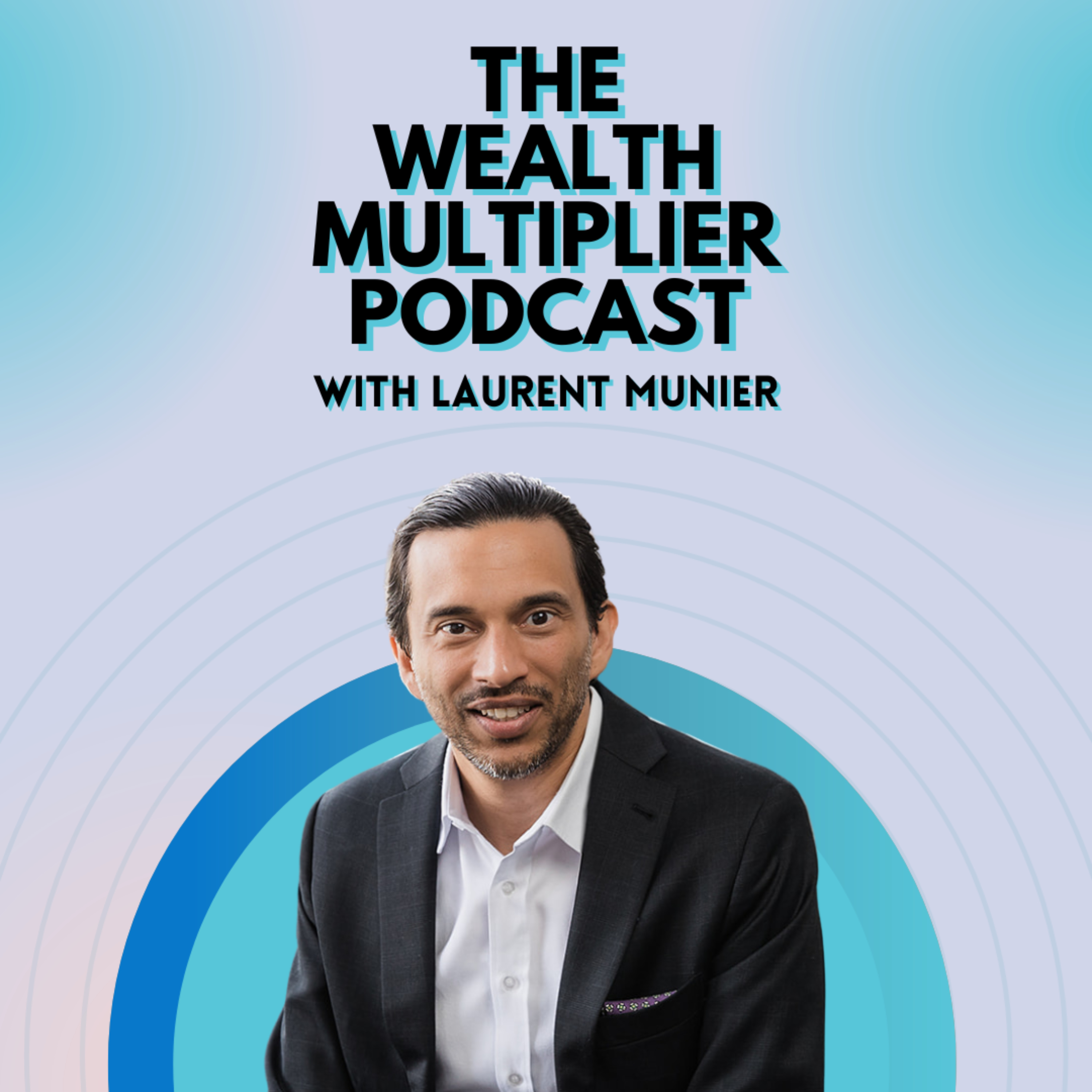
Corporate Tax Optimization for Business Owners
from The Wealth Multiplier Podcast Hosted by Safe Pacific
If you are an incorporated business owner in Canada, you have had this conversation with your accountant. Should I pay myself more salary or more dividends? You probably got some version of a default answer. Salary to the CPP maximum, then dividends for the rest. That question is real, but it is the wrong layer if it is the only one you are having. The actual optimization, the part where owners leave real money on the table, is happening above and below it. In this video, Laurent Munier, Partner and Advisor at Safe Pacific Financial, walks through three moves most business owners miss. None are aggressive, none are in a grey area, and all of them are built into the Canadian tax system. Book a discovery meeting: https://safepacific.com/discovery-schedule In this video, you will learn: - Why there is no universal right answer to salary versus dividends, and what actually drives it - The CPP question nobody answers honestly, and how to think about roughly $8,000 a year of combined contributions - What the Capital Dividend Account is, and why a balance may be sitting there unused right now - How the RDTOH refund works, and why the timing of a dividend matters - The AAII grind, and how passive income above $50,000 erodes your small business deduction at five to one - A worked example where the grind costs an owner about $60,000 a year in extra corporate tax - Why growth inside a corporately owned participating whole life policy does not count toward AAII - The Section 15 rules on shareholder loans, and how casual transfers become a tax problem - Why coordination between your accountant, advisor, and lawyer is where the real dollars are Timestamps: 0:00 Why salary versus dividends is the wrong layer 1:12 Meet Laurent Munier and Safe Pacific 1:18 The CPP question nobody answers honestly 2:14 Should you be contributing to CPP at all? 2:44 What CPP actually pays, and who it suits 3:22 Why the math differs for a successful owner 3:59 The variables that decide it for you 5:21 Move 2, the two notional accounts you should know 6:02 The Capital Dividend Account explained 7:28 Why a CDA balance often sits there unused 8:18 A $50,000 example, and the $20,000 tax you avoid 9:07 RDTOH, refundable dividend tax on hand 10:26 Why the timing of the refund matters 11:21 Move 3, the AAII grind 11:48 How the small business deduction works 12:25 The passive income rules and the five to one ratio 13:50 Real numbers, a $60,000 a year penalty 15:27 The structural exemption most owners never hear about 16:52 Shareholder loans and the Section 15 rules 18:58 The Smith Manoeuvre, briefly 20:50 How all of these pieces connect 22:58 Why decisions made in silos cost you 24:17 Bringing it all together 25:53 The quarterback role, and your next step 27:25 Before you go, like and subscribe When your corporate structure is reviewed as one picture, you can: - Decide the CPP and salary question on your numbers instead of a default - Take money out through the CDA tax-free instead of as a taxable dividend - Time dividends to recover the RDTOH balance sitting on your return - Keep growth out of the AAII calculation that erodes your small business rate - Keep shareholder loans documented and repaid before they become income - Stop paying for decisions that each looked reasonable in isolation Nothing here is tax or legal advice. Rates, thresholds, and the specifics of shareholder loan treatment depend on your province and your situation, and should be reviewed with your accountant. Book a discovery meeting: https://safepacific.com/discovery-schedule Get an email summary the moment each new video drops: https://safepacific.com/youtube-email GET STARTED https://safepacific.com/discovery-schedule/ SUBSCRIBE https://www.youtube.com/safepacific?sub_confirmation=1 INSTAGRAM https://www.instagram.com/safepacific/ LINKEDIN https://www.linkedin.com/company/safe-pacific-financial
Embed this episode
No transcript yet.