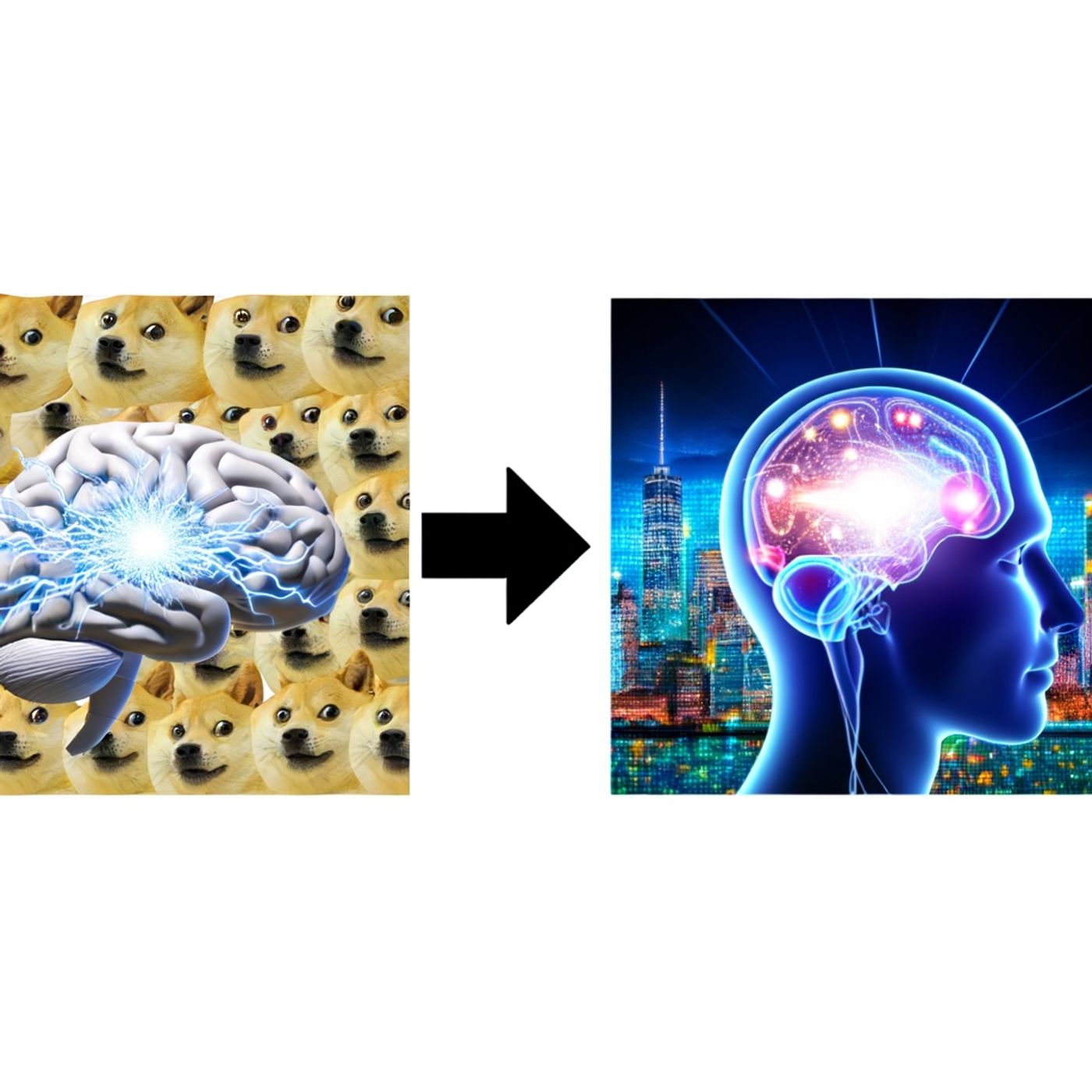
Could Dogecoin's Community Model Improve Government Efficiency and Public Innovation episode artwork

EPISODE · Jun 9, 2026 · 3 MIN

Could Dogecoin's Community Model Improve Government Efficiency and Public Innovation

from Gov Efficiency Beyond Meme: DOGE Thinking Work? · host Inception Point AI

The screen floods with Comic Sans captions, rainbow gradients, and that familiar Shiba Inu side‑eye: much wow, so coin, very hype. In a decade, the Doge meme has gone from internet in‑joke to a cryptocurrency with a multibillion‑dollar market cap and active integration into major payment rails, including a recent move that plugged Dogecoin into infrastructure behind platforms like PayPal and Venmo, expanding its reach to hundreds of millions of users worldwide. According to coverage of that deal, what started as a joke now quietly moves real money across borders. So what exactly is the “Doge phenomenon” we are going beyond? At its core are three elements: community, decentralization, and rapid action. Dogecoin’s creators never issued a grand manifesto; the energy came from a loosely coordinated swarm of people who tipped each other online, crowdfunded sponsorships, and rallied around causes simply because it felt fun and possible. Analysts consistently point to that community and brand recognition as the coin’s real asset, often more important than its underlying code. Decentralization plays out less as ideology and more as culture: no single spokesperson, no tight five‑year plan, but a network of volunteers, developers, and holders who can spin up initiatives quickly. And rapid action is baked into both the technology and the meme itself: fast block times, low fees, and a social environment where ideas are tried in days, not buried in committees for years. Could that logic improve government efficiency in unexpected ways? Not by turning public budgets into meme coins, but by borrowing Doge‑like patterns. Imagine small, capped “experiment budgets” where agencies can launch micro‑pilots in weeks, and a public dashboard lets communities “tip” attention and feedback toward what works, the way Doge holders rally around promising projects. Instead of one giant reform every decade, you get hundreds of tiny, visible experiments, where legitimacy comes from transparent outcomes and open participation. We already see “Doge Thinking” elsewhere. Open‑source software communities coordinate thousands of contributors without a central boss. Citizen science projects let volunteers classify galaxies or track pollution data at a scale no single lab could match. Some cities are testing participatory budgeting platforms that mirror crypto communities: proposals bubble up from residents, voting is digital, and funding is allocated in short, iterative cycles. These are all examples of community‑driven, decentralized, rapid action beyond traditional hierarchies. The question is whether governments can adopt that spirit without sacrificing accountability and equity. Can public institutions become more like experimental, meme‑aware networks while still protecting rights, due process, and long‑term planning? Or does the very absurdity that makes Doge powerful online break down when real‑world stakes are high? So, listeners, what do you think: does “Doge Thinking” have real potential for government innovation, or should it stay safely in the realm of memes and markets? Thank you for tuning in, and don’t forget to subscribe. This has been a quiet please production, for more check out quiet please dot ai. For more http://www.quietplease.ai Get the best deals https://amzn.to/3ODvOta

The screen floods with Comic Sans captions, rainbow gradients, and that familiar Shiba Inu side‑eye: much wow, so coin, very hype. In a decade, the Doge meme has gone from internet in‑joke to a cryptocurrency with a multibillion‑dollar market cap and active integration into major payment rails, including a recent move that plugged Dogecoin into infrastructure behind platforms like PayPal and Venmo, expanding its reach to hundreds of millions of users worldwide. According to coverage of that deal, what started as a joke now quietly moves real money across borders. So what exactly is the “Doge phenomenon” we are going beyond? At its core are three elements: community, decentralization, and rapid action. Dogecoin’s creators never issued a grand manifesto; the energy came from a loosely coordinated swarm of people who tipped each other online, crowdfunded sponsorships, and rallied around causes simply because it felt fun and possible. Analysts consistently point to that community and brand recognition as the coin’s real asset, often more important than its underlying code. Decentralization plays out less as ideology and more as culture: no single spokesperson, no tight five‑year plan, but a network of volunteers, developers, and holders who can spin up initiatives quickly. And rapid action is baked into both the technology and the meme itself: fast block times, low fees, and a social environment where ideas are tried in days, not buried in committees for years. Could that logic improve government efficiency in unexpected ways? Not by turning public budgets into meme coins, but by borrowing Doge‑like patterns. Imagine small, capped “experiment budgets” where agencies can launch micro‑pilots in weeks, and a public dashboard lets communities “tip” attention and feedback toward what works, the way Doge holders rally around promising projects. Instead of one giant reform every decade, you get hundreds of tiny, visible experiments, where legitimacy comes from transparent outcomes and open participation. We already see “Doge Thinking” elsewhere. Open‑source software communities coordinate thousands of contributors without a central boss. Citizen science projects let volunteers classify galaxies or track pollution data at a scale no single lab could match. Some cities are testing participatory budgeting platforms that mirror crypto communities: proposals bubble up from residents, voting is digital, and funding is allocated in short, iterative cycles. These are all examples of community‑driven, decentralized, rapid action beyond traditional hierarchies. The question is whether governments can adopt that spirit without sacrificing accountability and equity. Can public institutions become more like experimental, meme‑aware networks while still protecting rights, due process, and long‑term planning? Or does the very absurdity that makes Doge powerful online break down when real‑world stakes are high? So, listeners, what do you think: does “Doge Thinking” have real potential for government innovation, or should it stay safely in the realm of memes and markets? Thank you for tuning in, and don’t forget to subscribe. This has been a quiet please production, for more check out quiet please dot ai. For more http://www.quietplease.ai Get the best deals https://amzn.to/3ODvOta

NOW PLAYING

Could Dogecoin's Community Model Improve Government Efficiency and Public Innovation

0:00 3:46

No transcript for this episode yet

We transcribe on demand. Request one and we'll notify you when it's ready — usually under 10 minutes.

That Hoarder: Overcome Compulsive Hoarding That Hoarder Hoarding disorder is stigmatised and people who hoard feel vast amounts of shame. This podcast began life as an audio diary, an anonymous outlet for somebody with this weird condition. That Hoarder speaks about her experiences living with compulsive hoarding, she interviews therapists, academics, researchers, children of hoarders, professional organisers and influencers, and she shares insight and tips for others with the problem. Listened to by people who hoard as well as those who love them and those who work with them, Overcome Compulsive Hoarding with That Hoarder aims to shatter the stigma, share the truth and speak openly and honestly to improve lives. The Field Priest Methodius Chwastek The Field is a place of cultivation and of battle. In the Church, we learn to cultivate a life pleasing to God. This life is shaped in the spiritual battle. This series examines, chapter by chapter, the Christian classic The Field, by Saint Ignatius Brianchaninov. Please join me as I explain this great work in terms the modern Orthodox Christian can understand.  Humanizing Change Tremendousness Join us each episode as we talk with innovators in their respective fields about their unique journeys and how they humanize change in their own work, right here, on Humanizing Change. Tao Te Ching by Laozi (Author), Stephen Mitchell (Full Audiobook) Laozi Lao-tzu's Tao Te Ching, or Book of the Way, is the classic manual on the art of living, and one of the wonders of the world. In eighty-one brief chapters, the Tao Te Ching looks at the basic predicament of being alive and gives advice that imparts balance and perspective, a serene and generous spirit. This book is about wisdom in action. It teaches how to work for the good with the effortless skill that comes from being in accord with the Tao (the basic principle of the universe) and applies equally to good government and sexual love; to child rearing, business, and ecology.Stephen Mitchell's bestselling version has been widely acclaimed as a gift to contemporary culture.

Frequently Asked Questions

How long is this episode of Gov Efficiency Beyond Meme: DOGE Thinking Work??

This episode is 3 minutes long.

When was this Gov Efficiency Beyond Meme: DOGE Thinking Work? episode published?

This episode was published on June 9, 2026.

What is this episode about?

The screen floods with Comic Sans captions, rainbow gradients, and that familiar Shiba Inu side‑eye: much wow, so coin, very hype. In a decade, the Doge meme has gone from internet in‑joke to a cryptocurrency with a multibillion‑dollar market cap...

Can I download this Gov Efficiency Beyond Meme: DOGE Thinking Work? episode?

Yes, you can download this episode by clicking the download button on the episode player, or subscribe to the podcast in your preferred podcast app for automatic downloads.
URL copied to clipboard!