
EPISODE · Jul 4, 2026 · 16 MIN
Course 38 - Web Security Known Web Attacks | Episode 3: RFD, Mutation XSS, and RPO
from CyberCode Academy · host CyberCode Academy
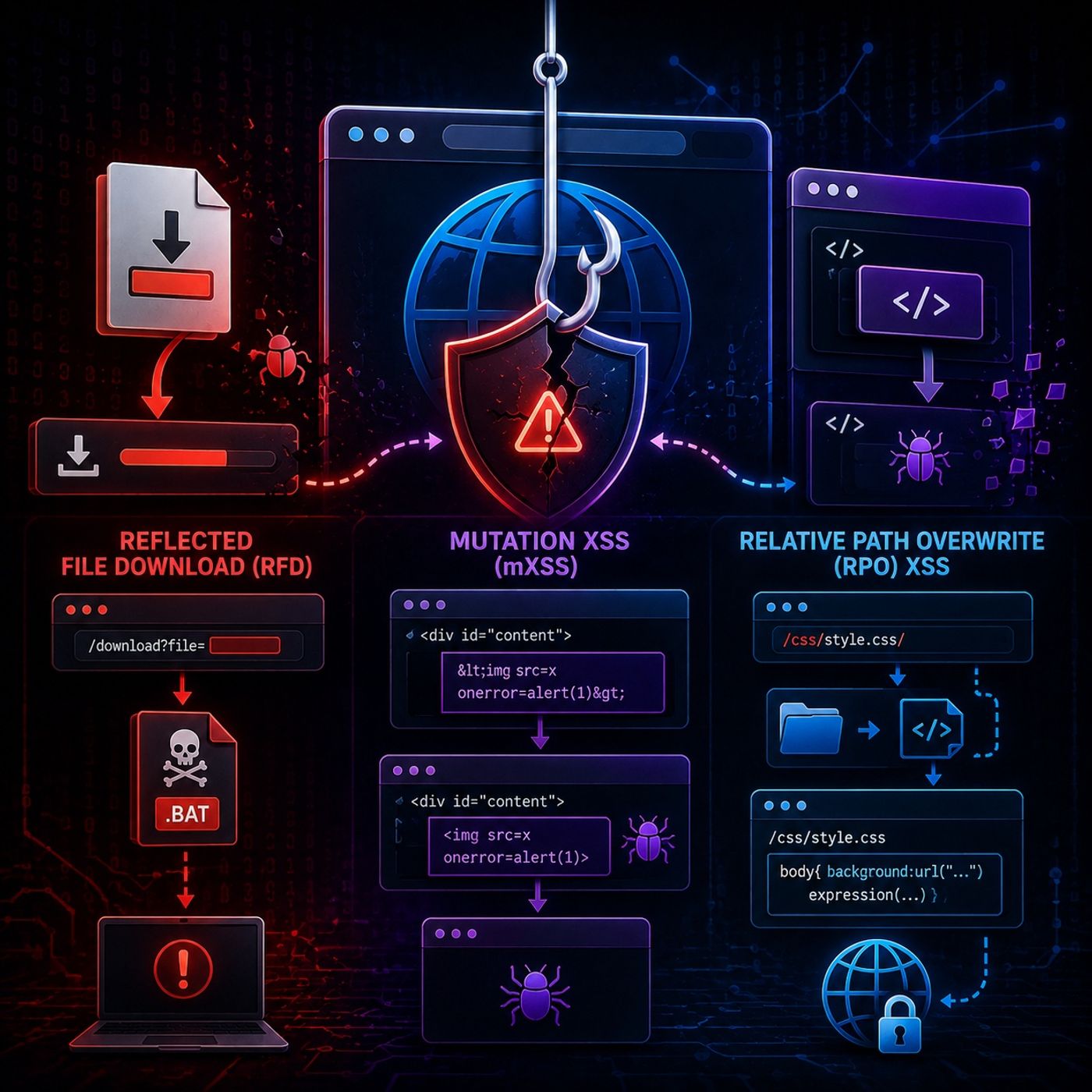
In this lesson, you’ll learn about: Reflected File Download (RFD), Mutation XSS (mXSS), and Relative Path Overwrite (RPO) XSS1. Reflected File Download (RFD)🔹 Definition:A vulnerability where user input is reflected into a response that the browser treats as a downloadable file🔹 How it works (high-level):Attacker crafts a URLServer reflects input into responseBrowser downloads it as a file (e.g., .bat, .cmd)👉 Key InsightThe attack relies more on social engineering than pure technical exploitation2. Why RFD is Dangerous🔹 Core risk:User executes a malicious file thinking it’s legitimate🔹 Attack characteristics:File appears trusted (same domain)Filename can be manipulatedContent may contain system commands👉 Key InsightTrust in the source (domain) is what makes this attack effective3. Advanced RFD Scenario🔹 More dangerous variant:Malicious script modifies browser behavior🔹 Example impact:Weakens browser protectionsEnables further data access👉 Key InsightRFD can act as an entry point for deeper compromise4. Mutation XSS (mXSS)🔹 Definition:A type of XSS where safe input becomes dangerous after browser processing🔹 Root cause:Browser mutates (transforms) HTML internally👉 Key InsightThe payload is not dangerous initially—it becomes dangerous after parsing5. How mXSS HappensUsing JavaScript:🔹 Scenario:Application inserts sanitized input into DOMBrowser reinterprets it via innerHTMLEncoded content becomes executable👉 Key InsightSecurity filters can fail due to DOM re-parsing behavior6. Why mXSS Is Tricky🔹 Challenges:Payload looks harmlessBypasses traditional filtersDepends on browser quirks👉 Key InsightmXSS exploits differences between sanitization and rendering7. Relative Path Overwrite (RPO) XSS🔹 Definition:Exploits how browsers resolve relative paths🔹 Core idea:Trick browser into loading wrong resource (e.g., HTML as CSS)👉 Key InsightPath confusion can lead to unexpected code execution contexts8. How RPO Works (Conceptually)🔹 Attack flow:Modify URL structure (e.g., add /)Break relative path resolutionForce browser to load unintended resource👉 Key InsightSmall URL changes can completely alter resource loading behavior9. CSS-Based Execution (Legacy Behavior)🔹 In older browsers:CSS supported dynamic expressions🔹 Result:Injected content could execute scripts through CSS parsing👉 Key InsightRPO relies heavily on legacy browser features10. Common Theme Across All Attacks🔹 These vulnerabilities exploit:Browser parsing logicTrust assumptionsInconsistent handling of content👉 Key InsightThe browser itself becomes part of the attack surface11. Why These Attacks Still Matter🔹 Even if partially outdated:Legacy systems still existMisconfigurations can reintroduce riskTechniques inspire modern attack methods👉 Key InsightOld vulnerabilities often evolve into new exploitation techniques12. Prevention Strategies🔹 General defenses:Strict input validation and output encodingAvoid reflecting raw user inputUse absolute paths instead of relative onesSet correct Content-Type headersEnforce modern browser security policies👉 Key InsightSecure design must consider both server and browser behaviorKey TakeawaysRFD abuses trust to deliver malicious filesmXSS exploits browser DOM mutationsRPO manipulates path resolution and parsingMany attacks rely on legacy browser behaviorDefense requires understanding how browsers interpret dataBig PictureYou are learning:👉 How client-side attacks go beyond simple XSS👉 How browsers can unintentionally enable exploits👉 How security must account for real-world behavior, not just codeMental ModelUser input → browser interpretation → unexpected transformation → exploitationYou can listen and download our episodes for free on more than 10 different platforms:https://linktr.ee/cybercode_academy
Embed this episode
Ready to play
Course 38 - Web Security Known Web Attacks | Episode 3: RFD, Mutation XSS, and RPO
No transcript for this episode yet
Similar Episodes
No similar episodes found.