
EPISODE · Jul 7, 2026 · 22 MIN
Course 39 - NodeJS Security Pentesting and Exploitation | Episode 1: From V8 Fundamentals to Namespace and Parameter Pollution
from CyberCode Academy · host CyberCode Academy
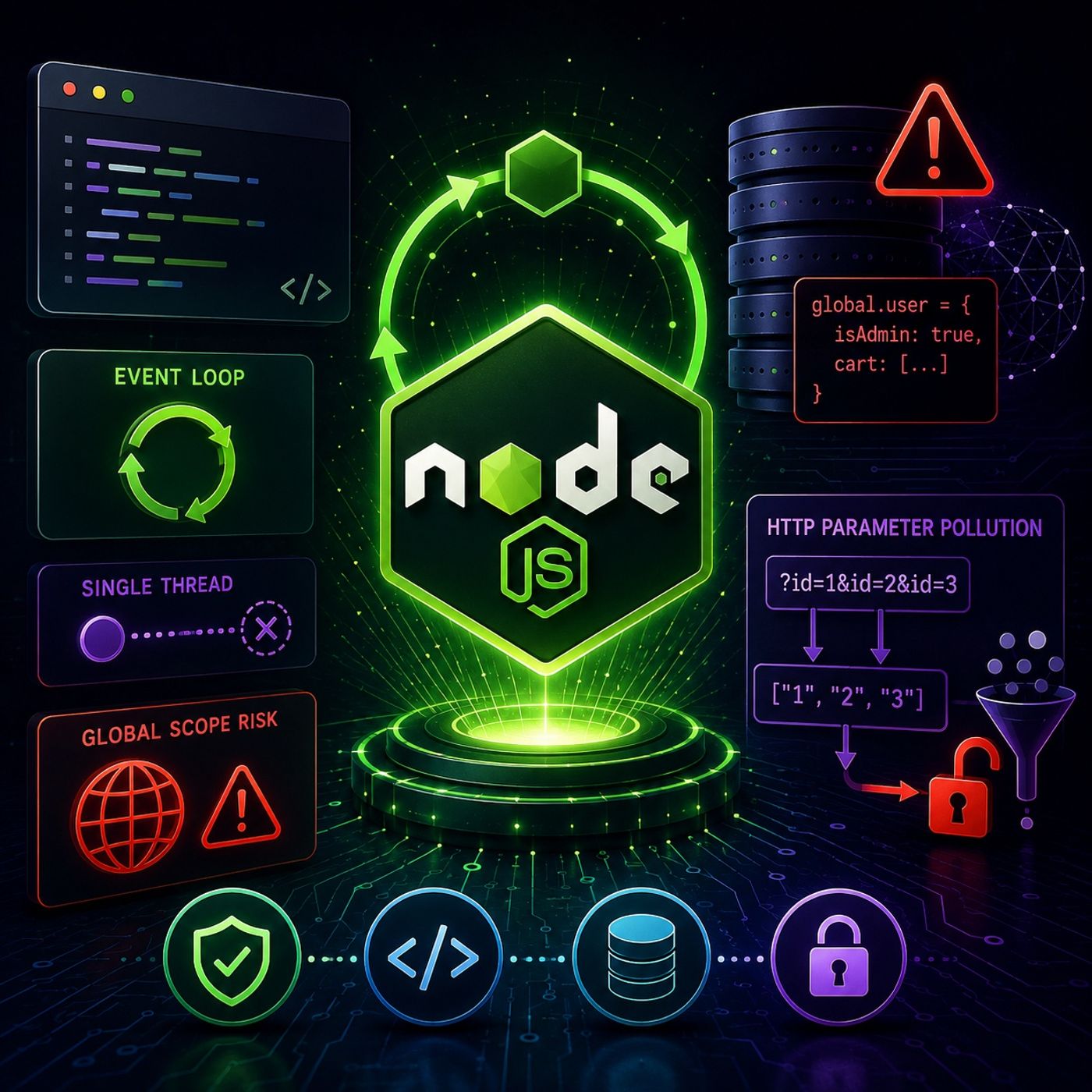
In this lesson, you’ll learn about: Node.js runtime architecture, single-threaded execution risks, global scope vulnerabilities, and HTTP Parameter Pollution (HPP)1. What is Node.js?🔹 Definition:A JavaScript runtime built on:Node.jsChrome V8 engine🔹 Purpose:Run JavaScript outside the browserBuild scalable server-side applications👉 Key InsightNode.js is not a framework—it’s a runtime environment2. Node.js Architecture🔹 Core model:Single-threadedEvent-drivenNon-blocking I/O🔹 How it works:One main event loop handles all requestsAsync tasks delegated to system threads👉 Key InsightIt scales well—but one bad crash can affect everything3. Single-Threaded Risk🔹 Problem:One runtime thread handles all requests🔹 What can go wrong:Uncaught exception → entire server stopsMemory leak → whole app affected👉 Key InsightScalability comes with system-wide fragility4. Global Namespace Pollution🔹 Definition:Variables declared globally in Node.js are shared across requests🔹 Risk in Express.js:Data leakage between usersShared state corruption🔹 Example risk:One user modifies a global variable affecting all users👉 Key InsightGlobal state in server apps = security vulnerability5. Why Global Variables Are Dangerous🔹 Issues:No request isolationCross-session data exposureHard-to-debug behavior👉 Key InsightServer logic must be stateless by design6. HTTP Parameter Pollution (HPP)🔹 Definition:Sending multiple values for the same parameterExample:?id=1&id=2 🔹 Node.js behavior:Captures all values as an array👉 Key InsightUnlike some frameworks, Node.js does not automatically collapse parameters7. Why HPP Becomes a Security Issue🔹 Risks:Bypass filtersConfuse validation logicManipulate backend decisions🔹 Example:WAF expects single value but receives array👉 Key InsightAmbiguous input = exploitable behavior8. Comparison With Other Systems🔹 Some frameworks:Take first valueOr last value🔹 Node.js:Keeps all values👉 Key InsightPredictability differences create security gaps9. Secure Coding Practices🔹 Recommendations:Avoid global variablesUse request-scoped data onlyValidate input as single/expected typeNormalize query parameters👉 Key InsightSecurity in Node.js = strict state control10. Big PictureYou are learning:👉 How Node.js architecture enables scalability👉 Why its design can introduce security risks👉 How input handling differences create vulnerabilitiesMental ModelEvent loop → shared runtime → global state risk → multi-value input → ambiguous parsing → exploitation opportunityYou can listen and download our episodes for free on more than 10 different platforms:https://linktr.ee/cybercode_academy
Embed this episode
Ready to play
Course 39 - NodeJS Security Pentesting and Exploitation | Episode 1: From V8 Fundamentals to Namespace and Parameter Pollution
No transcript for this episode yet
Similar Episodes
No similar episodes found.