
EPISODE · Aug 22, 2026 · 20 MIN
Course 40 - Web Scraping with Python | Episode 42: Web Authentication and Automated Form Input Submission
from CyberCode Academy · host CyberCode Academy
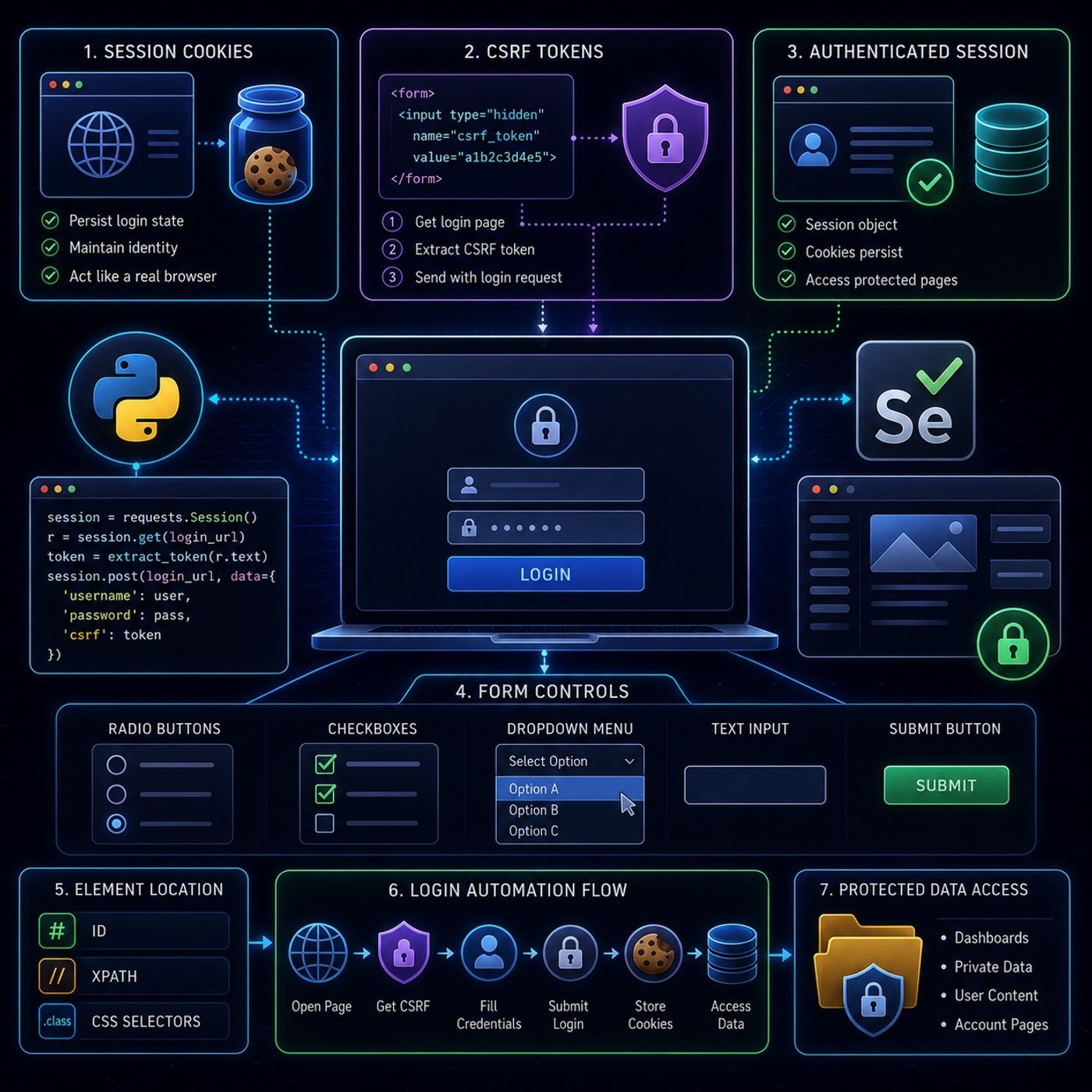
This episode is essentially about turning “login-protected websites” into programmable sessions and then controlling full form workflows like a real user.🔐 Core IdeaModern scraping stops being “download HTML” and becomes:“Authenticate → maintain session → interact → extract”This is the foundation of scraping anything behind a login wall.🍪 1. Session Cookies (Staying Logged In)🧠 What they are:Small identifiers stored after loginTell the server: “this is the same user”Without them:every request looks like a new visitorlogin state is lost immediately🐍 How requests handles itYou use a session object:session = requests.Session() Why this matters:cookies persist automaticallyall requests share authentication statemimics a real browser session🔥 Key insight:A session object = a “fake browser memory”🧾 2. CSRF Tokens (Hidden Security Gate)🧠 What they are:random hidden string in login formsprevents fake automated submissionsUsually found in:hidden fieldsform HTML source🕵️ How scraping handles it:Request login pageExtract CSRF token from HTMLInclude it in POST requestExample flow:# Step 1: get page r = session.get(login_url) # Step 2: extract token (XPath / parsing) token = extract_token(r.text) # Step 3: submit login session.post(login_url, data={ "username": "...", "password": "...", "csrf": token }) 🔥 Key insight:CSRF tokens force scrapers to behave like real browsers that “see” the page first🧭 3. Selenium for UI InteractionOnce login flows become JavaScript-heavy or interactive, requests is not enough.So Selenium is used for:real browser simulation🔘 4. Handling Form Controls🔵 Radio Buttonsonly one option selectableused for choices like gender, type, categoryAction:locate element.click()☑️ Checkboxesmultiple selections allowedtoggles true/false stateAction:click to toggle stateoptionally check if already selected📋 Dropdown MenusHandled using Selenium’s Select class:Options:select by visible textselect by value attributeselect by indexExample logic:from selenium.webdriver.support.ui import Select dropdown = Select(element) dropdown.select_by_visible_text("Option A") 🧠 5. Real Login Automation FlowThis episode combines everything into a full pipeline:Step-by-step:Open login page (Selenium or requests)Extract CSRF token (if exists)Fill credentialsSubmit formMaintain session (cookies)Access protected pagesExtract data⚙️ 6. Element Location StrategyTo interact with UI elements, you rely on:ID (best case)XPath (fallback, most powerful)CSS selectors🚨 7. Key Concept ShiftThis episode moves you from:Simple scraping:request pageparse HTMLTo authenticated automation:simulate login flowsmaintain identityinteract with UI controls🔥 Final TakeawayThe real skill here is:reconstructing the entire user authentication lifecycle in codeOnce you can:handle cookiesextract CSRF tokensautomate UI formsYou can access:dashboardsprivate data portalsaccount-based systemsdynamic user contentIf you want, I can next:combine ALL your episodes into a full advanced scraping architecture (professional blueprint)or show a real-world end-to-end system (login → scrape → clean → store → analyze)or design a portfolio-grade Scrapy + Selenium hybrid project for youYou can listen and download our episodes for free on more than 10 different platforms:https://linktr.ee/cybercode_academy
Embed this episode
Ready to play
Course 40 - Web Scraping with Python | Episode 42: Web Authentication and Automated Form Input Submission
No transcript for this episode yet
Similar Episodes
No similar episodes found.