
EPISODE · Aug 23, 2026 · 14 MIN
Course 40 - Web Scraping with Python | Episode 43: Mastering File Uploads and Reverse Image Search
from CyberCode Academy · host CyberCode Academy
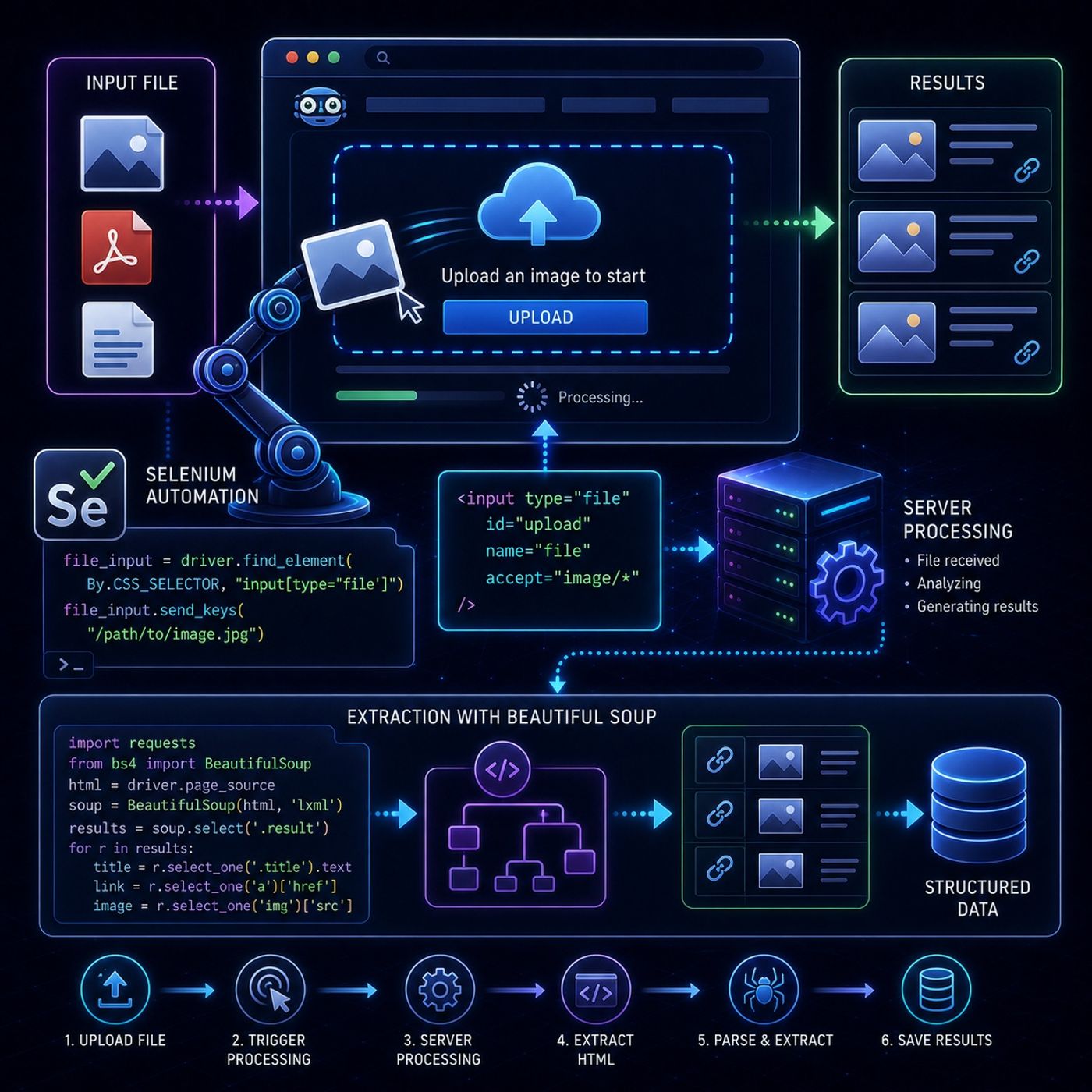
This episode is about a very specific but powerful capability in scraping:automating file uploads as part of a web interaction workflowIt sits at the intersection of browser automation + data extraction pipelines.📤 Core IdeaSome websites don’t just serve data — they require you to:upload a filetrigger processingthen return resultsSo scraping becomes:“submit file → wait for processing → extract generated output”📌 1. When File Upload Automation Is Needed🧠 Two real use cases:1) Content generation systemsupload input file (image, document, dataset)site processes itreturns generated report or resultsExamples:image analysis toolsdocument convertersscientific portals2) Gatekeeping / workflow restriction bypassupload required asset to continue navigation:resumeprofile imageverification fileWithout upload → no access to next page🔥 Key insight:File upload is often a hidden navigation step, not just data input🧭 2. Why Selenium is Required HereNormal HTTP tools (like requests) struggle because:file upload interacts with OS file pickerJavaScript handles upload triggersUI must be “physically simulated”So Selenium is used to mimic real browser behavior.📁 3. The Critical Mechanism: This is the key HTML element: Instead of clicking it and selecting a file manually…Selenium bypasses the dialog entirely.🐍 4. The Core Technique: send_keys()🧠 How it works:You directly send a local file path into the input field.file_input.send_keys("/path/to/image.jpg") 🚨 Important limitation:must be a valid local pathfile picker window is NOT usedSelenium cannot control OS dialogs🔥 Key insight:Upload automation = bypass GUI → inject file path directly into DOM🧪 5. Example Workflow (Reverse Image Search Case)Using a tool like TinEye:Step 1: open pageSelenium loads upload interfaceStep 2: locate file inputFind:element with type="file"Step 3: upload fileUse send_keys(path)Step 4: trigger processingSite automatically starts analysisStep 5: extract resultsNow switch to Beautiful Soup:parse returned HTMLextract:matching sitesimage sourcesmetadata🔄 6. Full Pipeline ArchitectureThis episode is really describing a 3-stage scraping flow:1. Interaction layer (Selenium)upload fileclick buttonstrigger server processing2. Network processing layer (server-side)file analyzedresults generated dynamically3. Extraction layer (Beautiful Soup)parse final HTMLextract structured results⚙️ 7. Why This Pattern MattersThis pattern appears in:reverse image search enginesAI document analyzersresume screening systemsfile validation services🧠 8. Core Concept ShiftThis episode moves you beyond “web scraping” into:automated workflow injectionYou’re no longer just extracting data — you’re:feeding inputs into systemstriggering computationharvesting outputs🔥 Final TakeawayFile upload scraping is about:turning browser-only workflows into programmable pipelinesAnd the key trick is simple but powerful:Selenium handles interactionfile path injection replaces manual upload dialogsBeautiful Soup handles result extractionYou can listen and download our episodes for free on more than 10 different platforms:https://linktr.ee/cybercode_academy
Embed this episode
Ready to play
Course 40 - Web Scraping with Python | Episode 43: Mastering File Uploads and Reverse Image Search
No transcript for this episode yet
Similar Episodes
No similar episodes found.