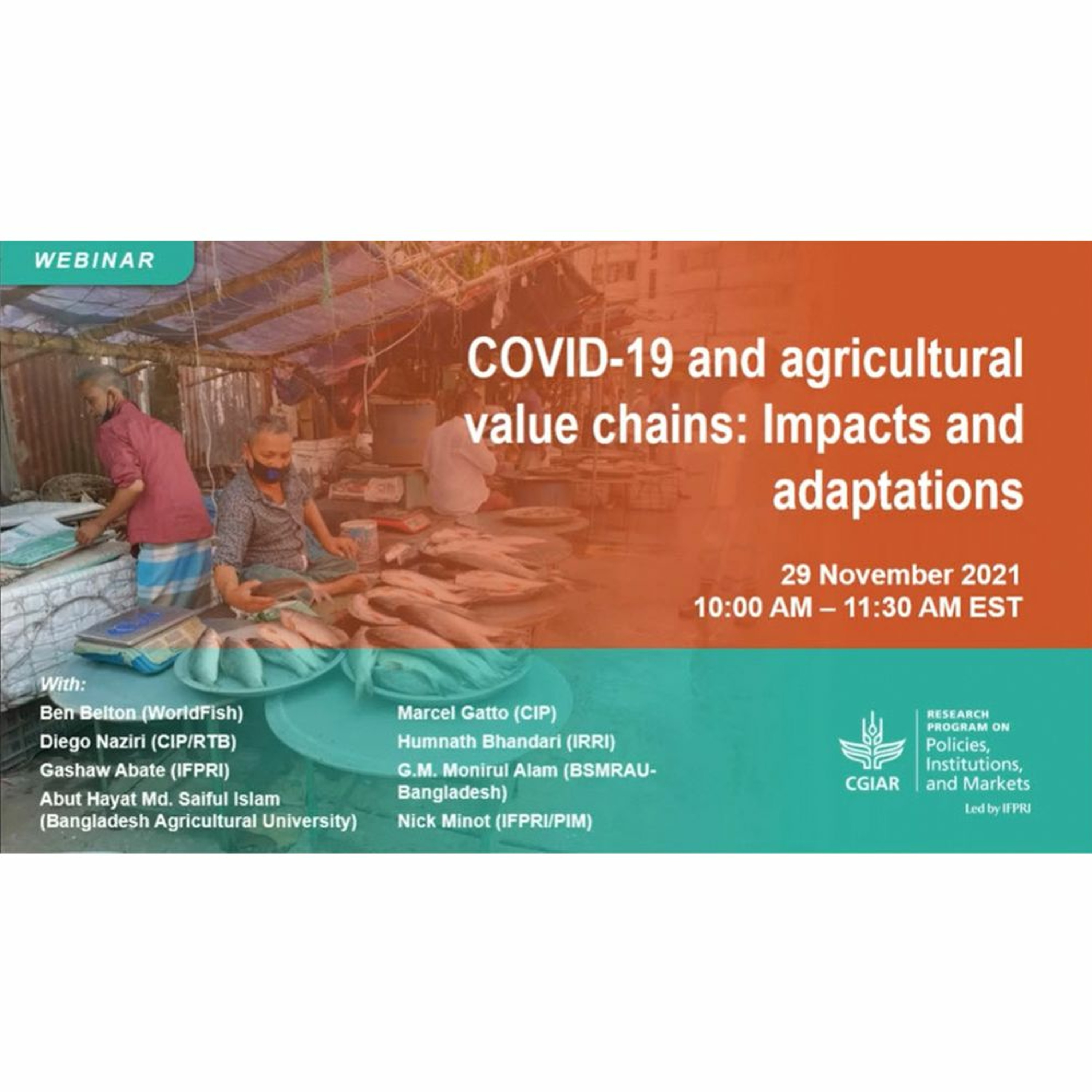
COVID-19 and agricultural value chains: Impacts and adaptations episode artwork

EPISODE · Nov 28, 2021 · 1H 30M

COVID-19 and agricultural value chains: Impacts and adaptations

from IFPRI Podcast · host International Food Policy Research Institute

PIM Webinar COVID-19 and agricultural value chains: Impacts and adaptations November 29, 2021 In 2020, researchers working under “Inclusive and Efficient Value Chains” (https://pim.cgiar.org/research/f3/) flagship under the CGIAR Research Program on Policies, Institutions, and Markets (PIM) developed a set of standardized questionnaires for assessing the impact of COVID-19 on agricultural value chains. The set includes questionnaires for farmers, traders, and processors. Despite their brevity (interview time of 25 minutes), the questionnaires cover the impact on scale of operations, employment, input use, production, small enterprise closures, profits, and welfare and food security of proprietors. They have been applied to eight value chains in Central America, Africa, and Asia. To deepen the understanding of how agri-food value chains have been adapting to the new reality, in 2021, the CGIAR COVID-19 Hub (https://a4nh.cgiar.org/covidhub/covid-hub-focus-addressing-value-chain-fractures/) working group on value chains issued a call for proposals on the theme of “Assessing the effectiveness of innovations and measures in maintaining agri-food value chains functional during COVID-19.” In this webinar, we will present some major findings of these studies in Kenya, Ethiopia, and Bangladesh. Ben Belton (WorldFish) and Diego Naziri (CIP) will present how small-scale traders, wholesalers and processors in the potato and fish value chains in Kenya have pivoted to cope with and adapt to the changing circumstances brought by the COVID-19 pandemic. Gashaw Abate (IFPRI) will present on the performance of Ethiopia’s coffee value chain during the COVID-19 pandemic. Abut Hayat Md. Saiful Islam (Bangladesh Agricultural University) and Marcel Gatto (CIP) will provide insights into the impacts of COVID-19 on several actors in value chain for potato in Bangladesh. Humnath Bhandari (IRRI) and G.M. Monirul Alam (BSMRAU-Bangladesh) will discuss the major impacts of COVID-19 on the rice and fish value chains in Bangladesh, focusing on the government interventions, how value chain actors adapted, and what lessons have been learnt. Presenters: Ben Belton - Global Lead, Social and Economic Inclusion, WorldFish Diego Naziri – value chain and postharvest specialist, International Potato Center (CIP); Leader of “Nutritious Food and Value Added through Post-harvest Innovation” research flagship in the CGIAR Research Program on Roots, Tubers and Bananas (RTB) Gashaw Tadesse Abate - Research Fellow at the International Food Policy Research Institute (IFPRI). Abut Hayat Md. Saiful Islam – Professor at Department of Agricultural Economics at Bangladesh Agricultural University in Mymensingh, Bangladesh. Marcel Gatto – Agricultural Economist at the International Potato Center (CIP). Humnath Bhandari - Senior Agricultural Economist and Country Representative, IRRI Bangladesh. G.M. Monirul Alam - Professor, Faculty of Agricultural Economics and Rural Development, Bangabandhu Sheikh Mujib Rahman Agricultural University, Gazipur, Bangladesh. Discussant: Sudha Narayanan, Research Fellow, South Asia Regional Office, International Food Policy Research Institute (IFPRI) Moderator: Nicholas Minot, Senior Research Fellow at the International Food Policy Research Institute (IFPRI) and co-leader of PIM Flagship3 on Efficient and Inclusive Value Chains. Learn more and access presentations: https://bit.ly/3DN18in Other webinars from the CGIAR Research Program on Policies, Institutions, and Markets (PIM): http://bit.ly/PIM-Webinars

PIM Webinar COVID-19 and agricultural value chains: Impacts and adaptations November 29, 2021 In 2020, researchers working under “Inclusive and Efficient Value Chains” (https://pim.cgiar.org/research/f3/) flagship under the CGIAR Research Program on Policies, Institutions, and Markets (PIM) developed a set of standardized questionnaires for assessing the impact of COVID-19 on agricultural value chains. The set includes questionnaires for farmers, traders, and processors. Despite their brevity (interview time of 25 minutes), the questionnaires cover the impact on scale of operations, employment, input use, production, small enterprise closures, profits, and welfare and food security of proprietors. They have been applied to eight value chains in Central America, Africa, and Asia. To deepen the understanding of how agri-food value chains have been adapting to the new reality, in 2021, the CGIAR COVID-19 Hub (https://a4nh.cgiar.org/covidhub/covid-hub-focus-addressing-value-chain-fractures/) working group on value chains issued a call for proposals on the theme of “Assessing the effectiveness of innovations and measures in maintaining agri-food value chains functional during COVID-19.” In this webinar, we will present some major findings of these studies in Kenya, Ethiopia, and Bangladesh. Ben Belton (WorldFish) and Diego Naziri (CIP) will present how small-scale traders, wholesalers and processors in the potato and fish value chains in Kenya have pivoted to cope with and adapt to the changing circumstances brought by the COVID-19 pandemic. Gashaw Abate (IFPRI) will present on the performance of Ethiopia’s coffee value chain during the COVID-19 pandemic. Abut Hayat Md. Saiful Islam (Bangladesh Agricultural University) and Marcel Gatto (CIP) will provide insights into the impacts of COVID-19 on several actors in value chain for potato in Bangladesh. Humnath Bhandari (IRRI) and G.M. Monirul Alam (BSMRAU-Bangladesh) will discuss the major impacts of COVID-19 on the rice and fish value chains in Bangladesh, focusing on the government interventions, how value chain actors adapted, and what lessons have been learnt. Presenters: Ben Belton - Global Lead, Social and Economic Inclusion, WorldFish Diego Naziri – value chain and postharvest specialist, International Potato Center (CIP); Leader of “Nutritious Food and Value Added through Post-harvest Innovation” research flagship in the CGIAR Research Program on Roots, Tubers and Bananas (RTB) Gashaw Tadesse Abate - Research Fellow at the International Food Policy Research Institute (IFPRI). Abut Hayat Md. Saiful Islam – Professor at Department of Agricultural Economics at Bangladesh Agricultural University in Mymensingh, Bangladesh. Marcel Gatto – Agricultural Economist at the International Potato Center (CIP). Humnath Bhandari - Senior Agricultural Economist and Country Representative, IRRI Bangladesh. G.M. Monirul Alam - Professor, Faculty of Agricultural Economics and Rural Development, Bangabandhu Sheikh Mujib Rahman Agricultural University, Gazipur, Bangladesh. Discussant: Sudha Narayanan, Research Fellow, South Asia Regional Office, International Food Policy Research Institute (IFPRI) Moderator: Nicholas Minot, Senior Research Fellow at the International Food Policy Research Institute (IFPRI) and co-leader of PIM Flagship3 on Efficient and Inclusive Value Chains. Learn more and access presentations: https://bit.ly/3DN18in Other webinars from the CGIAR Research Program on Policies, Institutions, and Markets (PIM): http://bit.ly/PIM-Webinars

NOW PLAYING

COVID-19 and agricultural value chains: Impacts and adaptations

0:00 1:30:37

No transcript for this episode yet

We transcribe on demand. Request one and we'll notify you when it's ready — usually under 10 minutes.

That Hoarder: Overcome Compulsive Hoarding That Hoarder Hoarding disorder is stigmatised and people who hoard feel vast amounts of shame. This podcast began life as an audio diary, an anonymous outlet for somebody with this weird condition. That Hoarder speaks about her experiences living with compulsive hoarding, she interviews therapists, academics, researchers, children of hoarders, professional organisers and influencers, and she shares insight and tips for others with the problem. Listened to by people who hoard as well as those who love them and those who work with them, Overcome Compulsive Hoarding with That Hoarder aims to shatter the stigma, share the truth and speak openly and honestly to improve lives. The Small Business Startup School – Business Notes | Financial Literacy | Retail Psychology – For Professionals & Entrepreneurs The Small Business Startup School Inc. Starting or buying a small business? While personal circumstances may vary, business patterns remain timeless. On The Small Business Startup School, we explore strategies, insights, and practical solutions to help entrepreneurs confidently navigate their journey.Hosted by Ola Williams—a retail entrepreneur, fintech founder, and financial coach with over two decades of experience—this podcast marries financial awareness and retail psychology with optimism to deliver actionable takeaways.Join us to learn, grow, and connect as we uncover the keys to business success.Let’s continue to learn together and be encouraged to keep on connecting! DIOSA. Carolina Sanper This podcast is a sacred space created by Carolina Sanper where you connect with your inner wisdom and embody your magnetic feminine power.It is the realization that the mystical realm is where you plant the seeds of your desired reality.It is a portal to your true essence: awareness, presence, and receiving with ease. Welcome home, DIOSA. 🖤 XXX Tech by SOVRYN Dr. Brian Sovryn The crossroads between technology, sensuality, and metaphysics - and the longest running anarchist podcast in the world! Brought to you by Dr. Brian Sovryn.

Frequently Asked Questions

How long is this episode of IFPRI Podcast?

This episode is 1 hour and 30 minutes long.

When was this IFPRI Podcast episode published?

This episode was published on November 28, 2021.

What is this episode about?

PIM Webinar COVID-19 and agricultural value chains: Impacts and adaptations November 29, 2021 In 2020, researchers working under “Inclusive and Efficient Value Chains” (https://pim.cgiar.org/research/f3/) flagship under the CGIAR Research Program...

Can I download this IFPRI Podcast episode?

Yes, you can download this episode by clicking the download button on the episode player, or subscribe to the podcast in your preferred podcast app for automatic downloads.
URL copied to clipboard!