
EPISODE · Sep 5, 2026 · 21 MIN
Cracking the Belgian Code: Independence, Isolation, and the Art of Connection
from Daily WTF!
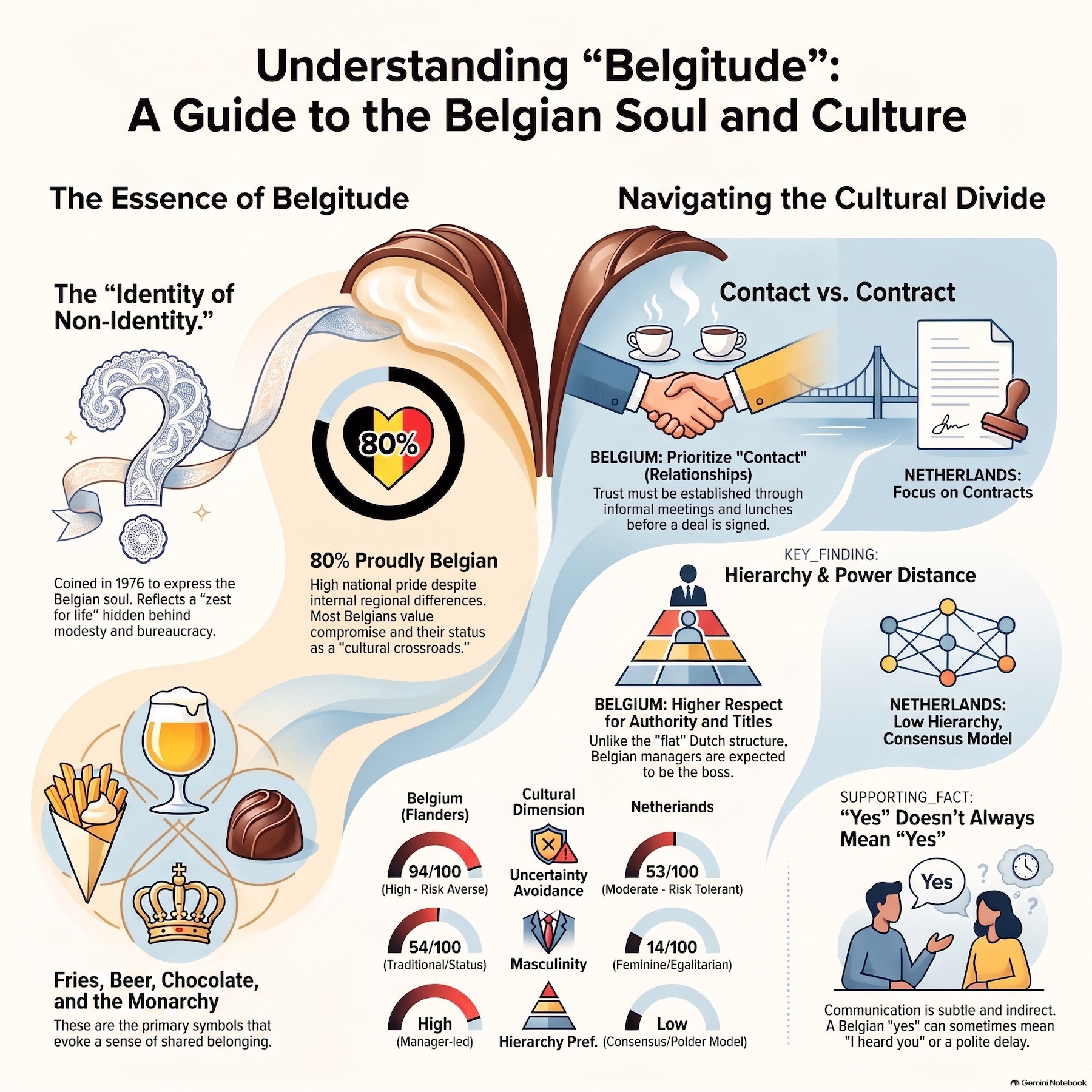
This deep dive explores the paradoxical soul of Belgium—a nation that offers unmatched safety and independence for travelers, yet presents a notoriously difficult social landscape to penetrate.The Identity of Non-IdentityConcept of Belgitude: Coined in 1976 and adapted from the Négritude movement, Belgitude describes a national identity defined by the very absence of a unified, boastful identity.Shared Passions over Shared Language: Lacking a single common language across its Flemish, Walloon, and German-speaking communities, Belgium is bound together by shared cultural loves: fries, trappist beer, chocolate, surrealism, and comic art.Solo Safety vs. Social IsolationEmpowering Independence: Cities like Brussels provide a low-pressure environment where solo travelers, particularly women, enjoy high levels of safety, excellent public transit, and a respectful culture that lets people simply "be".The Invisible Wall: That same respect for personal space creates a massive barrier for expats trying to settle long-term. Studies show only 25% of expats find it easy to make local friends.Compartmentalization: Belgians tend to keep tight-knit friend groups formed in youth and strictly separate work life from personal life. Social spontaneity is rare; gatherings are planned weeks in advance.Cultural Clashes: Belgium vs. The NetherlandsHigh-Context vs. Low-Context: The Dutch favor direct, explicit communication (low-context). Belgians operate in a high-context culture, relying on implicit cues, reading between the lines, and prioritizing social harmony.Contact vs. Contract: In business, Dutch professionals focus on getting straight to the contract. Belgians require long, relationship-building lunches to establish personal trust (contact) before diving into business.Hierarchy and Egalitarianism: The Dutch operate on a flat "polder model" where even CEOs maintain modest personas. Belgium maintains a stricter hierarchy where titles, status, and formal respect (you/u) carry significant weight.The Root Cause: History and Uncertainty AvoidanceUncertainty Avoidance: On Geert Hofstede's scale, Belgium scores an extreme 94/100 for Uncertainty Avoidance (compared to the Netherlands' 53). Belgians actively construct rigid routines and rules to avoid unpredictable situations.Historical Survival: Centuries of foreign invasions (Spanish, French, Austrian, German) taught Belgians generational survival skills: keep your head down, mistrust foreign authorities, and rely strictly on a tight inner circle.The Western Epidemic: VraagverlegenheidThe Paradox of Welfare: Sociological research shows that robust welfare states professionalize care, making citizens hyper-individualized.Asking for Help: This environment fosters Vraagverlegenheid—a deep hesitation to ask for, offer, or accept help from neighbors, treating vulnerability as a stigma.Breaking Through To build lasting connections in Belgium, outsiders must demonstrate long-term commitment—learning the local language, joining structured clubs, and showing patience. Ironically, the most effective way to break down a Belgian's cultural armor may be to embrace vulnerability by simply asking for a small favor.
Embed this episode
Ready to play
Cracking the Belgian Code: Independence, Isolation, and the Art of Connection
No transcript for this episode yet
Similar Episodes
No similar episodes found.
Similar Podcasts
No similar podcasts found.