
EPISODE · Dec 18, 2025 · 1H 8M
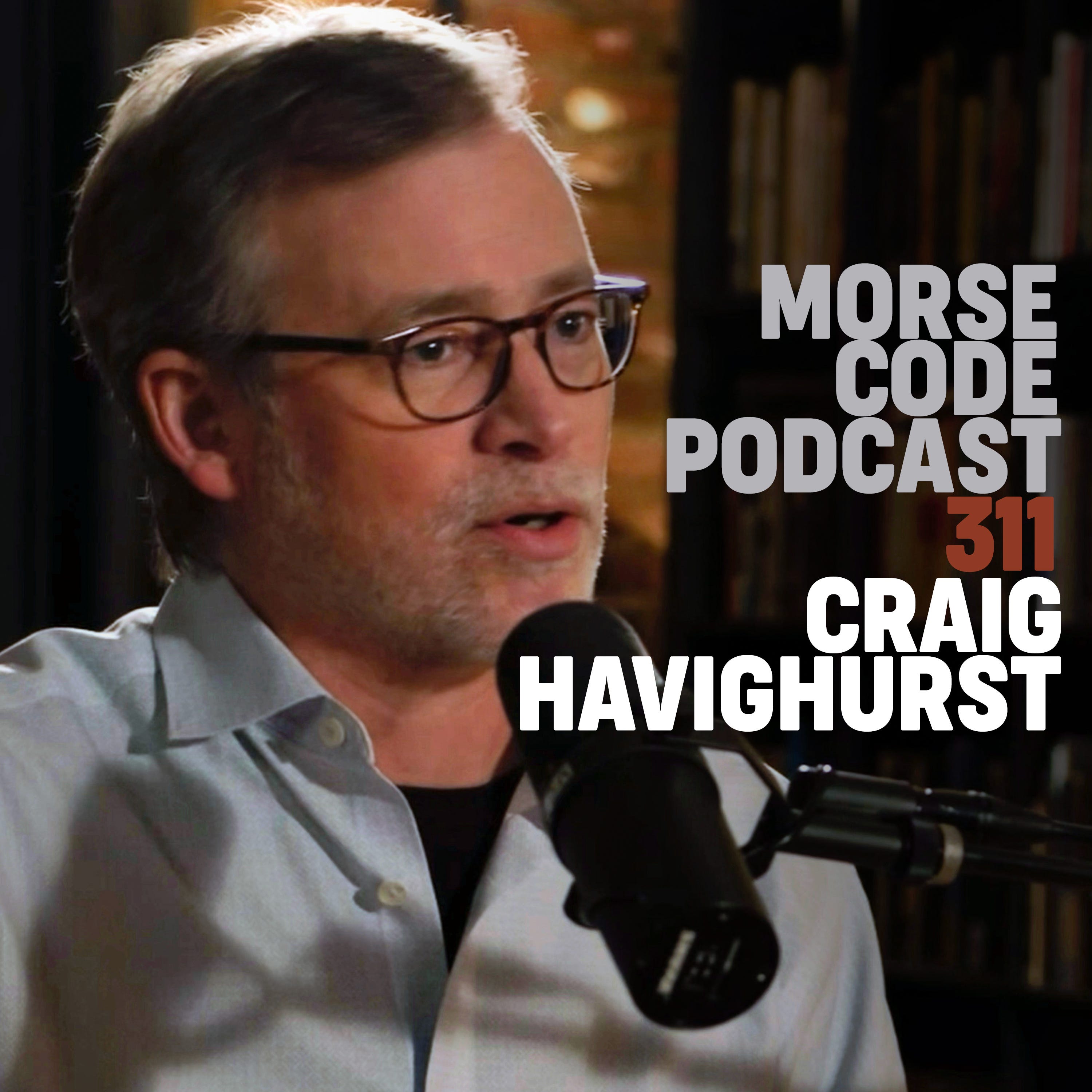
Craig Havighurst - Listening Is a Creative Act | MCP #311
from Morse Code Podcast with Korby Lenker · host Korby Lenker and Craig Havighurst
Why does music move us — and why do we so often stop listening?On this episode of The Morse Code Podcast, Korby sits down with journalist, musician, and Musicality for Modern Humans author Craig Havighurst to talk about the art of deep listening: how attention, empathy, and vulnerability shape not just how we hear music, but how we live.They explore the decline of music education, the rise of algorithmic culture, and why America’s musical legacy is both unmatched and under-heard. Craig shares stories from decades in the field and offers a compelling case for why listening — really listening — still matters.Genres discussed: jazz, classical, bluegrass, jam bands, pop.Themes: creative attention, cultural shifts, musical literacy.Joy Fatigue and the Return of MysteryBasic to my intention — with this podcast, with the Morse Code project generally, and even in my actual writing and music — is my desire to encourage and inspire people to make art a part of their own lives. Sometimes that takes the form of me breaking down a piano arrangement for a Gillian Welch song, or just sharing a meaningful family moment with as much detail as I can. The underlying intention is pretty simple. I want people to feel more alive. I want to bring some kind of encouraging spirit to a world that can be cold and mean and worst of all, boring.It was obvious talking to Craig that he shares a version of that desire. Early on in Musicality for Modern Humans he makes a claim that it’s musicians that listen most intently to music. For Craig the guys you see at the club, nodding along with fixed stares and arms crossed— those guys are the gold standard. Craig wants you to listen with that same intensity, background knowledge, technical finesse — and he has some practical ideas on how to increase your sensitivity to music’s deeper pleasures.So yay I’m a musician who listens with some of the active ingredients Craig wants to put in everyone’s gigbag. But coming off this taping, I realized something serious: I have a lot to learn.First, a caveat: I probably do listen with more active attention than, say, your average Swifty. I mean, ever since I was exposed to the circle of fifths (and its more practical cousin, the Nashville number system), I can’t hear a song without automatically clocking its chord progression. For most of the songs you and I listen to, that’s not very hard. Still, I suppose that puts me more in the green room than the mezzanine.But I’m here to tell you: I don’t listen to nearly as much music as I should.Why is that?A couple reasons come to mind, one obvious, one ridiculous and maybe damning.First: I’m overwhelmed by the options. Maybe you handle this better but me? I’m drowning in choice. When you have access to everything, how do you pick anything? I’m seriously asking. For my part, I try to listen to my friends’ songs when they come, out or an album of a familiar band whose last album I liked. Mostly I go to shows and discover music live. It doesn’t hurt that I live within walking distance to two of my favorite clubs, The Basement East and the Five Spot.But honestly, and maybe this is a Gen X thing, clicking on a screen to hear digital music is just cold and sad. It doesn’t help that I had a terrible experience with in the early 2000s. Punchline: after spending thousands of dollars on iTunes purchases to replace the CDs of some of my favorite bands, my hard drive failed one day and I lost everything. I don’t think The Cloud existed back then, though I wouldn’t be surprised if it did and I was just oblivious. Either way it hurt my feelings. I’m probably still recovering from it 20 years later, good god.And for someone who grew up with physical albums — that beautiful artwork and the credits and all the ancillary bits that came with the actual music — that was part of the lore. If you’re over forty you know what I’m talking about. A track name on an iPod? Please. And even now with a one inch cover “image” someone made on their phone — I can’t see it as anything but a impoverishment of an earlier romance.But the other reason I don’t listen to enough music is, for me, it requires a lot. A lot of active attention. I’m not one of those people who can read or write or think while any kind of music plays in the background. I don’t go to coffee shops to study. My ideal workplace is a tomb. No seriously, you should see where I’m sitting right now.Whenever I listen to music, it’s almost always intentional. And if I’m being honest, after doing this for 25 years, it’s usually work. Especially when I listen to something for the first time. I’m embarrassed to write this. I hardly like anything (music, books, movies yeah I’m a real charmer), so listening to music usually means trying to pick out what’s good from everything dull and average, from all the almosts that collectively make it just another song.I think part of the reason why I have a few other pursuits — writing and filmmaking, in addition to music — is to mitigate the negative effects of what I’ll call joy fatigue.There’s probably a better way to put this, but for me, joy fatigue is where the repetition of an activity diminishes its original magic.Twenty five years ago, when I was really trying to be a good flatpicking guitar player, I experienced my first onslaught of joy fatigue. The first time it happened I thought it was a fluke. The second was startling. And then it kept happening. I would hear some amazing lick — Tony Rice or Norman Blake or David Grier — and know that I absolutely had to learn it. Had to get it in my hands. A few hours later, or a day, or a week, I would have it. That amazing incendiary lick. Except — a little of the magic disappeared. Knowing how to play the thing removed some of its essential mystery. Does that make sense? Is there something wrong with me? Do you have any examples of joy fatigue?I brought this up with Craig — the first problem of not knowing what to listen to. The second one I kept to myself.He shared a few strategies, one of which was to visit tastemakers and see what their recommendations were. He pointed to Ted Goia, who happens to be the number one substack in the category of music. Don’t get me wrong. I have really enjoyed a lot of Ted’s writing and his insights. But when he posts the top 100 songs of 2025, I’m like, “How is that even helpful at all? One hundred is ninety too many.” Also how does this guy have time to listen to so much music that he can come up with a hundred examples? If you listen to the podcast, you’ll hear Craig relay that Ted listened to more than 600 albums, or something. I don’t know what the exact number is, but it’s way more than any other person on planet Earth, I can almost guarantee it.So, for we mere mortals, I guess we’re stuck with however we’ve been doing it. I have no comfort to offer.But what I want to say is, I felt challenged by the conversation with Craig, and more importantly I felt a glimmer of hope during the taping. A moment that came and went and left me thinking that maybe, just maybe, I can listen to a song without straining to figure out what’s right and wrong with it.We were talking about something Craig shared in the book’s introduction, a formative moment in his childhood when for the first time music came utterly alive. It’s a great piece of writing, and while we were talking, I asked if we could listen to the song he described, a piece by the German composer Richard Strauss called Der Rosenkavalier, Opus 59.Jared cued it up and cranked the volume. There was a long beat, and suddenly I was sitting quietly across the table from another human being just, enjoying the music. Here’s that moment.I wasn’t charting the chords. I wasn’t listening for weak lyrics. I was listening. With 100% attention and an open heart.Guys, it was sublime. I could hear the swooping cellos below and the laughing violins above and I could hear the way the double basses moved like big lumbering animals. The tempo hastened and then changed its mind. I could hear the individual lines of music and how they played with each other. I don’t know how to describe it — the music moved like water sloshing in a bathtub. And I was listening, all the way.It’s been a long time since something like that happened, at least with music. To just give yourself to a thing without thinking or judging or learning even. To give yourself all the way to a piece of music and let it do the steering.Probably the highest achievement any piece of art can give its audience the experience of being absolutely present. So much of the time, the podcast tends — like any conversation - to circle around the thing rather than embody it. This little moment Craig and I shared was something else. It was the actual thing.Hoping for more of these moments. Thanks for sharing this one. Get full access to Morse Code with Korby Lenker at korby.substack.com/subscribe
Embed this episode
NOW PLAYING
Craig Havighurst - Listening Is a Creative Act | MCP #311
No transcript for this episode yet
Similar Episodes
No similar episodes found.
Similar Podcasts
No similar podcasts found.