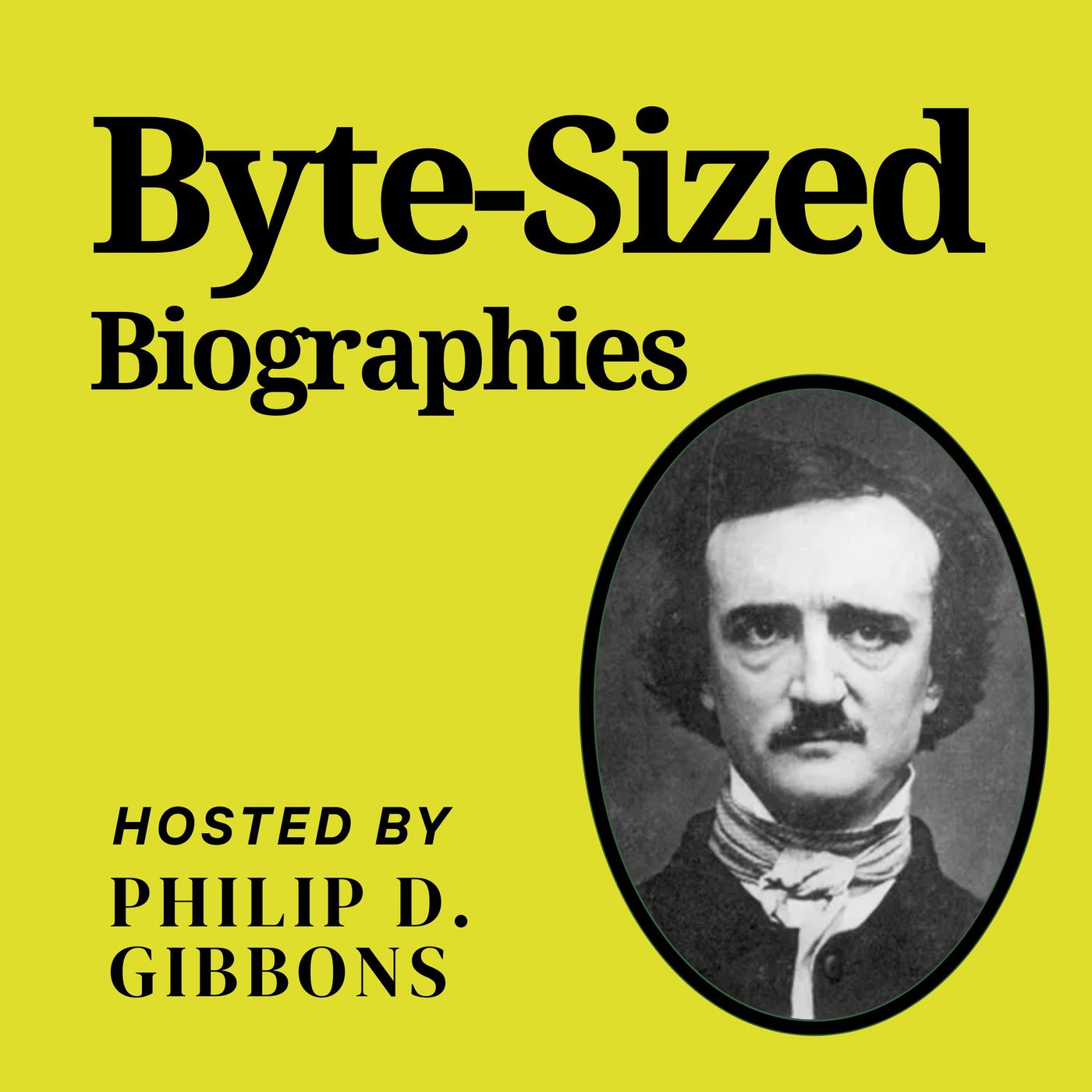
Crazy Horse, One of a Kind (Part One) episode artwork

EPISODE · Nov 6, 2019 · 52 MIN

Crazy Horse, One of a Kind (Part One)

from Byte Sized Biographies… · host Philip D. Gibbons

In life, a prominent Lakota warrior chieftain, in death, an American legend No photo of Crazy Horse has ever been authenticated, this sketch was verified by his sister after his death Most likely, Crazy Horse was born in the spring of 1840, in the Black Hills of western South Dakota, near Rapid City.  His father was a member of the Oglala clan, also named Crazy Horse, and his mother, Rattle Blanket Woman was a Minniconju. Marcus Reno The Lakotas and Cheyenne were generally aware of the federal presence but believed that only a fool would attempt to attack such a large and powerful position.  But, at 3 PM, attack Custer did, ordering 140 cavalry on horseback under the command of Major Marcus Reno to engage the south side of the giant native village on the western shoreline of the Little Bighorn River.  Custer planned to take his command of 200 men and proceed along the river, ultimately leading an attack upon the northern side of the village.  Frederick Benteen Custer’s strategy, relying on his own success at the Washita and other battlefield experience, was simple.  He divided his 12 companies into three units.  Three companies commanded by Major Marcus Reno would attack the encampment from the South, Three would be commanded by Captain Frederick Benteen, held in reserve to pursue any subsequent advantage and five units would be lead by Custer himself, attacking the village from the North.  One unit would be held behind to customarily protect the regiment wagon train of material and ammunition. General George A. Custer Although weakened and disorganized, Crazy Horse and other non-treaty natives were adamant that they would not move on to a reservation.  Perhaps as a further attempt to intimidate them, in 1874, Phil Sheridan ordered General Custer to march directly into the Black Hills with a force of over one thousand well-equipped soldiers.  Accompanying the expedition were mining engineers who quickly determined that the entire region was replete with sizable gold deposits.  Custer, a shameless self promoter, also travelled with several journalists who wasted no time in informing an economically challenged American population that gold was everywhere in the Black Hills.  He Dog, 1877 Unlike previous incidents, this time there was some warning of an attack and as Reno approached, numerous warriors on foot and on horseback rapidly emerged to bring this assault to an immediate halt.  The cavalry was quickly forced to dismount and set up a battle line that hastily became defensive.  Several Lakota chiefs, including He Dog and Brave Heart were soon involved in the fight but as the conflict escalated, one notable combatant remained absent.  The most respected and prominent Oglala warrior, Crazy Horse, was swimming in the river when the fighting started.  Crow King Custer's initial strategy involved an attack on the northern edge of the  encampment, splitting his companies into two units, commanded by Myles Keough and George Yates, with Custer retaining overall command. This dual assault followed natural ravines in an attempted crossing of the Little Bighorn.  But Custer quickly ran into the same predicament as Reno.  He also ran into Crazy Horse as well as another native column lead by the Hunkpapa warrior chief Crow King.  By 4:35, Crazy Horse had traversed the two miles from the vicinity of the Reno skirmish and was now organizing a response to Custer’s aggression.  The Hunkpapa and Cheyenne contingent would confront the Yates column and quickly drive it backwards in retreat while Crazy Horse lead a one and a half mile ride of the Oglalas which forded the Little bighorn river at a spot known as Deep Ravine and then attacked the Custer-Keough battalion on its right rear flank.  Both battalions would eventually retreat to a spot known as Calhoun Hill.  They would be surrounded by the two separate native columns, Crazy Horse leading a looping encircling movement from the Northwest, Crow King pressing the attack from the South.  Custer Marker, Little Big Horn Battlefield Although Custer’s command is traditionally believed to have been wiped out on high ground now known as Custer Hill, how and exactly where the US detachment and Custer met their end is still a subject of academic debate.  Native descriptions indicate that the entire secondary battle took little more than an hour and the last surviving troops were overwhelmed by a final charge of warriors, the conflict now a desperate hand- to-hand struggle in which soldiers had no time to reload, and natives relied on war clubs and hatchets to attack and then kill.  Modern analysis indicates a final breakout attempt of two-dozen men who were trapped in a nearby canyon and then finished off.  Several warriors claimed credit for killing Custer but as one native participant eventually stated: “If we could have seen where each bullet landed, we might have known. But hundreds of bullets were flying that day.”  

In life, a prominent Lakota warrior chieftain, in death, an American legend No photo of Crazy Horse has ever been authenticated, this sketch was verified by his sister after his death Most likely, Crazy Horse was born in the spring of 1840, in the Black Hills of western South Dakota, near Rapid City.  His father was a member of the Oglala clan, also named Crazy Horse, and his mother, Rattle Blanket Woman was a Minniconju. Marcus Reno The Lakotas and Cheyenne were generally aware of the federal presence but believed that only a fool would attempt to attack such a large and powerful position.  But, at 3 PM, attack Custer did, ordering 140 cavalry on horseback under the command of Major Marcus Reno to engage the south side of the giant native village on the western shoreline of the Little Bighorn River.  Custer planned to take his command of 200 men and proceed along the river, ultimately leading an attack upon the northern side of the village.  Frederick Benteen Custer’s strategy, relying on his own success at the Washita and other battlefield experience, was simple.  He divided his 12 companies into three units.  Three companies commanded by Major Marcus Reno would attack the encampment from the South, Three would be commanded by Captain Frederick Benteen, held in reserve to pursue any subsequent advantage and five units would be lead by Custer himself, attacking the village from the North.  One unit would be held behind to customarily protect the regiment wagon train of material and ammunition. General George A. Custer Although weakened and disorganized, Crazy Horse and other non-treaty natives were adamant that they would not move on to a reservation.  Perhaps as a further attempt to intimidate them, in 1874, Phil Sheridan ordered General Custer to march directly into the Black Hills with a force of over one thousand well-equipped soldiers.  Accompanying the expedition were mining engineers who quickly determined that the entire region was replete with sizable gold deposits.  Custer, a shameless self promoter, also travelled with several journalists who wasted no time in informing an economically challenged American population that gold was everywhere in the Black Hills.  He Dog, 1877 Unlike previous incidents, this time there was some warning of an attack and as Reno approached, numerous warriors on foot and on horseback rapidly emerged to bring this assault to an immediate halt.  The cavalry was quickly forced to dismount and set up a battle line that hastily became defensive.  Several Lakota chiefs, including He Dog and Brave Heart were soon involved in the fight but as the conflict escalated, one notable combatant remained absent.  The most respected and prominent Oglala warrior, Crazy Horse, was swimming in the river when the fighting started.  Crow King Custer's initial strategy involved an attack on the northern edge of the  encampment, splitting his companies into two units, commanded by Myles Keough and George Yates, with Custer retaining overall command. This dual assault followed natural ravines in an attempted crossing of the Little Bighorn.  But Custer quickly ran into the same predicament as Reno.  He also ran into Crazy Horse as well as another native column lead by the Hunkpapa warrior chief Crow King.  By 4:35, Crazy Horse had traversed the two miles from the vicinity of the Reno skirmish and was now organizing a response to Custer’s aggression.  The Hunkpapa and Cheyenne contingent would confront the Yates column and quickly drive it backwards in retreat while Crazy Horse lead a one and a half mile ride of the Oglalas which forded the Little bighorn river at a spot known as Deep Ravine and then attacked the Custer-Keough battalion on its right rear flank.  Both battalions would eventually retreat to a spot known as Calhoun Hill.  They would be surrounded by the two separate native columns, Crazy Horse leading a looping encircling movement from the Northwest, Crow King pressing the attack from...

NOW PLAYING

Crazy Horse, One of a Kind (Part One)

0:00 52:54

No transcript for this episode yet

We transcribe on demand. Request one and we'll notify you when it's ready — usually under 10 minutes.

Chewing the Fat with WorkForge WorkForge Bite-Sized Conversations for Building a Stronger Workforce Welcome to Chewing the Fat, a podcast delving deep into the world of food manufacturing. Dive into real conversations around critical topics like staffing, retention, onboarding, and career development in this essential industry. Subscribe now to gain insights from your peers, subject matter experts and more on the biggest issues facing food manufacturers today: -Hiring and retaining employees -Addressing the challenges of the Silver Tsunami -Improving time to productivity of new employees -Engaging employees from hire to retire And more... Tune in to Chewing the Fat, a WorkForge podcast, and join the conversation on how to build and sustain a resilient, high-performing workforce in food manufacturing. The Course Mentors Podcast The Course Mentors Hey there, future course creator!Ever feel like turning your know-how into an online course is like trying to solve a Rubik's cube blindfolded? Well, grab your headphones because "The Course Mentors Podcast" is here to be your secret weapon!Meet Aimee and Odette (that's us!), your new best friends in the course creation world. We've been in the trenches for over a decade, and for the last five years, we've been rocking the online course space. Now we're here to spill all our secrets in bite-sized, 15-20 minute episodes that'll fit perfectly in your coffee breaks.No fluff, no filler - just real, actionable advice that'll take you from "um, what's a landing page?" to "holy moly, I just hit six figures!". We're talking everything from crafting your course to marketing it like a pro and building a business that'll have you pinching yourself.Whether you're dreaming of ditching the 9-to-5 grind, adding a sweet extra income str Ragged Scratch Podcast Ragged Foils The Ragged Scratch Podcast is a new writing night… in podcast form! Each season we bring you 12 bite-sized audio dramas over 6 episodes, plus interviews with the creatives involved. Like a chocolate box of audio goodies, we cover a range of genres and styles, so there’s bound to be something each season that you’ll love! Listen on Apple Podcasts, Spotify, Stitcher or wherever you find your podcasts, and follow us across social media @raggedfoils to find out where, when and how to get involved. Relaxing Free Sounds Instant Media Access Welcome to RELAXING FREE SOUNDS — your pocket-sized escape into pure atmosphere. This podcast is built for the moments when you need to soften the noise of the day and replace it with something calmer, steadier, and more natural. Whether you’re winding down after work, focusing on a task, trying to drift into sleep, or simply craving a sense of space, you’ll find immersive soundscapes designed to help you breathe a little deeper and feel a little lighter. Each episode is a carefully curated ambience session, created to feel like you’ve stepped into a different place. Expect soothing nature soundscapes like rainfall on leaves, distant thunder rolling across the horizon, gentle ocean waves, forest wind moving through pines, mountain streams, crackling campfires, and night insects humming under a wide sky. You’ll also hear city and indoor ambience for those who love the comfort of lived-in spaces: cozy café chatter, soft library hush, subtle office room tone, a quiet apartment at night, a

Frequently Asked Questions

How long is this episode of Byte Sized Biographies…?

This episode is 52 minutes long.

When was this Byte Sized Biographies… episode published?

This episode was published on November 6, 2019.

What is this episode about?

In life, a prominent Lakota warrior chieftain, in death, an American legend No photo of Crazy Horse has ever been authenticated, this sketch was verified by his sister after his death Most likely, Crazy Horse was born in the spring of 1840, in the...

Can I download this Byte Sized Biographies… episode?

Yes, you can download this episode by clicking the download button on the episode player, or subscribe to the podcast in your preferred podcast app for automatic downloads.
URL copied to clipboard!