
EPISODE · Jun 13, 2021 · 9 MIN
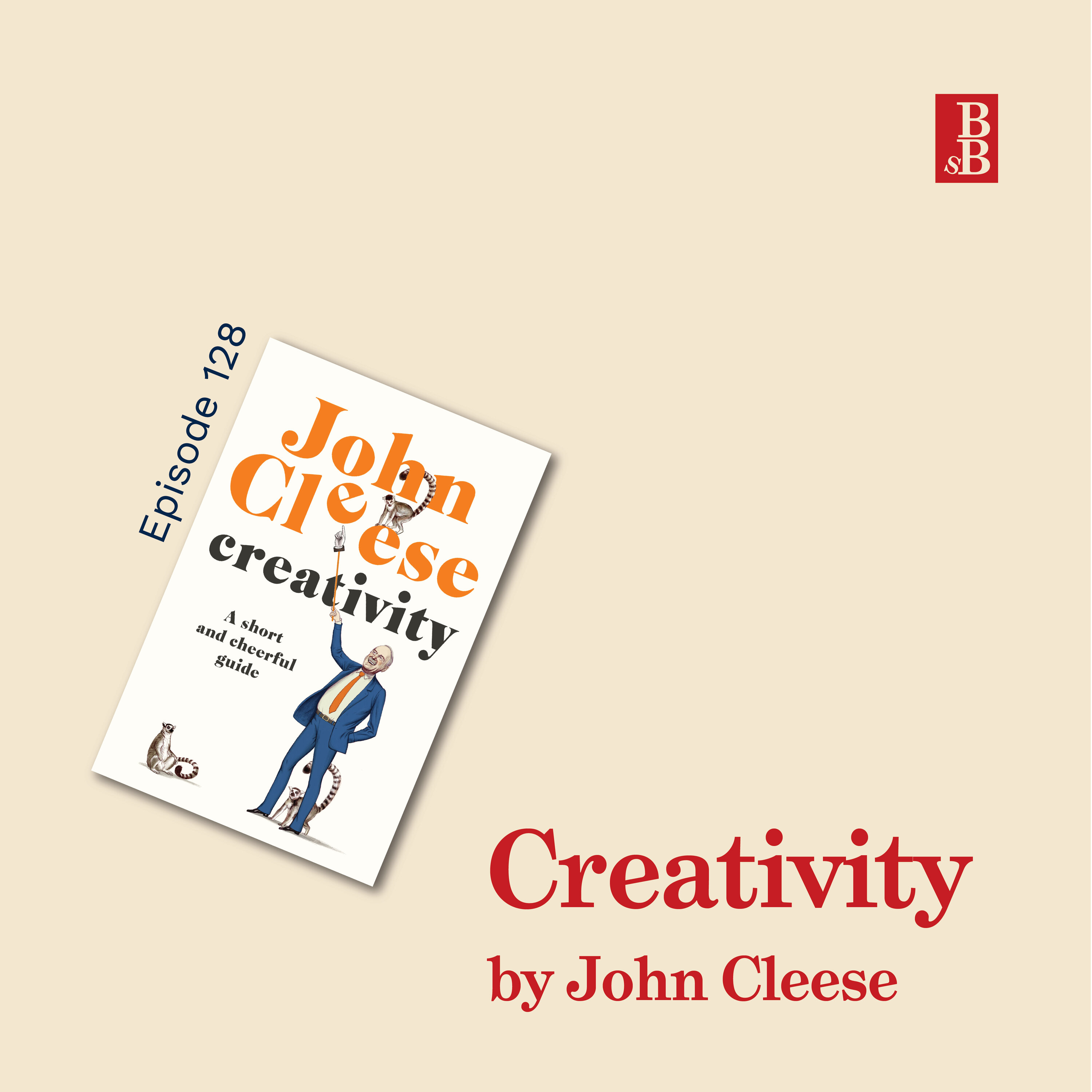
Creativity: A Short and Cheerful Guide by John Cleese: how to learn to be creative
from Steph's Business Bookshelf Podcast · host Steph Clarke
About the book We can all be more creative. John Cleese shows us how. Creativity is usually regarded as a mysterious, rare gift that only a few possess. John Cleese begs to differ, and in this short, immensely practical and often very amusing guide he shows it’s a skill that anyone can acquire. Drawing on his lifelong experience as a writer, he shares his insights into the nature of the creative process, and offers advice on how to get your own inventive juices flowing. Not only does he explain the way your mind works as you search for inspiration, he also shows that, regardless of the task you’ve set yourself, you can learn to be better at coming up with a promising idea, refining it and knowing when you’re ready to act on it. We can all unlock new reserves of creativity within ourselves. John Cleese shows us how. Source: https://www.penguin.com.au/books/creativity-9781786332257 About the author John Cleese was born in 1939 in Weston-Super-Mare. He studied Law at Cambridge University and has enjoyed a successful career in comedy, theatre and film and television. He achieved success at the Edinburgh Festival Fringe and as a scriptwriter and performer on The Frost Report. In the late 1960s, he co-founded Monty Python, the comedy troupe responsible for the sketch show Monty Python’s Flying Circus and the four Monty Python films: And Now for Something Completely Different, Monty Python and the HolyGrail, Life of Brian and The Meaning of Life. In the mid-1970s, Cleese and his first wife, Connie Booth, co-wrote and starred in the British sitcom Fawlty Towers. Later, he co-starred with Kevin Kline, Jamie Lee Curtis and former Python colleague Michael Palin in A Fish Called Wanda and Fierce Creatures. He also starred in Clockwise, and has appeared in many other films, including two James Bond films, two Harry Potter films, and the last three Shrek films. Source: https://www.penguin.com.au/books/creativity-9781786332257 Big idea #1 — You can learn to be creative (…but you probably won’t be taught it in school) Creativity is not something that’s discussed much in school, certainly when John Cleese was at school. There, the focus tends to be on grades, logic, on reason, on analysis, and getting the right answer. It was only when he arrived at Cambridge University and he joined Footlights, that he realized that he was actually creative. This came as quite a surprise to him because it was never something he considered previously. But he immersed himself in the creative field of writing in particular, because it was fun, and he liked the people he was doing it with. He was studying to become a lawyer, so pursuing a creative vocation was never something he intended. But because of this experience of joining Footlights, spending time with people he liked, and going through that creative process, he ended up learning to be more creative. He surrounded himself with other people, he tested what made people laugh, and he put himself out there with monthly smoker (open mic) sessions. Big idea #2 — Slow down Early on in his writing career, John noticed this phenomenon of coming up with ideas overnight. He would get stuck on something in the evening, go to bed, wake up and generally have it solved, or at least know the next step to be able to progress and move it forward. He continued to use this particular technique throughout his career, and still does today. Once he lost a whole sketch he’d written down. Much to the annoyance of his co-writer, and he had to rewrite it from memory. When he eventually found the original version, he realized that the rewrite was actually better because he’d mulled on it a little more, he’d slept on it, and the idea had evolved for the better as a result. He references a particular study about creative architects, or what makes some architects more creative than others. One of the trends they found is that the more creative architects will delay decisions for as long as they were allowed, which gave them the time to play and to explore their ideas further. He goes on to talk about how we have to get comfortable with the discomfort of leaving things open and incomplete, in order to make them better. (Something I definitely need to remind myself) This also links to a later idea in the book about getting a second opinion. We should allow time for that extra layer of feedback, and the power of collaboration, to help take your idea to that next level. Again, it adds a little bit more time and forces us to slow down, but it will mean a better outcome in the end. Big idea #3 — Get your panic in early In this little section on getting your panic in early, John talks about the benefit of a bit of panic. It gives you energy, so you might as well use it, and use it early. You can harness that panic to get something down on paper — even if it’s just scrappy notes that are going to go into the bin later — but it creates some much needed momentum that is necessary to move forward. Once you’ve made this first panic-driven move(!), you can feel better about making that first tiny, tiny step, and then get onto the important questions like who you’re writing for, or whatever the context is for what you’re creating. In a separate section in the book, he says that creativity isn’t an emotion, it is a frame of mind. And therefore we need to prepare ourselves to be creative, and not be worried about, or distracted by, other things. So this idea of getting your panic in early, getting all those weird negative, messy feelings out of the way early on in the process, will mean you can move on to the more important things that you actually need to do to create something. ____________________ Support my book habit: https://www.buymeacoffee.com/stephsbookshelfSee omnystudio.com/listener for privacy information.
Embed this episode
NOW PLAYING
Creativity: A Short and Cheerful Guide by John Cleese: how to learn to be creative
No transcript for this episode yet
Similar Episodes
No similar episodes found.
Similar Podcasts
No similar podcasts found.