
EPISODE · May 12, 2026 · 9 MIN
Cultivating the next Elon Musk: building a lifelong pathway for immigrants
from Korea JoongAng Daily - Daily News from Korea
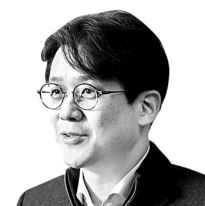
Hyuncheol Bryant Kim The author, a medical doctor, is a professor of economy and public policy at Hong Kong University of Science and Technology. The world's most exceptional talents — the kind who can change the course of history — are not born only in certain countries. They emerge with equal probability across the globe. If Korea can attract such brilliant minds from around the world, it could become a decisive source of national competitiveness. The United States, a country defined by overwhelming innovation, offers the clearest example. Four of the CEOs of the country's seven largest Big Tech companies are immigrants. Nvidia's Jensen Huang is a 1.5-generation immigrant from Taiwan. Ugur Sahin and his wife, the German scientists who developed the mRNA vaccine that helped save the world, also come from Turkish immigrant families. In that sense, the Justice Ministry's recently announced "2030 Future Strategy for Immigration Policy" is both welcome and encouraging. It marks the first time the government has clearly expressed, at a national level, its intention to attract highly skilled foreign talent. But revising the visa system alone will not be enough. We need to imagine an inspiring scenario — one in which Korea is revived through talent. Imagine this: A gifted 15-year-old student from Uzbekistan receives a scholarship and enrolls in an international school in Pohang, where they learn both Korean and English. They earn their undergraduate degree at Yonsei University and their doctorate at KAIST. Later, they become a Korean citizen, launch a startup in Pangyo and, by the age of 45, become the CEO of a global company. Only when such a "full life-cycle path" becomes real can immigrants fundamentally transform Korea. To make this possible, Korea needs an interministerial "foreign talent master plan." The first step should be to admit young gifted students into boarding-style international schools and science high schools. The United States' Future Leaders Exchange, or FLEX, program has brought talented teenagers from Eastern Europe to America on full scholarships since 1992, helping them move on to universities and settle into society. In this way, the United States absorbed gifted students from around the world as national assets. Likewise, foreign talent is far more likely to settle in Korea if they grow up here from a young age. Universities are the base camps that anchor the highest-caliber talent. Talent hired by companies can leave Korea at any time if the conditions are not right. Universities, by contrast, can hold elite talent in place more stably, directly contributing to Korea's research and development capacity while training countless future scholars and innovators. This is why Korean campuses must be filled with world-class foreign professors. The Hong Kong University of Science and Technology, founded in 1991, used an extraordinary all-around package to recruit top talent from North America and Europe. It offered overwhelming salaries, an excellent research environment, on-campus housing and even international school admissions for professors' children. As a result, it rose to become one of Asia's top universities in just over a decade. Do we have that kind of vision and will to execute? The reality in Korea is dismal. I still remember the day I decided to take a faculty position at Yonsei University. At the time, I had been participating in a new faculty hiring meeting at the Hong Kong University of Science and Technology. Hong Kong offered a newly hired assistant professor an annual salary of 200 million won, equivalent to $134,300 at today's exchange rate, along with a substantial housing allowance. By contrast, salaries at Korean universities were less than half that amount and locked into rigid seniority-based pay scales. This asymmetry captures one of the most painful reasons Korea loses out in the race for top talent. The indicators are equally disappointing. Some 85 percent of international student...
What this episode covers
Hyuncheol Bryant Kim The author, a medical doctor, is a professor of economy and public policy at Hong Kong University of Science and Technology. The world's most exceptional talents — the kind who can change the course of history — are not born only in certain countries. They emerge with equal probability across the globe. If Korea can attract such brilliant minds from around the world, it could become a decisive source of national competitiveness. The United States, a country defined by overwhelming innovation, offers the clearest example. Four of the CEOs of the country's seven largest Big Tech companies are immigrants. Nvidia's Jensen Huang is a 1.5-generation immigrant from Taiwan. Ugur Sahin and his wife, the German scientists who developed the mRNA vaccine that helped save the world, also come from Turkish immigrant families. In that sense, the Justice Ministry's recently announced "2030 Future Strategy for Immigration Policy" is both welcome and encouraging. It marks the first time the government has clearly expressed, at a national level, its intention to attract highly skilled foreign talent. But revising the visa system alone will not be enough. We need to imagine an inspiring scenario — one in which Korea is revived through talent. Imagine this: A gifted 15-year-old student from Uzbekistan receives a scholarship and enrolls in an international school in Pohang, where they learn both Korean and English. They earn their undergraduate degree at Yonsei University and their doctorate at KAIST. Later, they become a Korean citizen, launch a startup in Pangyo and, by the age of 45, become the CEO of a global company. Only when such a "full life-cycle path" becomes real can immigrants fundamentally transform Korea. To make this possible, Korea needs an interministerial "foreign talent master plan." The first step should be to admit young gifted students into boarding-style international schools and science high schools. The United States' Future Leaders Exchange, or FLEX, program has brought talented teenagers from Eastern Europe to America on full scholarships since 1992, helping them move on to universities and settle into society. In this way, the United States absorbed gifted students from around the world as national assets. Likewise, foreign talent is far more likely to settle in Korea if they grow up here from a young age. Universities are the base camps that anchor the highest-caliber talent. Talent hired by companies can leave Korea at any time if the conditions are not right. Universities, by contrast, can hold elite talent in place more stably, directly contributing to Korea's research and development capacity while training countless future scholars and innovators. This is why Korean campuses must be filled with world-class foreign professors. The Hong Kong University of Science and Technology, founded in 1991, used an extraordinary all-around package to recruit top talent from North America and Europe. It offered overwhelming salaries, an excellent research environment, on-campus housing and even international school admissions for professors' children. As a result, it rose to become one of Asia's top universities in just over a decade. Do we have that kind of vision and will to execute? The reality in Korea is dismal. I still remember the day I decided to take a faculty position at Yonsei University. At the time, I had been participating in a new faculty hiring meeting at the Hong Kong University of Science and Technology. Hong Kong offered a newly hired assistant professor an annual salary of 200 million won, equivalent to $134,300 at today's exchange rate, along with a substantial housing allowance. By contrast, salaries at Korean universities were less than half that amount and locked into rigid seniority-based pay scales. This asymmetry captures one of the most painful reasons Korea loses out in the race for top talent. The indicators are equally disappointing. Some 85 percent of international student...
NOW PLAYING
Cultivating the next Elon Musk: building a lifelong pathway for immigrants
No transcript for this episode yet
Similar Episodes
No similar episodes found.
Similar Podcasts
No similar podcasts found.