
EPISODE · Apr 25, 2026 · 5 MIN
Cultural landmarks see popularity bump as K-culture expands beyond pop exports
from Korea JoongAng Daily - Daily News from Korea · host KANG HYE-RAN
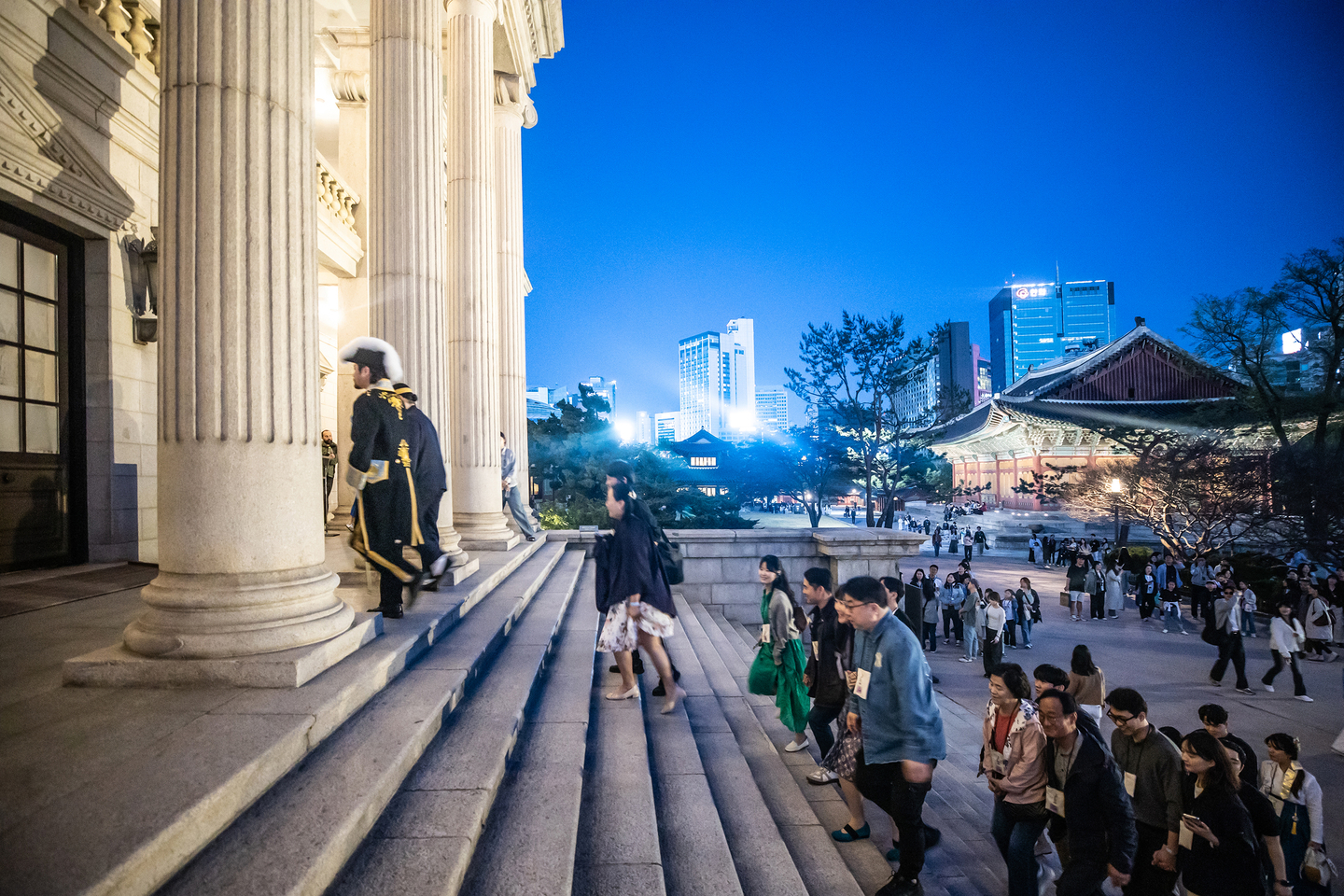
This article is by Kang Hye-ran and read by an artificial voice. Key historical and cultural landmarks of the Joseon royal family, such as palaces, royal tombs and the Jongmyo Shrine, are becoming popular with Koreans seeking to reconnect with their roots. "I booked the program as a way to recharge for myself while taking time off between jobs," said a woman in her 20s while dressed in an elegant hanbok embroidered in gold thread patterns on April 16. She is among the lucky few who secured a spot in the nighttime tour program of Deoksu Palace's Seokjojeon Hall, where demand for tickets outpaced supply by 137 to 1 this year. The program features a tour around the palace led by guides dressed as royal guards and court ladies. It also includes an inside tour of Seokjojeon Hall, the western-style building inside the palace grounds, along with a cafe experience on the building's second-floor terrace, which serves coffee and desserts alongside a classical music performance. Visitors to palaces, royal tombs and the Jongmyo Shrine hit a record high last year, totaling over 17.8 million people, according to the Korea Heritage Service. About a quarter of them were foreign visitors. This year, the cumulative number of visitors reached 4,076,352 as of April 19, up 13.1 percent from the same period last year. Following the surge in numbers, obtaining tickets for seasonal events such as the K-Royal Culture Festival held in the spring and fall, along with select programs at the five major palaces, including Gyeongbok Palace and Changdeok Palace, has become almost as competitive as concerts by popular K-pop groups. One reason palaces have gained popularity is the expansion of attractions inside their grounds. At Gyeongbok Palace, restoration and maintenance projects that began in the 1990s have increased the number of buildings from 36 to 148. "With the physical increase in palace buildings, visitor routes have expanded, and the restoration of the sojubang, or royal kitchen, has made it possible to host programs such as Gyeongbok Palace's saenggwabang program," said Kim Cheol-yong at the Korea Heritage Service. The saenggwabang refers to the section of the sojubang where sweets, porridge and other delicacies were prepared for the king and queen during the Joseon Dynasty (1392-1910). Gyeongbok Palace's saenggwabang program lets visitors enjoy the same desserts and teas. In addition to the K-Royal Culture Festival, which began in 2014, tailored programs that reflect the historical significance and unique characteristics of each site — such as the Moonlight Tour of Changdeok Palace — have steadily increased, contributing to rising visitor numbers. "Palaces may be static spaces, but with additional programming, visitors can feel as if they are experiencing living history," said Lee Hoon, a professor of tourism at Hanyang University. This trend also aligns with the rise of the "experience economy" since the late 2010s and particularly after the Covid-19 pandemic. As consumption shifts from goods to experiences, spending that prioritizes emotional satisfaction has become a trend. The Deoksu Palace's Seokjojeon Hall night tour program, for example, is subsidized by public funds as part of cultural welfare, allowing participants to experience the upper-class culture of early modern Korea for 35,000 won ($23) per person. As places rich with stories of kings, rituals, taboos and power, palaces and royal tombs also provide both education and entertainment. A representative example is the surge in visitors to Jangneung Royal Tomb — the tomb of King Danjong — in Yeongwol County, Gangwon, among those who developed an interest in the king and Joseon history after watching the film "The King's Warden," which drew more than 16.5 million viewers in cinemas after its release on Feb. 4. The Korea Heritage Service has also been rolling out tailored programs in response to the surge of interest in King Danjong. Gyeongbok Palace's saenggwabang will host a r...
Embed this episode
NOW PLAYING
Cultural landmarks see popularity bump as K-culture expands beyond pop exports
No transcript for this episode yet
Similar Episodes
No similar episodes found.
Similar Podcasts
No similar podcasts found.