
EPISODE · Jun 3, 2026 · 5 MIN
Custom Welding Near Me: Finding Quality Services in 2026
from Industrial Fab, Welding & Machining · host Aaron Sova
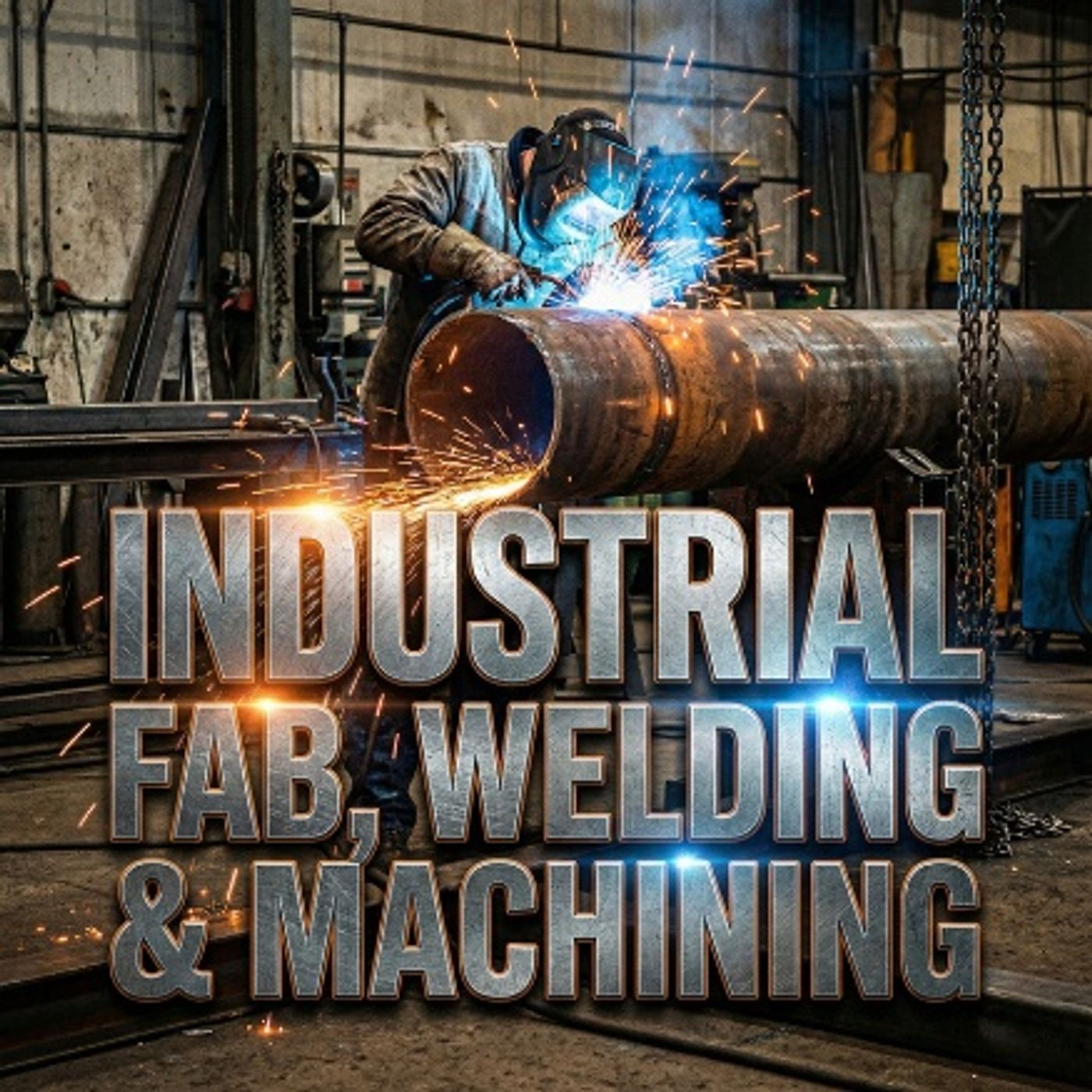
Moving Past Lowest-Bid Joint Failures to Enforce AWS Benchmarks, Specialized Alloy Thermal Controls, and Rigorous OSHA Safety ProtocolsIn heavy industrial operations, structural and pressure welding joint performance serves as the primary safeguard against expensive infrastructure failures. When extraction equipment, transportation networks, or sorting machinery components face extreme workloads, basic unvetted repair attempts can introduce micro-fissures that lead to sudden breakdowns costing thousands of dollars per hour. In this asset-protection installment of The Industrial Fab, Welding & Machining Podcast, the mechanical engineers at LTJ Industrial Services detail the technical logistics of securing high-integrity industrial welding partnerships.Discover the essential quality frameworks that elevate specialized fabricators over general repair shops. We outline the importance of the American Welding Society's (AWS) expansive code library, detail the precise heat-management techniques needed to weld thermal-conductive aluminum and sensitive stainless steel, and contrast the controlled environment of shop production with the complex challenges of mobile field rig deployments. Learn how strict adherence to OSHA safety guidelines insulates operations from regulatory liabilities while protecting field crews from toxic fumes and high-voltage hazards.Chapter Sections00:00 – The Invisible Infrastructure: Analyzing the vast scale and economic importance of specialized industrial welding pipelines.01:45 – Cost Realities of Unplanned Outages: Calculating how sudden component failures impact upstream financial margins.03:15 – Deciphering the AWS Code Framework: Leveraging documented quality benchmarks to weed out uncertified labor.05:00 – Material-Specific Metallurgy: Navigating the specific thermal properties, contamination risks, and quirks of industrial alloys.06:45 – Shop Fabrication vs. Mobile Field Reality: Evaluating environmental control factors across production facilities and remote setups.08:30 – Mobile Welding Rig Logistics: Engineering self-contained field units to deliver high-precision repairs straight to remote operations.10:15 – Industrial Safety and Compliance Audits: Enforcing comprehensive OSHA guidelines covering ventilation, fire watches, and electrical ground networks.11:45 – Exposing Low-Bid Hidden Liabilities: Uncovering how sub-standard billing metrics result in regulatory fines and premature joint cracking.13:15 – Cultivating Strategic Partnerships: Shifting from transactional service purchases to long-term preventive maintenance loops.15:15 – Closing: Utilizing specialized regional field networks and requesting custom project estimates at LTJIndustrial.com.Key Episode HighlightsThe High Stakes of Code-Compliant Joint Execution: Industrial infrastructure demands absolute precision. Pipelines and heavy machinery assemblies endure punishing stress cycles, making certified welding practices essential to avoid microscopic weld defects that quickly widen into costly equipment failures under field pressure.Navigating the Metallurgy of Technical Alloys: Successful multi-alloy fabrication requires deep technical knowledge. While carbon steels are relatively predictable, welding highly conductive aluminum demands fast thermal management, and stainless steel requires strict shielding gas protection to prevent atmospheric contamination.The Operational Hurdles of Mobile Field Environments: Transporting massive mining or oil field assets to a centralized shop is often physically impossible. Overcoming this requires mobile welding trucks that function as fully self-contained service bays, allowing certified personnel to prepare joints, manage pre-heats, and execute code welds directly in tough outdoor conditions.Enforcing Strict Regulatory Safety Standards: High-output welding operations require comprehensive safety steps. Staying fully compliant with OSHA parameters means monitoring high-voltage grounding systems, enforcing strict fire watch intervals in dry fields, and using advanced source-extraction fans to capture toxic airborne elements.The Long-Term Value of Specialized Partnerships: Selecting a welding vendor solely on the lowest hourly bill rate frequently introduces hidden long-term costs. Partnering with certified fabricators who thoroughly understand your equipment blueprints enables proactive maintenance that catches micro-frictional wear before it causes an expensive, unscheduled shutdown.Western Slope Industrial Sourcing & Performance MetricsThe Quality Assurance Index: Industrial entities utilizing AWS-certified welding procedures realize lower field defect rates alongside significant extensions in heavy equipment operational lifecycles.The Thermal Management Yield: Incorporating precise pre-heat and post-weld thermal stress-relief cycles prevents rapid cooling cracks in high-stress hardened alloy steel components.The Rapid Turnaround Dividend: Retaining an integrated regional provider equipped with mobile line-boring tools and independent power generation setups minimizes transit times, returning vital machinery to service quickly.Secure Your Production Infrastructure with LTJ Industrial ServicesThe Western United States’ Elite Manufacturing Authorities: Operating from 22505 US-6, Rifle, CO, LTJ Industrial Services combines advanced CNC precision with decades of rugged field experience to support energy, aggregate, mining, and recycling operations across Colorado and Utah.Turnkey Machining, Fabrication, and Field Repair: We eliminate the scheduling vulnerabilities of sub-contractor networks. Our industrial facility handles your entire project in-house—from initial CAD/CAM blueprinting and heavy plasma cutting to multi-axis CNC milling, precision code welding, CMM verification, and mobile line boring.Request a Manufacturing or Repair Quote: Ready to protect your heavy equipment assets from high-cost mechanical wear and secure high-precision replacement components? Visit ltjindustrial.com or call our regional manufacturing center at (970) 625-9353 to review your blueprints with our estimating team today.Click here to read moreLearn more about LTJ Industrial Services at www.ltjindustrial.com/
What this episode covers
Moving Past Lowest-Bid Joint Failures to Enforce AWS Benchmarks, Specialized Alloy Thermal Controls, and Rigorous OSHA Safety ProtocolsIn heavy industrial operations, structural and pressure welding joint performance serves as the primary safeguard against expensive infrastructure failures. When extraction equipment, transportation networks, or sorting machinery components face extreme workloads, basic unvetted repair attempts can introduce micro-fissures that lead to sudden breakdowns costing thousands of dollars per hour. In this asset-protection installment of The Industrial Fab, Welding & Machining Podcast, the mechanical engineers at LTJ Industrial Services detail the technical logistics of securing high-integrity industrial welding partnerships.Discover the essential quality frameworks that elevate specialized fabricators over general repair shops. We outline the importance of the American Welding Society's (AWS) expansive code library, detail the precise heat-management techniques needed to weld thermal-conductive aluminum and sensitive stainless steel, and contrast the controlled environment of shop production with the complex challenges of mobile field rig deployments. Learn how strict adherence to OSHA safety guidelines insulates operations from regulatory liabilities while protecting field crews from toxic fumes and high-voltage hazards.Chapter Sections00:00 – The Invisible Infrastructure: Analyzing the vast scale and economic importance of specialized industrial welding pipelines.01:45 – Cost Realities of Unplanned Outages: Calculating how sudden component failures impact upstream financial margins.03:15 – Deciphering the AWS Code Framework: Leveraging documented quality benchmarks to weed out uncertified labor.05:00 – Material-Specific Metallurgy: Navigating the specific thermal properties, contamination risks, and quirks of industrial alloys.06:45 – Shop Fabrication vs. Mobile Field Reality: Evaluating environmental control factors across production facilities and remote setups.08:30 – Mobile Welding Rig Logistics: Engineering self-contained field units to deliver high-precision repairs straight to remote operations.10:15 – Industrial Safety and Compliance Audits: Enforcing comprehensive OSHA guidelines covering ventilation, fire watches, and electrical ground networks.11:45 – Exposing Low-Bid Hidden Liabilities: Uncovering how sub-standard billing metrics result in regulatory fines and premature joint cracking.13:15 – Cultivating Strategic Partnerships: Shifting from transactional service purchases to long-term preventive maintenance loops.15:15 – Closing: Utilizing specialized regional field networks and requesting custom project estimates at LTJIndustrial.com.Key Episode HighlightsThe High Stakes of Code-Compliant Joint Execution: Industrial infrastructure demands absolute precision. Pipelines and heavy machinery assemblies endure punishing stress cycles, making certified welding practices essential to avoid microscopic weld defects that quickly widen into costly equipment failures under field pressure.Navigating the Metallurgy of Technical Alloys: Successful multi-alloy fabrication requires deep technical knowledge. While carbon steels are relatively predictable, welding highly conductive aluminum demands fast thermal management, and stainless steel requires strict shielding gas protection to prevent atmospheric contamination.The Operational Hurdles of Mobile Field Environments: Transporting massive mining or oil field assets to a centralized shop is often physically impossible. Overcoming this requires mobile welding trucks that function as fully self-contained service bays, allowing certified personnel to prepare joints,...
NOW PLAYING
Custom Welding Near Me: Finding Quality Services in 2026
No transcript for this episode yet
Similar Episodes
Mar 28, 2026 ·3m
Apr 29, 2025 ·4m
Apr 29, 2025 ·4m
Apr 29, 2025 ·4m
Apr 29, 2025 ·3m
Apr 29, 2025 ·4m