
EPISODE · Feb 23, 2024 · 3 MIN
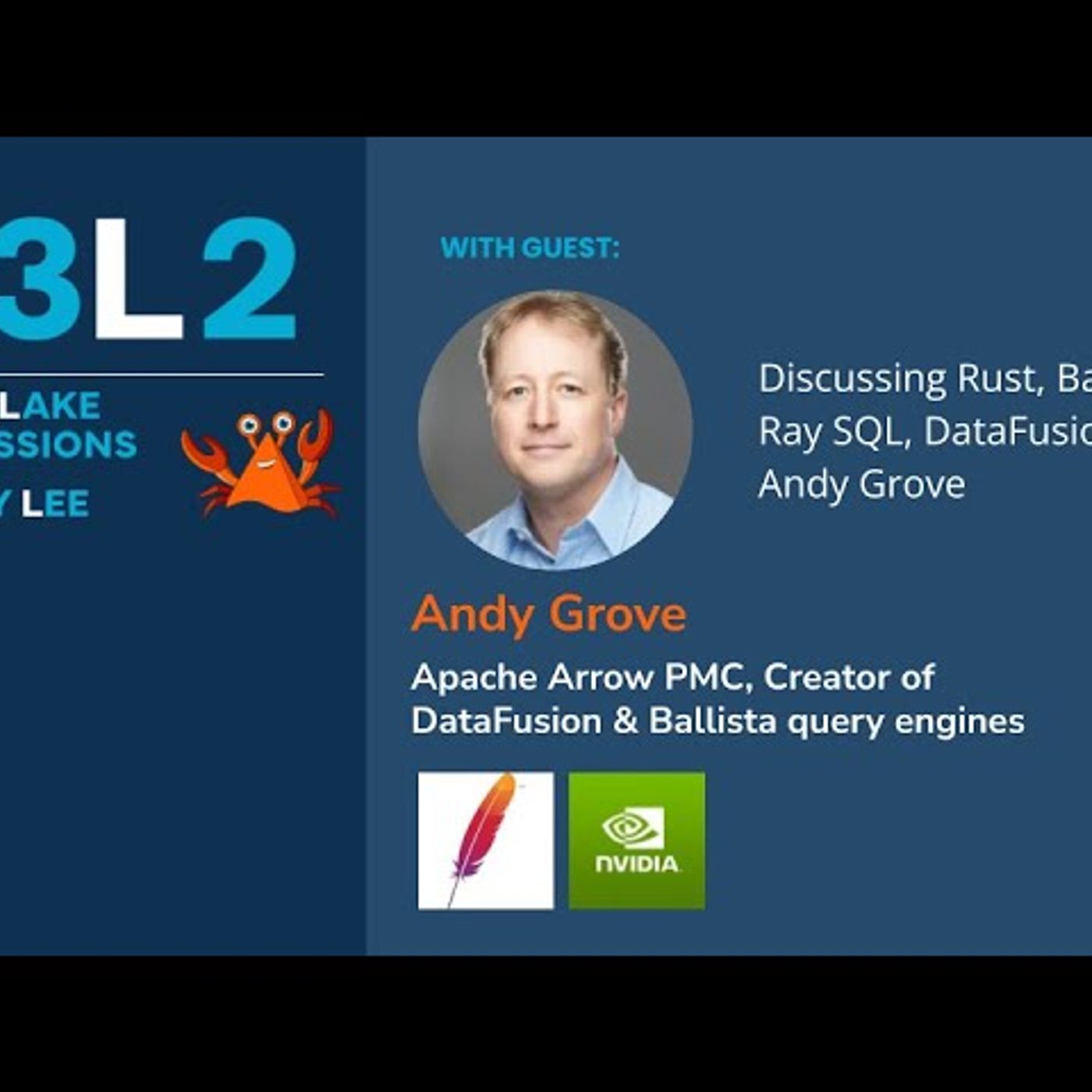
D3L2: Discussing Rust, Ballista, Ray SQL, Data Fusion with Andy Grove
from Higher Signal: Get Smarter. Faster. · host Higher Signal
Summary:1. The session revolved around discussions on Rust, Ballista, Ray SQL, and Data Fusion with Andy Grove.2. Andy Grove's experience encompasses starting the Data Fusion and Ballista Query Engine projects, contributing to Apache Arrow, and creating Ray SQL. Currently, he works at Nvidia on the Spark Rapids project.3. The podcast also touched on Andy's interest in programming since childhood, his move to the US to work on a database sharding product, his involvement with Apache Spark, and the evolution of his career into building database infrastructure and distributed queries.4. The motivation behind using Rust for Andy was the need for a fresh skillset outside the Java ecosystem, and Rust's performance, memory safety, and absence of a garbage collector made it an attractive choice for data processing.5. Data Fusion started as a distributed query engine concept but was refocused to be an in-memory query engine due to the complexity of building a distributed system.6. Ballista is another ambitious project by Andy; it is a distributed query engine built using the foundation of Data Fusion and further contributes to the Apache Arrow project.7. Ray SQL is a distributed SQL query engine in Python using Ray, building upon the work done with Data Fusion and Ballista, aiming to attract more Python developers to Data Fusion.Key Questions and How They are Answered:- How did Andy Grove get into programming and eventually Rust and Data Fusion? Andy began experimenting with programming as a child in the 1980s. His interest peaked during his career in database infrastructure and distributed queries. He embraced Rust to freshen up his skillset and built Data Fusion and Ballista due to his interest in data processing efficiency without garbage collection.- Why did Andy Grove decide to create a project like Data Fusion in Rust? Andy hypothesized that a Rust-based system could match or outperform JVM-based systems like Apache Spark due to Rust's efficiency and memory safety. He aimed to take advantage of Rust's performance for data processing.- What led to the creation of Ballista? Andy's desire to build a distributed query engine on top of the solid foundation provided by Data Fusion led to Ballista's creation. Blog posts and community feedback gave him the motivation to pursue it.- How does Ray SQL fit into Andy Grove's work? Ray SQL resulted from Andy's efforts to show the potential of Data Fusion through Python bindings and to create an example of running DataFusion on a Python distributed platform like Ray.Core Takeaway:The core problem discussed is the need for efficient, scalable data processing systems that can leverage modern programming language benefits such as Rust. The consequences of not addressing this include potential performance bottlenecks and the inability to fully utilize hardware capabilities.The three key ideas to address this problem are:1. Embrace Rust for critical data processing components to capitalize on its performance, memory safety, and efficient resource utilization.2. Build scalable systems such as Data Fusion and Ballista that can be both standalone or form the foundation for other projects, thus enriching the data processing ecosystem.3. Integrate these systems with popular languages like Python, as demonstrated by Ray SQL, to make advanced data processing accessible to a wider audience and stimulate community contributions.Tags here: Andy Grove, Rust, Data Fusion, Ballista, Ray SQL, Apache Arrow, Nvidia.
Embed this episode
NOW PLAYING
D3L2: Discussing Rust, Ballista, Ray SQL, Data Fusion with Andy Grove
No transcript for this episode yet
Similar Episodes
No similar episodes found.
Similar Podcasts
No similar podcasts found.