
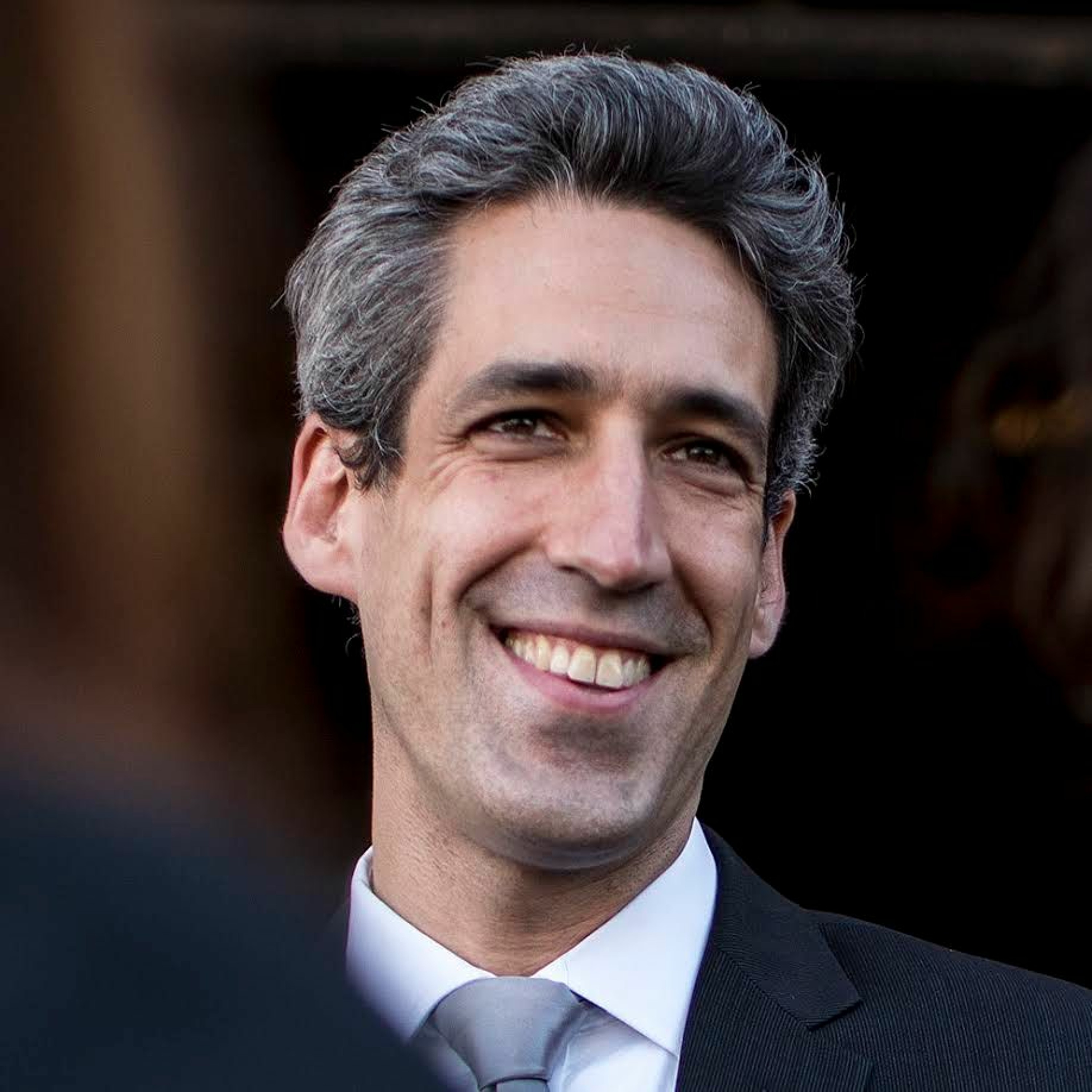
So first things first, thank you so much for agreeing to do this interview with the Zavirai. My name is Cheyenne. I'm the news editor. I'll be conducting the interview.
But with me, I also have my editor-in-chief, her name is Elizabeth. I know we have a short amount of time tonight, so let's just jump right in, okay? Sure. So first things first, we all know that the financial stability of the state is not exactly 100% at the moment.
But how exactly would you plan on addressing the after-effects basically of the budget crisis? Well, you actually just asked two different great questions. First of all, we have a tax system built for an economy that doesn't exist anymore. The tax system that asks the middle class and we're working towards a page of much.
The tax system that lets the rich off the hook. And it's time for us to build a tax system for modern economy that asks the wealthiest to pay their shares so that we can have a budget that works for the rest of us. But you also asked how do we deal with the after-effects of the budget crisis? The after-effects would include a social service network that is fraying universities and community colleges that have been harmed, grievously, exactly leaving enrollment dropout.
It's time for us to have a long-term sustainable budget plan that invests in the institutions that need to be rebuilt and we need to recruit people to go into those fields to make sure that we have a workforce for the social service sector that we ought to have, not the social service sector that we unfortunately have to reduce to. And you actually brought up education and that's kind of a big one for us, obviously as we are at college campus. So my one question, particularly that I wanted to ask, was about the Illinois Student Loan Bill of Rights. Oh, thank you.
So I know you helped get that going for us. Thank you. But what exactly will the student loan bill of rights, what exactly does it do to help students and kind of make sure that they're informed about the decisions that they're making when they are taking out loans? So it's the strongest student loan of the right to the country.
And by the way, we passed it by overriding Governor Rounders' detail, which is just incredible. What the student loan bill of rights does is it regulates these for-profit student loan servicers that have unfortunately been acting in predatory ways, putting student loan borrowers into the most expensively payment plans, not giving full information about all the options, just acting in ways that frankly are, in my opinion, consumer fraud. And I think tuition is too high. I think student loan debt is too great.
I think we've got to do a lot about that problem. But as long as we have the high tuition we have and the student loan burden that we unfortunately are living with, we cannot have these servicers prey upon borrowers just to make a problem with their customers. And speaking of tuition, your platform says I believe that you would ultimately want there to be free tuition for colleges. Is that correct?
Do you believe that that is something that can truly happen? In all honesty, like with the economic state of things, is that something that can actually happen? And if so, how long would that actually take to be able to be enacted? I believe it has to happen.
I think that we chose to make high school free for the century ago because we understood that it was necessary to have a high school education to be an equal participant in the economy. And here we are in 2017, and to be an equal participant in the economy, we need some form of post-secondary certification. So we have that same moral obligation to create free access to colleges and university and community colleges. Now you're right.
It's expensive, we can't do it tomorrow. We've got to get there by having the right kind of tax system for a modern economy that actually funds the services that communities need. And I don't want to pretend that we're going to do that in a year or even two, but it has to be the goal. It isn't achievable goal.
The state has the affluence to make it possible. We just don't have the government to make it. Speaking of high schools, the four-year graduation rate for 2017 was at 87%. Which is actually a bad number actually.
But when we look at the inequity between who's graduating, so we see that white students are graduating at 91%, Hispanic graduation rate was at 84%, and then the blacks' graduation percentage was at 79%, which also happens to be the same rate as those who were graduating from low income families. None of these numbers are bad at all. They're pretty nice actually. But is there anything that we can do to help bridge the gap between not only the different races, graduation rate, but also on the different income level?
That's a great question, China. Those two questions are still profoundly lit. We have the most property tax reliant, the most regressive school funding system of any state in the union. It doesn't have to be this way.
If we had a modern school funding system like many other states, including the western states that much of our own, we could fund schools in all communities properly and that would help address the gap. There are other things to be done too, by the way. The universal access of preschool and early childhood education, child care, so that more children arrive at kindergarten ready to learn. That makes a huge difference.
Adequate wraparound services, trauma-informed care counseling, there are communities that are unfortunately ravished by violence. Students arrive at school with unbelievable trauma and we need to create schools that are safe havens and network to support. Fundamentally, if we actually believe that there's potential in every child, we have to create educational opportunities that are available to every child about it. It's just not what we do at Illinois right now and it's terrible.
If we're looking at schools and creating those educational opportunities, does this also pertain to trade schools? So advocating for the promotion of trade schools to serve as a sustainable means of employment for future workers? You bet. You bet.
We have a cultural bias that really is a shame that we've brought parents to push their kids away from the trades and leaves a lot of really decent middle-class job opportunities on builds. I think we need to build an education system and a job training system that is designed for the economy that we have, not the economy that exists in some of the imagination. You bet. Vocational education, career technical education and trade schools must be a part of it.
And what about for our dreamers? What can we do or what can you do or bring to the table that can help protect them and fight against the very real threat that the DACA program will be removed along with it would be the dreamer students? I wish I could just fix it. I think that what's been threatened to the dreamers is profoundly un-American and immoral.
And I wish that I could tell you the state senator or his governor unable to restore DACA or pass the dream act or pass the citizenship. I can't pretend that, but I can tell you there are things that the state can do. We were proud to pass the trust. The legislation that limits the goal that local police forces can play in cooperating with ICE and changing its attention and so forth.
That's a good step for that. We've got watered down. We should have done more. We should have created greater opportunities for our victimists to report their situation regardless of their documentation status.
They've been acted very strong. Welcome to policy. Very strong. Welcome to policy that are sure that the municipal officials will act to protect their residents as opposed to cooperate with federal officials.
School districts do the same thing, but there are school districts in municipality that haven't done this yet. What we need is a governor who stands up in village halls and city councils in school board meetings across the state that says we need strong welcome to policy here in the community because that's what makes me the one way stronger. I'm going to be that governor. And then the last thing I wanted to ask you really quick, you were endorsed by our revolution, which many people hopefully know was Bernie Sanders' people basically.
What does this mean for your campaign? Where do you see yourself going now with this endorsement? It's very exciting endorsement. You know what?
It's exciting because it comes on the heels of endorsement of move on.org. National Mercy United Progressive Groups, which is grassy, grassy, Illinois, are blocking to our campaign because they see this as a progressive candidacy. They see this as a people's movement to transform Illinois. That's how we're going to win.
That's how we're going to change our state. Like working with people, talking to people, knocking on doors, getting on those phone calls, and building on a new kind of politics. So instead of accepting what we've been told is a limit on what's possible, though we've worked together to change what's possible and build this state that we deserve.