
EPISODE · Aug 3, 2026 · 1H 2M
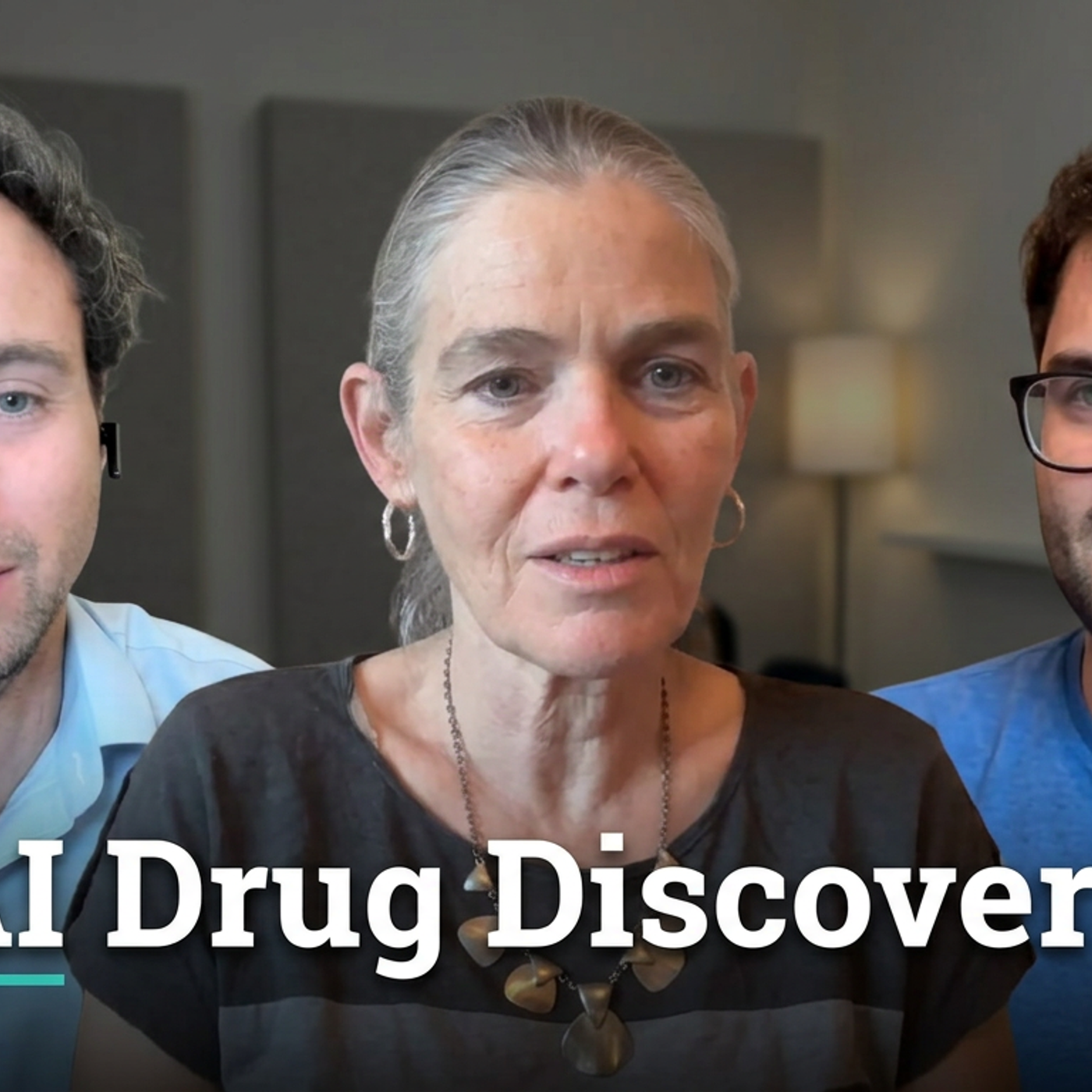
Daphne Koller - The Future of AI in Biology and Drug Discovery
from The Information Bottleneck · host Ravid Shwartz-Ziv & Allen Roush
Daphne Koller wrote the book that many of us learned probabilistic graphical models from, founded Coursera, and now runs insitro, which is trying to make drug discovery a machine-learning problem.We start with the bitter lesson. She agrees with most of it and then says where it stops working: biology doesn't have enough data, structure is how people understand anything, and making a drug is a question about an intervention that hasn't happened yet, not a pattern in data you already have.Most of the episode is about why drug discovery is hard. Ninety percent of drugs that reach the clinic fail, and mostly not because the molecule was bad. The molecule usually does what it was designed to do. It just turns out the thing it was designed to do had nothing to do with the disease. Only 22% of diseases have any approved drug at all, and she calls that an upper bound on what we understand, not a lower bound.She also gets into what agents are and aren't good for in a wet lab, why cells don't grow faster no matter how many GPUs you point at them, what it would take to have real foundation models for biology, and why almost all of biology is still out of distribution.Plus GLP-1s and what human data keeps teaching us, whether AI can make the kind of leap that turned a bacterial immune system into CRISPR, and what she'd build if she were starting Coursera today.Key TopicsThe impact of scaling and data in machine learningThe importance of structure and causality in AIChallenges in drug discovery and biological understandingThe role of foundation models in biologyEthical considerations in AI and biomedical researchChapters00:00 Introduction to Machine Learning and Drug Discovery02:00 The Bitter Lesson and Its Implications06:48 Challenges in Drug Design and Discovery11:48 Ethical Considerations in Human Research17:20 The Drug Discovery Pipeline Explained29:30 Integrating AI in Experimental Design35:38 The Role of Human Judgment in Drug Design37:14 Future of Drug Design: Efficiency vs. Automation39:37 Challenges in AI and Data Availability for Biology41:08 Foundation Models: Potential and Limitations43:39 Causality in Biological Data: Importance and Challenges45:18 Creativity vs. Understanding in Drug Design48:17 Balancing Investments in Data, Algorithms, and Experiments50:07 The Value of Simulations in Drug Discovery52:03 Mathematical Frameworks in Biology: Utility and Limitations54:14 The Future of Drug Discovery: Optimism and Innovations56:28 The Impact of Coursera on Education01:00:33 The Role of Universities in Lifelong Learning01:04:06 Connecting Dots: The Fun of Variety in Work01:05:46 Optimism for the Future of Drug DiscoveryMusic"Kid Kodi" - Blue Dot Sessions - via Free Music Archive - CC BY-NC 4.0.
Embed this episode
NOW PLAYING
Daphne Koller - The Future of AI in Biology and Drug Discovery
No transcript for this episode yet
Similar Episodes
No similar episodes found.
Similar Podcasts
No similar podcasts found.