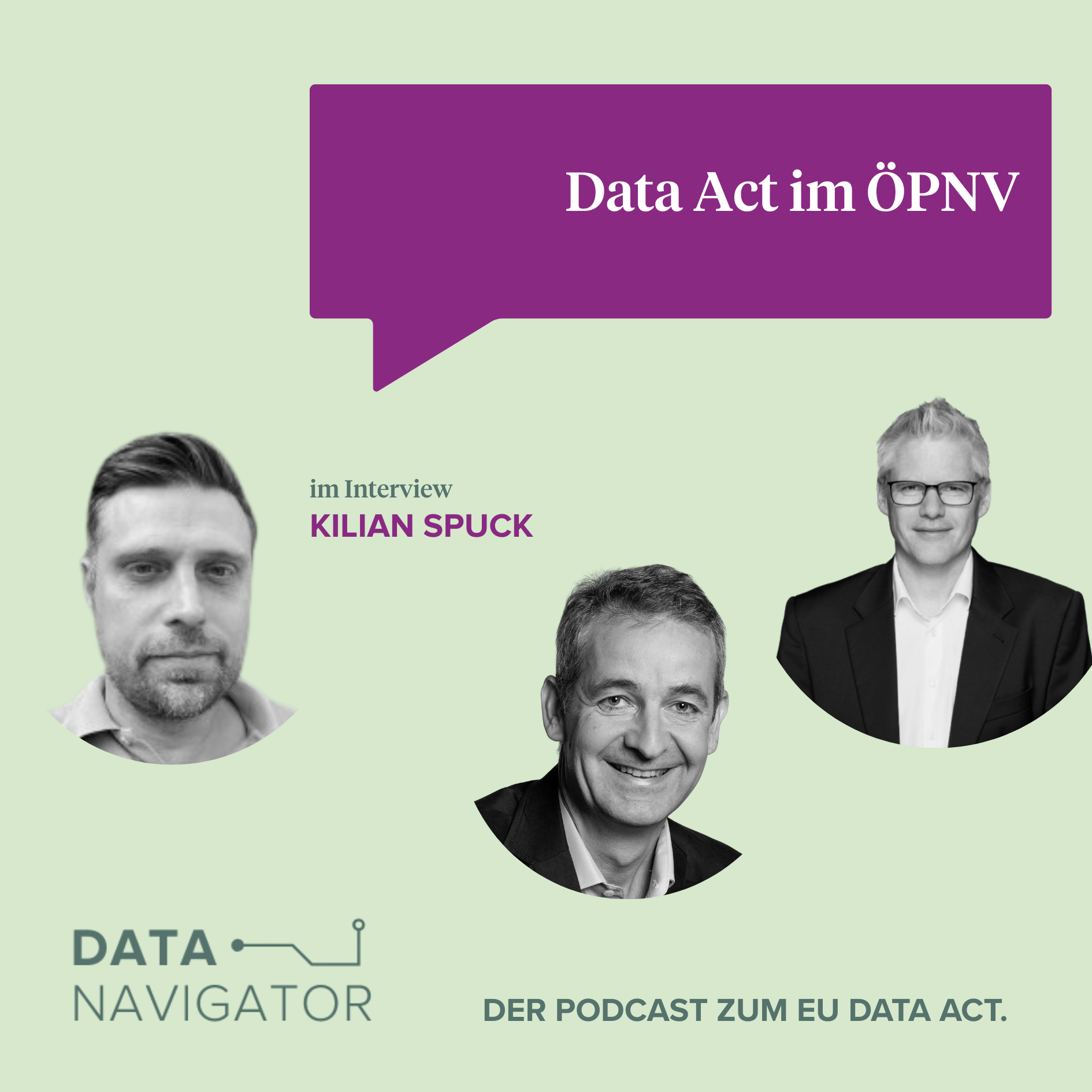
Data Act im Öffentlichen Nahverkehr episode artwork

EPISODE · Jan 26, 2026 · 53 MIN

Data Act im Öffentlichen Nahverkehr

from Data Navigator · host Dr. Martin Schirmbacher, Dr. Hubertus von Roenne

Thema von Folge 35 des Data Navigator Podcast ist die Rolle des Data Act für den öffentlichen Nahverkehr. Gast in der ersten Folge 2026 ist Kilian Spuck, Head of Digital Law, IT-Vergaberecht, Datenschutzrecht & Energierecht bei der Berliner BVG. Wir schauen darauf, welche Daten bei den Berliner Verkehrsbetrieben heute schon entstehen, welche davon besonders kritisch oder wertvoll sind, wer sie erzeugt und wer sie wie nutzt. Ein Schwerpunkt liegt auf Datenzugang und Abhängigkeiten in komplexen Systemen: Wie kommt die BVG an Maschinendaten, was erhebt sie selbst – und wie transparent ist eigentlich, wer welche Daten bekommt? Dazu besprechen wir, ob und wie Daten zentral ausgewertet werden und welche konkreten Schlüsse sich daraus für Betrieb, Planung und Service ableiten lassen. Im zweiten Teil ordnen wir den EU Data Act aus Nutzerperspektive ein: erste Reaktionen, Erfahrungen im Umgang mit Herstellern und die Bedeutung für den Verkehrssektor insgesamt. Aus unserem Data Navigator Forum greifen wir zentrale Punkte auf – fairer Zugang zu Maschinendaten, Datennutzung als Innovationstreiber sowie mögliche Rollen von Drittanbietern – und beleuchten typische Herstellerbedenken (z.B. Geschäftsgeheimnisse, personenbezogene Daten). Zum Abschluss geht es um Umsetzung und Praxis: Stand im Sektor, größte Hürden, Unterstützungsbedarf und Erwartungen an Politik, Behörden und Verbände. Kilian gibt außerdem konkrete Empfehlungen für andere ÖPNV-Unternehmen – und wir werfen einen Blick nach vorn: Welche Veränderungen könnte der Data Act bei der Datennutzung auslösen, und was wäre in den nächsten Jahren wünschenswert?

Episode metadata supplied by the publisher feed · Published Jan 26, 2026

Thema von Folge 35 des Data Navigator Podcast ist die Rolle des Data Act für den öffentlichen Nahverkehr. Gast in der ersten Folge 2026 ist Kilian Spuck, Head of Digital Law, IT-Vergaberecht, Datenschutzrecht & Energierecht bei der Berliner BVG. Wir schauen darauf, welche Daten bei den Berliner Verkehrsbetrieben heute schon entstehen, welche davon besonders kritisch oder wertvoll sind, wer sie erzeugt und wer sie wie nutzt. Ein Schwerpunkt liegt auf Datenzugang und Abhängigkeiten in komplexen Systemen: Wie kommt die BVG an Maschinendaten, was erhebt sie selbst – und wie transparent ist eigentlich, wer welche Daten bekommt? Dazu besprechen wir, ob und wie Daten zentral ausgewertet werden und welche konkreten Schlüsse sich daraus für Betrieb, Planung und Service ableiten lassen. Im zweiten Teil ordnen wir den EU Data Act aus Nutzerperspektive ein: erste Reaktionen, Erfahrungen im Umgang mit Herstellern und die Bedeutung für den Verkehrssektor insgesamt. Aus unserem Data Navigator Forum greifen wir zentrale Punkte auf – fairer Zugang zu Maschinendaten, Datennutzung als Innovationstreiber sowie mögliche Rollen von Drittanbietern – und beleuchten typische Herstellerbedenken (z.B. Geschäftsgeheimnisse, personenbezogene Daten). Zum Abschluss geht es um Umsetzung und Praxis: Stand im Sektor, größte Hürden, Unterstützungsbedarf und Erwartungen an Politik, Behörden und Verbände. Kilian gibt außerdem konkrete Empfehlungen für andere ÖPNV-Unternehmen – und wir werfen einen Blick nach vorn: Welche Veränderungen könnte der Data Act bei der Datennutzung auslösen, und was wäre in den nächsten Jahren wünschenswert?

PodParley-generated summary based on available episode metadata and transcript content.

NOW PLAYING

Data Act im Öffentlichen Nahverkehr

0:00 53:02

No transcript for this episode yet

We transcribe on demand. Request one and we'll notify you when it's ready — usually under 10 minutes.

NEWMORROW SESSIONS - A PodCast Series on the Future of Hospitality Mario C. Bauer, Florian Schneider, Axel Weber & Dr. Tillman Bardt The Newmorrow PodCast is more than a podcast — it's a platform for open dialog on the future of our business, a platform for those building what doesn’t exist yet. Here, we share and embrace our passion for the hospitality industry, but we won’t romanticize the journey. We ask the tough questions, confront uncomfortable truths, and prepare for a future that resists easy answers. We believe that the tougher and wilder times become, the more openly, honestly and humanely people need to talk to each other and act together. We believe, openness, togetherness, and truthfulness should also be cornerstones of a professional community to develop our utopian idea of „open source“. This is a space where visionaries don’t just imagine the future — they wrestle with the paradoxes that shape it: success vs. happiness, data vs. instinct, stability vs. reinvention. Join leaders, entrepreneurs, and thinkers as they share not what made them — but what’s actively shaping them, now and next. So tune in The Health Odyssey: Navigating Tomorrow's Medicine Podcast Welcome to 'The Health Odyssey: Navigating Tomorrow's Medicine,' where we embark on an adventurous journey through the ever-evolving world of healthcare. Each episode is like a treasure map, guiding you through the rich tapestry of ancient healing arts mixed with futuristic tech wizardry. We’ll chat about the wild west of health data privacy, the corporate giants reshaping our care, and the mind-bending potential of psychedelics for mental wellness. Think of us as your trusty sidekicks, unraveling the mysteries of modern medicine while keeping it real and relatable. Let’s dive into the stories, the science, and the soul of healthcare, paving the way for a healthier tomorrow. Talent Stacker Jonathan Mendonsa Data suggests that the average cost of college in 2019 was $122,000 while the entry-level salary for a college graduate at the same time period was 50,000. ROI is a distant memory.hopefully for that that $122,000 the student graduates with a degree and possibly some skills. The reality is, as most individuals approach graduation, they realize that ultimately what they have to prove to their employers that they actually have the skills and since you don't need a degree or permission to start building skills, let’s document the stories and best practices of individuals that crushed the game by focusing on building their skills and their talent stack. Maybe you feel like you don’t have a talent stack. What are the skills you need to be able to generate an above-median income and when paired with interest-led learning this talent stack will allow you to work towards financial independence and design your future?If you're up for this challenge to go from no Talent Stack to designing you Sacramento, California Crime Report Inception Point Ai Sacramento, California Crime Report is your go-to podcast for the latest updates and in-depth analysis of crime trends in the Sacramento area. Join us as we explore real cases, discuss law enforcement efforts, and offer expert insights into the community's safety. Stay informed and engaged with comprehensive coverage of everything from local crime stories to broader criminal justice issues affecting Sacramento. Tune in for weekly episodes that dive into the data and deliver the facts you need to stay aware in California's capital city. For more info go to https://www.quietplease.ai Check out these deals https://amzn.to/48MZPjsThis show includes AI-generated content.

Frequently Asked Questions

How long is this episode of Data Navigator?

This episode is 53 minutes long.

When was this Data Navigator episode published?

This episode was published on January 26, 2026.

What is this episode about?

Thema von Folge 35 des Data Navigator Podcast ist die Rolle des Data Act für den öffentlichen Nahverkehr. Gast in der ersten Folge 2026 ist Kilian Spuck, Head of Digital Law, IT-Vergaberecht, Datenschutzrecht & Energierecht bei der Berliner...

Can I download this Data Navigator episode?

Yes, you can download this episode by clicking the download button on the episode player, or subscribe to the podcast in your preferred podcast app for automatic downloads.
URL copied to clipboard!