Davos After Davos....influence to insularity
from Somali Waa kuma Podcast Hosted by MI
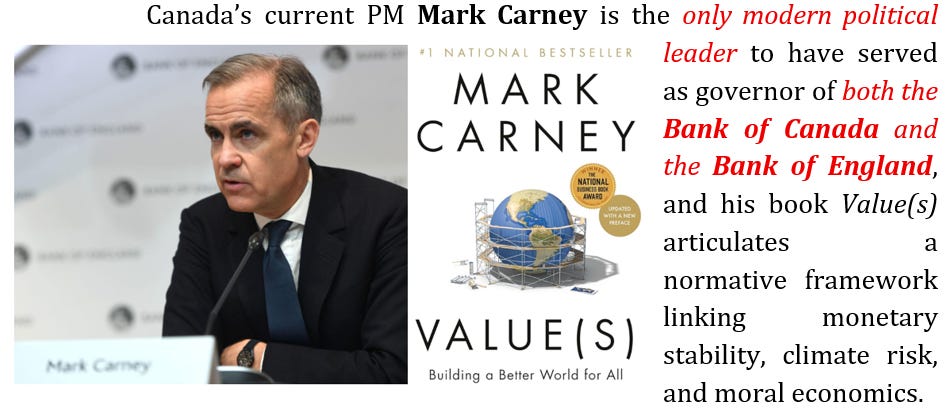
Welcome to MI’s 5 Minutes of Fame - Week 3 (2026). This week’s episode was drafted in the Middle East, but published from Indonesia, purely because travel commitments have had me moving across time zones and working in transit. In between airport gates and shifting schedules, I also found myself half-distracted by the global noise of the Davos discussions. A quick apology in advance for the quality of the video. It was recorded during a beautiful night walk along the Arabian Gulf, but the wind had other plans - so the audio and clarity are not as clean as I would normally want. Still, I wanted to share the moment and keep the weekly rhythm alive, even if the production isn’t perfect. For those who prefer the Somali-language version, you can find it at ayuub.org. Let’s get into Week 3. A brief critical note on Davos and the WEF is necessary here. Despite the scale of its media coverage and the authority often projected onto its discussions, the WEF is not a UN body, nor is it a formal multilateral institution with democratic legitimacy or binding decision-making power. It is, fundamentally, a convening platform for - influential, well-resourced, and highly curated - where wealth, corporate power, and select political elites meet to align narratives, build relationships, and shape priorities. Despite its media prominence, the WEF remains neither a multilateral institution nor a democratic body, yet increasingly performs the language of global authority without bearing its obligations. There is an unmistakable note of schadenfreude - uncomfortable satisfaction - in watching the World Economic Forum (WEF)’s influence fade - an elite stage long insulated from consequence now struggling to justify its relevance. As Davos slips from power broker to (not so) polite spectacle, the quiet satisfaction lies in seeing performative globalism losing credibility in a world demanding results rather than rhetoric. In this context, the WEF is confronted by a world no longer impressed by conversation without commitment. The problem is not scale or visibility, but function: Davos operates less as a forum for global accountability and more as a space for global networking. A marketplace of access where CEOs, financiers, and carefully chosen leaders interact with major business entities that increasingly influence policy outcomes. The danger is not simply elitism, but the quiet normalization of governance-by-proximity - where “solutions” to global crises are discussed in exclusive rooms, while those most affected by inequality, conflict, debt, and climate vulnerability remain structurally absent. In that sense, Davos is not the world convening - it is a particular class of the world convening, and calling it “global leadership” often disguises the reality of whose interests are most consistently represented. As David Hearst remarked that ‘everyone and his dog appears to have been invited’ captured the mood and summarised it brilliantly. He has argued that Davos functions less as a site of decision-making than as a theatre of alignment - where power reassures itself rather than submits to scrutiny. So I will leave Davos with the following observation: More than a century ago, Rainer Maria Rilke urged a young poet to live the questions now - to resist the comfort of ready-made answers and instead confront uncertainty as the only honest path to truth. At Davos this year, that sensibility found its sharpest political expression not in rhetorical flourish or moral exhibitionism, but in a forum crowded with aspiration and abstraction. Carney’s intervention stood out for its intellectual discipline - grounded not in hope, but in conditions, constraints, and responsibility (see footnote). Mark Carney spoke not as a performer of ideals, but as a thinker shaped by history, markets, and institutions. “We actively take on the world as it is,” he observed, “not wait around for the world we wish to be” - a statement reflecting intellectual breadth, strategic maturity, and a rare refusal to confuse aspiration with analysis. In a forum crowded with over 60 heads of state, more than 400 political leaders, and some 830 CEOs and chairs gathered under the banner of A Spirit of Dialogue, this was one of the most intellectually serious statement made. While others spoke in aspirations, Carney spoke in conditions; while many performed optimism, he articulated responsibility. In doing so, he did not merely echo Rilke - he translated existential courage into statecraft, and stood out as the most credible leader on the mountain precisely because he refused to escape reality. What connects Davos and Somalia is not geography, but power: who convenes it, who shapes it, and who is left outside the room. The same logic of elite proximity that defines global governance in the Alps quietly reproduces itself in fragile states, where capital flows freely but institutional authority remains absent. Remittances wasted, windows closed : The following is the wrap of my earlier two posts of the year focusing on how the collapse of traditional money channels exposed Somalia’s missed chance - and the Somali Central Bank’s failure to engage diaspora host-country counterparts. Engagement should have meant sustained regulatory diplomacy, bilateral MOUs with host-country central banks, shared supervisory frameworks, joint anti-money laundering and counter-terrorism financing (AML/CFT) audits, and diaspora-linked settlement mechanisms. None were pursued with consistency. The gradual collapse of traditional Somali remittance businesses should have marked a decisive inflection point for the Somali government - an opportunity to formalise, stabilise, and strategically harness one of the economy’s most vital and resilient capital inflows. Instead, the transition unfolded in a fragmented and largely ungoverned manner. Last-mile cash deliverers and mobile money platform owners expanded rapidly but failed to meaningfully collaborate with the Somali government to align operations with national financial, regulatory, or development objectives. In the absence of coordination, the remittance ecosystem drifted into a hybrid space dominated by private incentives, informal digital practices, and external compliance pressures, while the state remained marginal and reactive. A potentially transformative shift toward regulated, development-oriented financial intermediation was thus squandered, leaving systemic risk unresolved and public value unrealised. This fragmentation was compounded by the persistent failure of the Central Bank of Somalia to proactively engage its counterparts in countries hosting the Somali diaspora. At a time when correspondent banking access depends on regulatory diplomacy, supervisory cooperation, and trust-building, Somalia remained largely absent from sustained bilateral engagement. Proposals to work with host-country central banks on AML/CFT alignment, oversight of digital remittance channels, and diaspora-linked settlement frameworks were articulated but never institutionalised. The consequence is a structural disconnect: large inflows continue to sustain households and markets, yet remain detached from national monetary policy, financial deepening, and long-term state capacity building. Somalia’s remittance and mobile money ecosystem stands at a decisive crossroads. My research shows that while a shift toward blockchain-based digital currencies may enhance transparency and efficiency for some, it will also risk excluding those on the wrong side of the digital divide - the non-digital natives, the poor, and the structurally marginalised who depend most on frictionless cash and human intermediaries. At the same time, tightening tax regimes and an increasingly hostile posture from the United States toward informal and quasi-formal transfer channels threaten to further constrict vital capital inflows. Yet this is not a story without hope. The imminent formation of a new Somali government presents a rare opportunity… This is a public episode. If you would like to discuss this with other subscribers or get access to bonus episodes, visit somalia.substack.com
Embed this episode
No transcript yet.