
EPISODE · Jul 14, 2025 · 12 MIN
Day 21: Understanding Stress
from Peak Performer · host Larry G Maguire | Psychologist
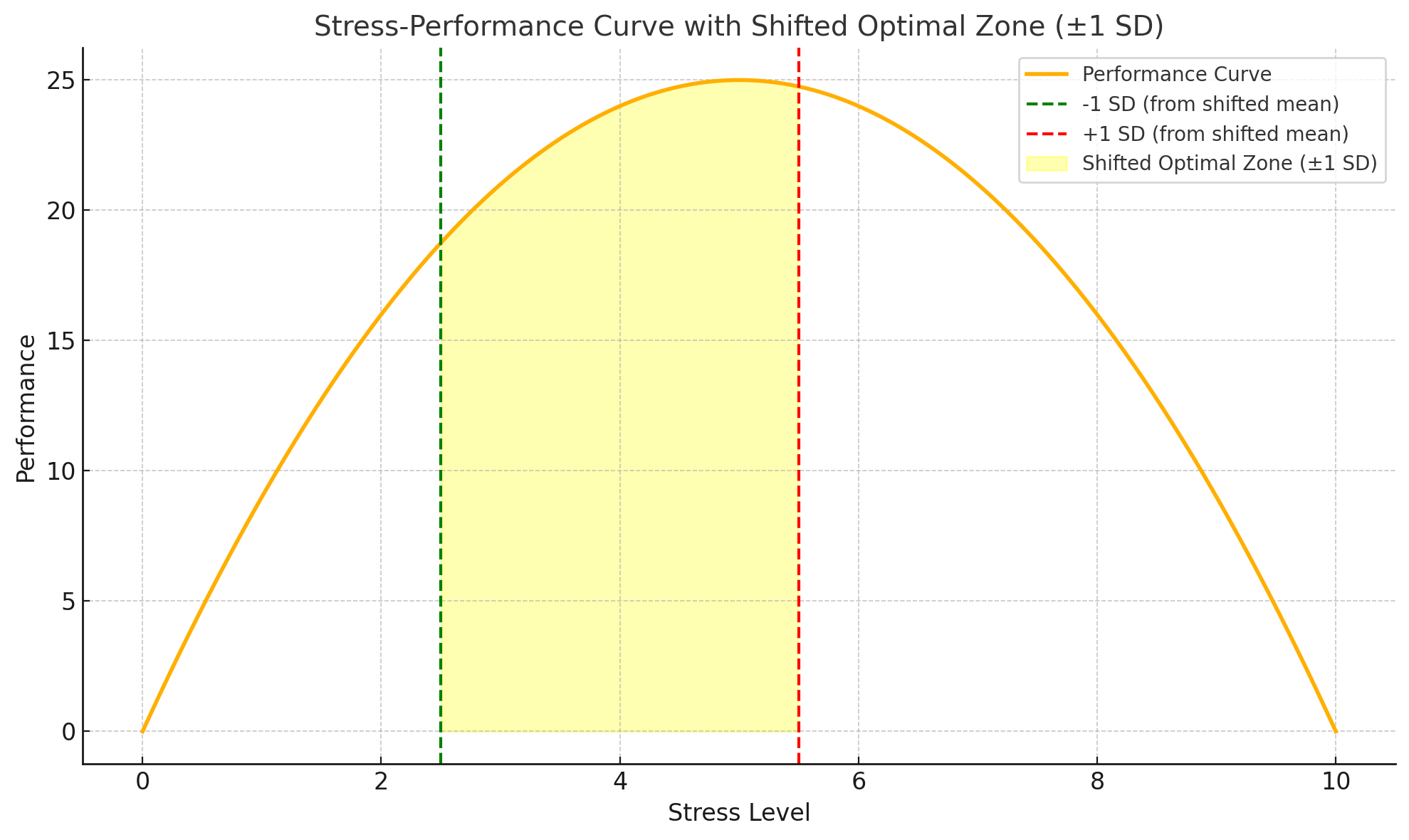
Stress is a normal part of life. It represents the challenge that being alive presents, and without it, life would be very boring. What do you want, an easy and challenge-free existence? Best of luck with that. Yes, I know that pretty much every marketing campaign out there promises you an easier life, a hedonistic life, even, but the truth is that it is idealistic and naive. To live a life full of pleasure and ease, without pain and discomfort, is unrealistic. Instead, you’ve got to embrace whatever life throws at you and, in the meantime, cultivate the skills you need to survive and grow.Aristotle wrote that most people are slaves to their desires. They crave the easy life and run away from difficulty. He stated that pursuing the hedonic lifestyle was detrimental to the good life. Instead, he advocated for the Eudaimonic life—a life spent engaged in things that were inherently challenging and interesting. It was there that he said the meaning and purpose of life could be found. In contemporary terms, we refer to this as flourishing wellbeing. It is the doing of things for their own sake rather than for their outcomes. There is no ulterior motive in our actions, and we accept whatever life sends our way because we possess the mental skills to cope and to flourish regardless.Stress and burnout are significant psychological phenomena with wide-ranging implications for health, well-being, and occupational functioning. While stress is often a short-term response to perceived threats or challenges, burnout is a chronic state of physical and emotional exhaustion that develops gradually in response to prolonged stress, particularly in work contexts. Understanding the pathways from stress to burnout involves examining both dispositional (personality-related) and environmental factors.The Yerkes-Dodson Law (1908) describes the relationship between arousal (or stress) and performance. It proposes that performance improves with increasing arousal, but only up to an optimal point, beyond which performance deteriorates. This relationship is typically represented as an inverted U-shaped curve, as seen below. The curve illustrates that both low arousal levels (leading to boredom) and high arousal levels (leading to anxiety) impair performance, while moderate arousal levels are associated with optimal performance.Originally based on experiments with mice, Yerkes and Dodson found that simple tasks benefited from higher arousal, while complex tasks required lower arousal for a longer time. This idea has since been applied across various domains, including work, education, and sport. In work psychology, the Yerkes-Dodson Law explains how moderate stress can enhance motivation and productivity. Chronic or excessive stress, on the other hand, contributes to burnout—a syndrome marked by emotional exhaustion, cynicism, and reduced professional efficacy (Maslach et al., 2001).Dispositional Stress: The Role of PersonalityDispositional stress refers to an individual's inherent predisposition to stress, as observed in research in personality psychology. High levels of neuroticism—a trait characterised by emotional instability, proneness to anxiety, and sensitivity to adverse situations—have been strongly correlated with higher perceived stress (Ebstrup et al., 2011). If you score high on neuroticism, you may interpret ambiguous situations as threatening, experience greater physiological arousal, and struggle with emotional regulation. In other words, your typical reaction to difficulty is not very productive.Maladaptive perfectionism, in particular, has been linked to chronic stress and increased risk of burnout, especially in achievement-oriented domains (Hill & Curran, 2016). These individuals set unrealistically high standards for themselves and experience distress when they fail to meet them. Influential research by Lazarus and Folkman (1984) highlighted that those who predominantly use emotion-focused coping strategies (avoidance, denial) rather than problem-focused strategies (planning, seeking support) are more susceptible to stress. This highlights the significance of dispositional variables in influencing how individuals perceive and respond to stressors.Environmental StressEnvironmental stressors are external conditions or demands that challenge your ability to cope. In occupational settings, high workload, time pressure, low autonomy, lack of support, and role uncertainty are familiar sources of stress (Karasek & Theorell, 1990). The Effort-Reward Imbalance (ERI) model (Siegrist, 1996) further explains how chronic stress arises when the effort invested in work is not matched by adequate rewards, resulting in a sense of unfairness and a lack of equity. This imbalance can lead to persistent stress and a sense of injustice, fostering emotional exhaustion and depersonalisation, two hallmarks of burnout.Outside the workplace, environmental stress can also stem from team or group conflict, aggressive forms of leadership, and social isolation. In this sense, the environment breeds the culture and attitude of all involved. Significantly, chronic exposure to environmental stressors without adequate recovery or support can shift acute stress responses into long-term patterns of physiological, psychological strain, and underperformance.From Stress to Burnout: A Progressive DeteriorationStress and burnout are conceptually distinct but functionally related. While stress is a state of heightened arousal and responsiveness, burnout is a state of depletion. Leiter and Maslach (2016) describe burnout as a response to prolonged stress that has not been effectively managed. Chronic stress leads to physiological dysregulation, including elevated cortisol levels, impaired immune function, and disrupted sleep, which over time can erode psychological resilience.The progression from stress to burnout typically follows a pattern: initial enthusiasm and high investment in work leads to overextension; persistent demands then generate emotional exhaustion; to cope, individuals begin to distance themselves emotionally (depersonalisation or cynicism); eventually, they may experience a reduced sense of personal accomplishment (Maslach et al., 2001).Stress does not automatically result in burnout, but when stressors are intense, unrelenting, and coupled with inadequate coping resources or recovery time, the risk increases substantially. Individual vulnerabilities (e.g., neuroticism, poor coping) and environmental demands (e.g., high workload, low control) interact dynamically to influence this trajectory (Leiter & Maslach, 2005).Burnout in Clinical TermsClinically, burnout is most commonly measured using the Maslach Burnout Inventory (MBI), which assesses three dimensions: emotional exhaustion, depersonalisation (cynicism), and reduced personal accomplishment (Maslach et al., 2001). Although burnout is not classified as a distinct disorder in the Diagnostic and Statistical Manual of Mental Disorders (DSM-5), it has been recognised in the International Classification of Diseases (ICD-11) as an occupational phenomenon (World Health Organisation, 2019). The ICD-11 defines burnout as "a syndrome conceptualised as resulting from chronic workplace stress that has not been successfully managed" and specifies the three aforementioned dimensions.Burnout is associated with numerous adverse outcomes, including depression, anxiety, sleep disturbances, substance misuse, cardiovascular disease, and decreased job performance (Melamed et al., 2006). Importantly, burnout can also impact interpersonal relationships, leading to social withdrawal and impaired empathy, which is particularly problematic in caregiving professions.ConclusionStress is important for optimal performance, but when it becomes too intense, or sustained for too long, it can bring about negative consequences. Burnout is a related construct with profound implications for psychological health and performance in work and sport. Dispositional factors, such as neuroticism, maladaptive perfectionism, and emotion-focused coping styles, can heighten vulnerability to stress. Environmental factors, particularly in the workplace, significantly contribute to this. When stress is intense and chronic, and coping resources are insufficient, burnout can result. Clinically, burnout is characterised by emotional exhaustion, cynicism, and reduced professional efficacy, and it carries significant health risks. Prevention and intervention efforts must address both individual and systemic factors to reduce the incidence and impact of burnout.Mental Skills Basics CourseSuffering stress and anxiety is not a prerequisite for success in self-employment–there's a better way. Mental skills provide you with the means of coping effectively with difficulty and achieving your goals. I created the Mental Skills Basics Course to introduce business leaders, self-employed individuals, freelancers, consultants, and small business owners to the psychological and emotional skills associated with success.References This is a public episode. If you would like to discuss this with other subscribers or get access to bonus episodes, visit peak.humanperformance.ie
Embed this episode
Ready to play
Day 21: Understanding Stress
No transcript for this episode yet
Similar Episodes
No similar episodes found.