
EPISODE · Aug 25, 2026 · 7 MIN
Day 320 - Beware, Modern Traveler
from The 365 Commitment · host Guy Reams
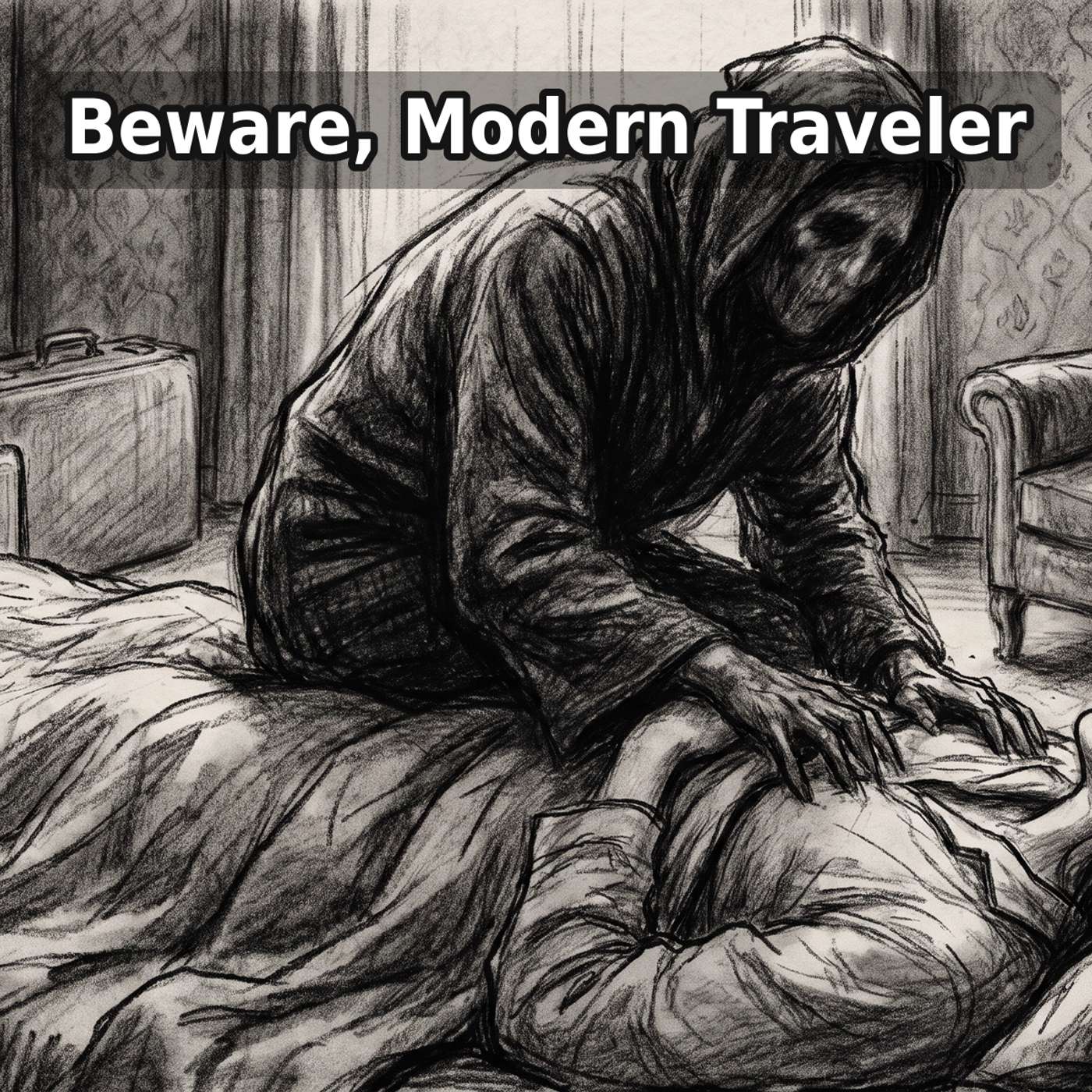
Be wary, modern traveler. One of the oldest habits of the human mind is also one of the easiest to miss. When confronted with ambiguity, complexity, or something we cannot fully explain, we give it a name. The name helps because it takes something shapeless and puts a boundary around it. It gives us something we can talk about, warn others about, blame, and sometimes even treat. The danger comes later, when we forget that the name was originally just a model. For centuries, people reported waking in the night unable to move. Some felt pressure on their chest. Others sensed someone standing in the room. Some saw a figure approaching the bed or believed that something was physically holding them down. Different cultures developed different explanations for these experiences, and in parts of medieval Europe one of those explanations was the incubus, a demon believed to visit people while they slept. Today we have a different name: sleep paralysis. Our modern understanding is unquestionably better. We know that REM sleep involves temporary muscle paralysis and that consciousness can sometimes return before that paralysis has completely released. We understand something about the neurological machinery involved. Yet there is still something important to notice. The people who spoke of the incubus were not necessarily inventing the experience. They were describing something human beings continue to experience today. What changed most dramatically was the explanation. That should make us humble. There seems to be a recurring pattern in the way humans deal with the unknown. We observe something we cannot explain, recognize a pattern, give it a label, build an explanatory story around it, and eventually accept that story so thoroughly that the label begins to feel like reality itself. The ancient person might say, “An incubus attacked him.” Another generation might say, “It must have been God’s will.” The modern person has a different vocabulary. “She’s bipolar.” “He’s autistic.” “That’s trauma.” “It’s systemic.” “The algorithm did it.” “That’s misinformation.” “The science says.” These statements are certainly not equivalent. Some describe phenomena supported by enormous bodies of evidence, and modern science can tell us far more about human behavior and physiology than our ancestors could have imagined. But that is not really the point. The point is that the human mind can use all of these labels in the same psychological way, as a means of turning uncertainty into apparent understanding. We hear the word and experience the relief of recognition. “Oh, that’s what it is.” But sometimes what we really mean is, “Oh, that’s what we call it.” Those are not the same thing. Once a label becomes widely accepted, another problem appears. We begin interpreting new observations through it. A person has dramatic mood changes, so every future emotional reaction is interpreted through a diagnosis. A child behaves differently from other children, so every unusual habit becomes evidence of a category already assigned. A company unexpectedly becomes popular, and we say, “the algorithm.” A political event surprises us, and we reach for whichever ideological explanation our group already prefers. Eventually the category begins absorbing everything around it. The label that was created to describe the observations starts being offered as the cause of the observations. Why does he behave that way? Because he has X. How do we know he has X? Because he behaves that way. We have gone in a circle. Philosophers call part of this process reification. We create an abstraction or category and gradually begin treating it as though it were a concrete thing. The map starts replacing the territory. I think this reveals something uncomfortable about us: human beings have always manufactured certainty faster than they manufacture understanding. Our ancestors populated the unknown with spirits, gods, humors, curses, and demons. We populate it with diagnoses, models, statistics, ideologies, systems, algorithms, and technical terminology. That does not make modern categories worthless. Science has given us something profoundly different from mythology: a method for testing our explanations against reality. We can measure things, make predictions, run experiments, reject hypotheses, and change our minds. That is an extraordinary achievement. But science is still practiced by human beings, and human beings remain susceptible to the same ancient temptation. We like certainty, particularly explanations that make further questioning feel unnecessary. Sometimes “the science says” means there is overwhelming evidence supporting a conclusion. Other times it is used to mean that the proper authorities have named the thing and further curiosity is no longer welcome. The latter is not science. It is our ancient desire for certainty wearing modern clothing. None of this is an argument against labels. We need them. Medicine, science, and ordinary communication would be nearly impossible without categories. The lesson is simply to treat the label as a tool rather than a verdict. When someone gives something a name, ask what that name actually tells you. Does it describe a pattern, or explain the mechanism? Does it make predictions? Can it be tested? What evidence would prove it wrong? Most importantly, what do we still not understand? There is nothing wrong with saying, “We don’t know.” Those may be three of the most productive words in human history, because they leave the door open to curiosity. So be wary, modern traveler. Use names, categories, diagnoses, models, and science, but do not surrender your curiosity to any of them. A word can represent reality without fully explaining it. Our ancestors populated the gaps in their understanding with demons. We should be careful about what we populate ours with.
Embed this episode
What this episode covers
This article explores the human tendency to label and categorize the unknown, from ancient explanations like the incubus to modern diagnoses and algorithms. It highlights the danger of mistaking a label for reality and the importance of maintaining curiosity even when confronted with seemingly certain explanations.
Ready to play
Day 320 - Beware, Modern Traveler
No transcript for this episode yet
Similar Episodes
No similar episodes found.
Similar Podcasts
No similar podcasts found.