
EPISODE · May 27, 2026 · 21 MIN
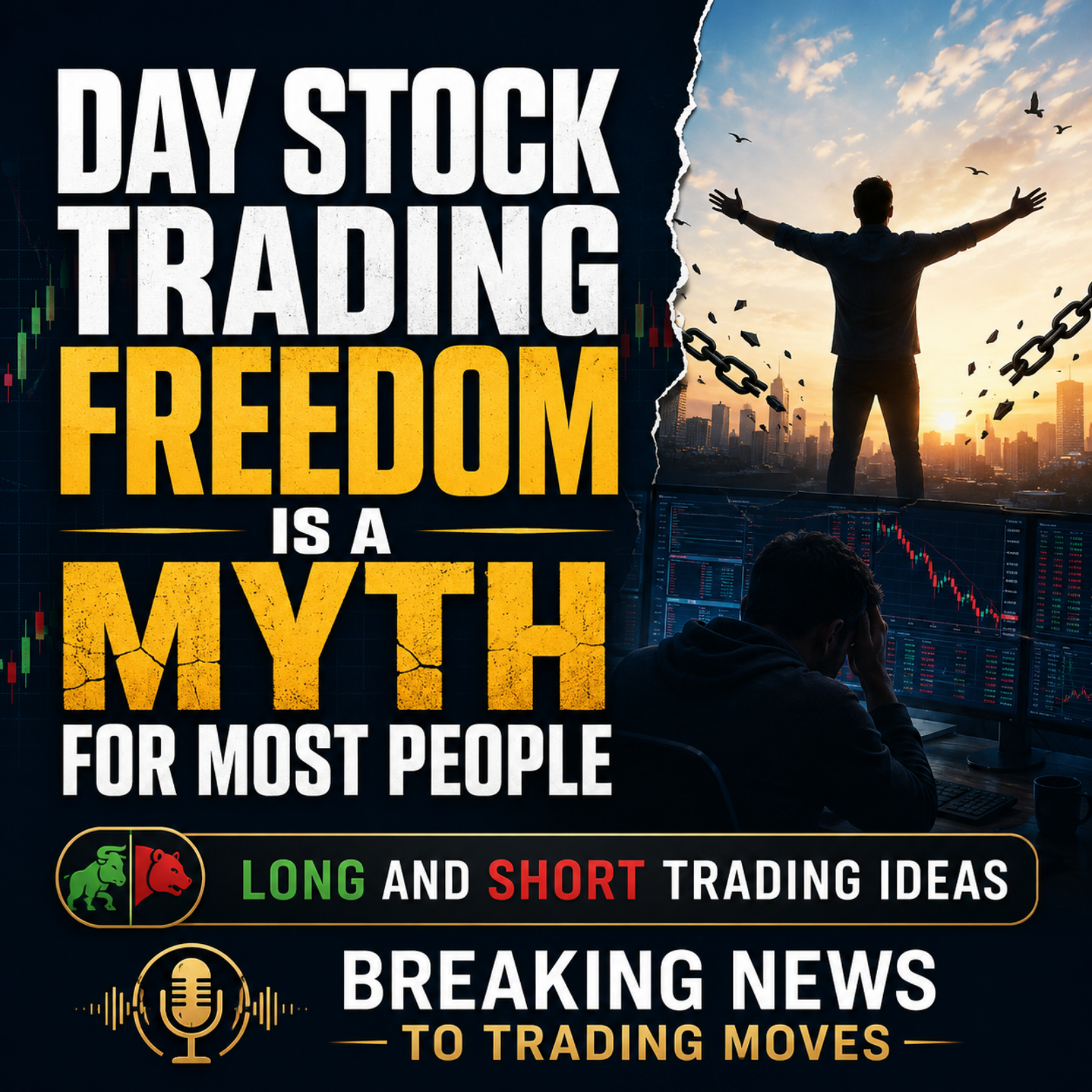
Day stock trading freedom is a myth for most people
from Breaking News To Trading Moves
Day trading freedom is often sold as the dream: no boss, no commute, quick profits, and full control over your time. But for most people, the reality can look very different.In this episode of Breaking News to Trading Moves, we discuss why the idea of day trading as an easy route to freedom can be misleading for retail traders. The conversation looks at market access, zero-commission trading, payment for order flow, behavioural bias, margin risk, gamified apps, and the pressure that comes with trying to trade short-term moves in a competitive market.The debate asks a simple but uncomfortable question: does easier access to trading truly empower ordinary people, or does it expose more retail traders to systems where the odds are already stacked against them? Removing old restrictions and high trading costs can give smaller accounts more flexibility, but easier access can also encourage overtrading, emotional decision-making, leverage, and false confidence.Key pointsThe myth of trading freedom Day trading is often marketed as independence, but freedom is not just the ability to click buy and sell whenever you want. Real freedom requires consistency, risk discipline, capital protection, emotional control, and the ability to step away from bad trades. Without those, the dream can become stress, screen addiction, and financial pressure.Why access does not equal success Zero-commission trading changed the market for retail traders, but removing direct fees does not remove risk. Small accounts can still be hurt by spreads, slippage, poor execution, overtrading, and emotional exits. Making trading easier to access does not automatically make it easier to win.Payment for order flow and hidden incentives The episode breaks down how “free” trading is often funded through payment for order flow. Retail orders may be routed through wholesale market makers, while brokerages benefit from high trading volume. If platforms make more money when users trade more often, traders need to ask whether they are being pushed towards activity rather than good decision-making.The psychology of losing traders Many traders do not lose only because of bad stock picks. They lose because of behaviour. The discussion looks at selling winners too early, holding losers too long, selective memory, overconfidence, panic selling, hope-based holding, and the emotional need to be right.The pressure of intraday trading Day trading can create intense physical and mental stress. Watching every tick, reacting to sudden moves, dealing with margin calls, and making fast decisions under pressure can be exhausting. Many people underestimate the stress until real money is involved.The problem with gamified trading apps Modern brokerage apps can make trading feel simple, fast, and almost game-like. But the market is not a game. Every click has financial consequences. When apps encourage constant engagement and emotional reactions, traders may start behaving more like gamblers than risk managers.Main takeaway: Day trading may offer access, flexibility, and opportunity, but it does not guarantee freedom. For most people, the dream of quitting work and trading from anywhere is far harder than it looks. The market rewards preparation, discipline, emotional control, and realistic expectations. Without those, the freedom story can become a trap.#StockMarket #Trading #Investing #DayTrading #SwingTrading #RetailTraders #TradingPsychology #RiskManagement #StockTrading #TradingMindset #FinancialMarkets #Overtrading #MarginTrading #TradingDiscipline
Embed this episode
Ready to play
Day stock trading freedom is a myth for most people
No transcript for this episode yet
Similar Episodes
No similar episodes found.
Similar Podcasts
No similar podcasts found.