
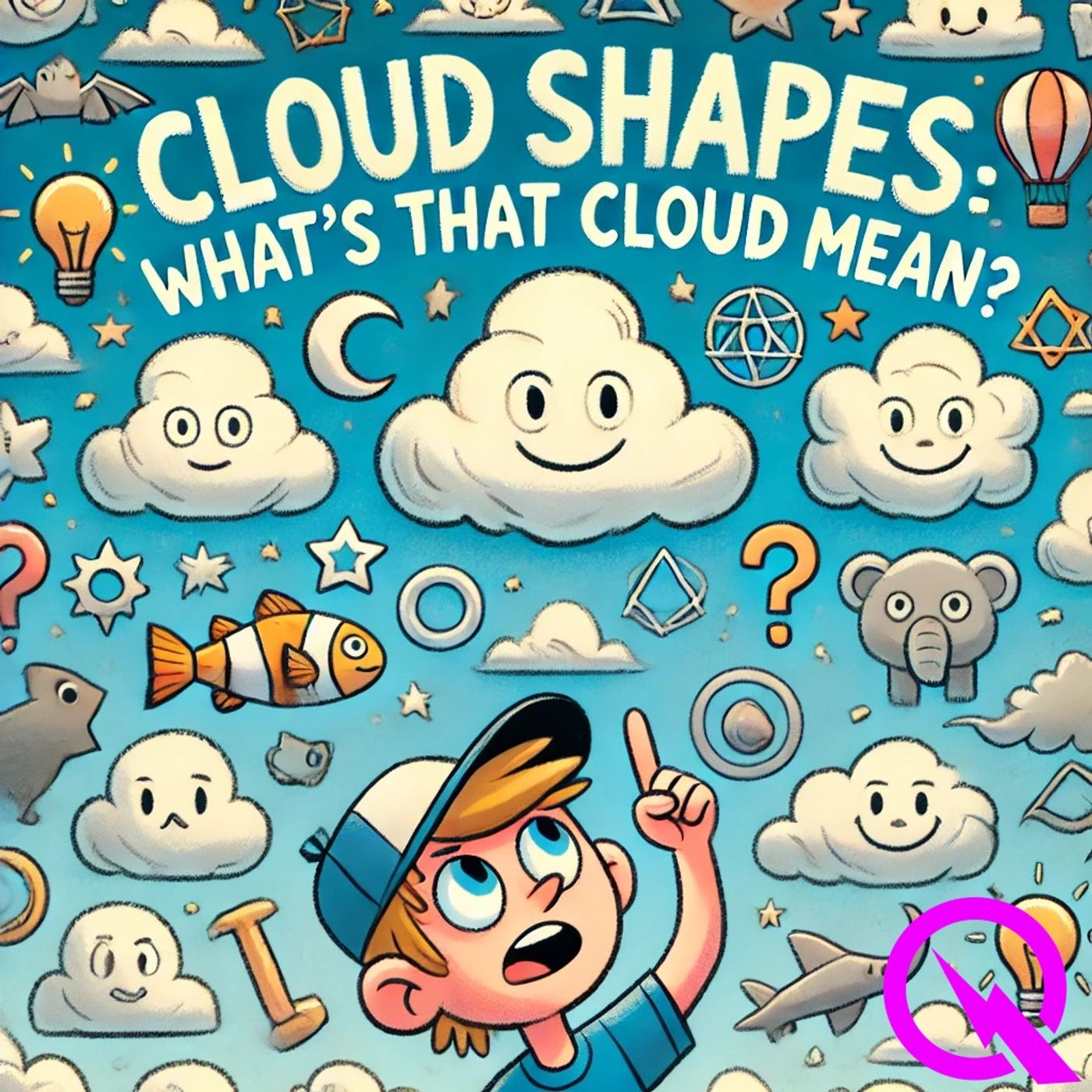
EPISODE · Apr 26, 2025 · 4 MIN
Decoding the Sky: Unraveling Cloud Mysteries and Their Hidden Meanings with Jed Why
from Cloud Shapes What’s That Cloud Mean? · host Inception Point AI
Hey there, I'm Jed Why, your friendly neighborhood audio explorer and former tinkerer extraordinaire. Back in the day, I used to spend my hours dismantling toasters and reassembling them just for the thrill of it. Now, I've traded in the soldering iron for a microphone, and I'm here to unravel life's oddball mysteries with you. So grab a lukewarm coffee, pull up a creaky porch chair, and let's dive into today's puzzling topic: Cloud Shapes—What's That Cloud Mean? You know, it's one of those lazy afternoons when the sky's a canvas of cottony confusion. I'm sprawled out on my porch, staring up at the heavens, and I can't help but wonder about those cloud shapes. Are they just random, or is there some cosmic artist up there doodling away? Huh, that's weird—let's unpack it. Let's start with the basics. Clouds come in all sorts of shapes and sizes, and each one tells a different story. Take the classic cumulus cloud, those fluffy white pillows that look like they've been plucked straight from a cartoon. They form when warm air rises and cools, condensing into water droplets. But what's interesting is how they evolve. A cumulus cloud can grow and grow until it becomes a cumulonimbus—a towering giant that might unleash a thunderstorm. It's a bit like watching a caterpillar turn into a butterfly, only with more potential for lightning and chaos. Speaking of chaos, let's talk about cirrus clouds. Those wispy, high-flying beauties are made of ice crystals and often signal a change in weather. The word "cirrus" comes from the Latin for "curl of hair," which makes sense when you see their feathery tendrils stretched across the sky. They're like nature's way of saying, "Hey, something's coming, so keep your eyes peeled." And then there are the stratus clouds, the gloomy overcast blankets that can turn a bright day into a monochrome mystery. They form a low, uniform layer and can bring drizzle or light rain. It's like the sky's wearing a gray hoodie, trying to hide from the world below. But here's where things get really interesting. Did you know that certain cloud formations have inspired everything from folklore to scientific theories? Take the lenticular cloud, for instance. These lens-shaped clouds often form near mountains and have been mistaken for UFOs. In the 1950s, a pilot reported seeing a strange object hovering over Mt. Rainier, only for it to be debunked as a lenticular cloud. It's a reminder that sometimes, the most otherworldly sights have perfectly earthly explanations. Speaking of earthly explanations, let's dive into the science behind cloud shapes. It's all about thermodynamics and atmospheric dynamics. Warm air rises, cools, and condenses into clouds. The shape of the cloud depends on the temperature, humidity, and wind patterns at different altitudes. It's a complex dance of physics that turns water vapor into a spectacle above our heads. But it's not just about science. Clouds have a way of sparking our imagination and stirring our This content was created in partnership and with the help of Artificial Intelligence AI.
Embed this episode
NOW PLAYING
Decoding the Sky: Unraveling Cloud Mysteries and Their Hidden Meanings with Jed Why
No transcript for this episode yet
Similar Episodes
No similar episodes found.
Similar Podcasts
No similar podcasts found.