
EPISODE · Mar 11, 2025 · 21 MIN
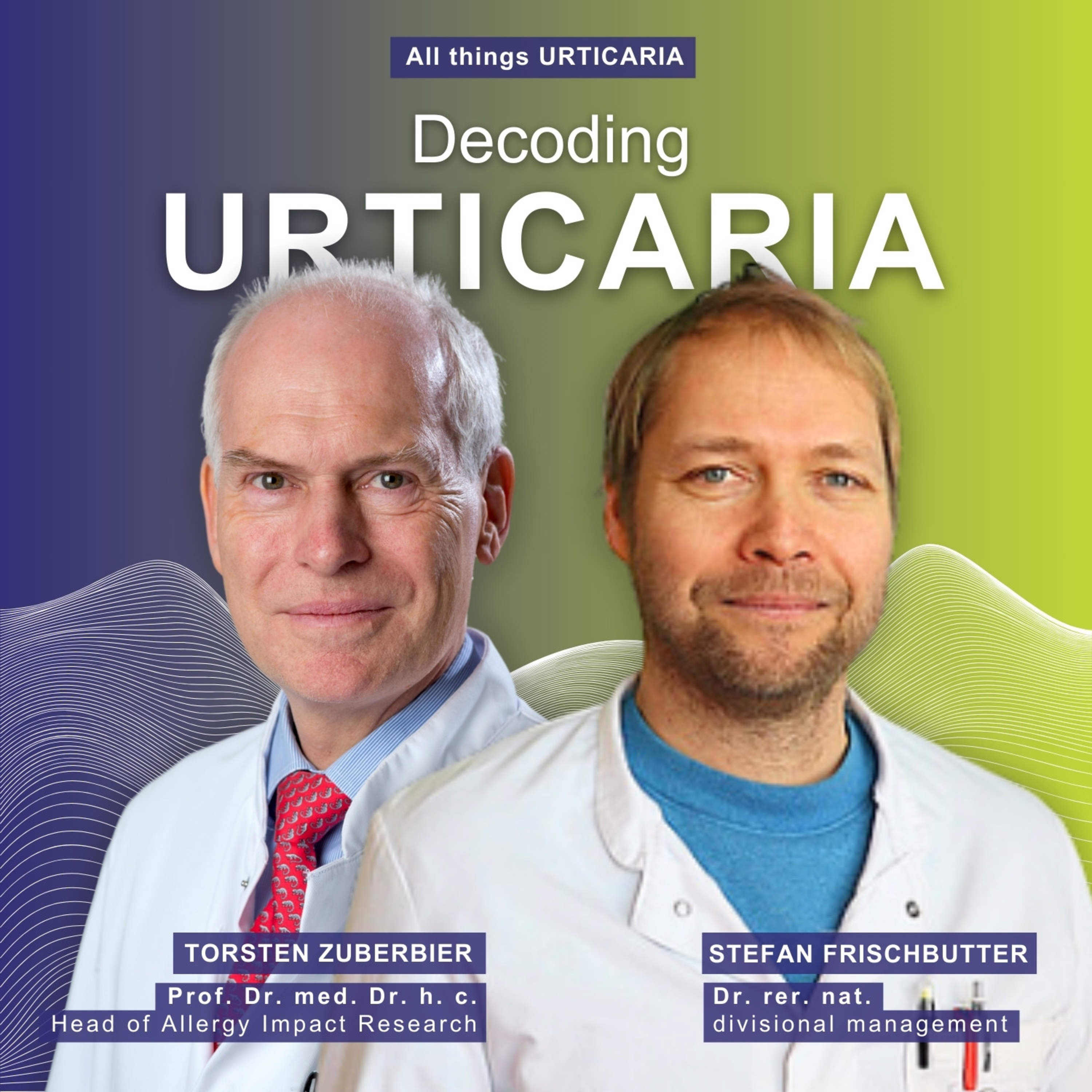
Decoding Urticaria: Mast Cells, Triggers & Immune cell crosstalk
from All Things Urticaria – Learning about urticaria with Prof. Dr. Torsten Zuberbier · host UCARE, the Global Allergy and Asthma Excellence Network for Urticaria
In this episode, Prof. Torsten Zuberbier (Charité Berlin, GA²LEN) welcomes Dr. Stefan Frischbutter, senior researcher at the Institute of Allergy in Berlin, to explore the fascinating world of mast cells and urticaria. They discuss: 🔬 The critical role of mast cells in immune responses and skin conditions like urticaria. 💡 How temperature, autoantibodies, and nerves can trigger mast cell activation. 🦠 Different types of mast cell activation: IgE, IgG autoantibodies & pseudo-allergens. 🧪 New research techniques to study mast cells and identify better treatments. 💊 How eosinophils, neutrophils & T-cells influence chronic urticaria severity. 📢 The latest advances in urticaria treatment and why biopsies could guide therapy. Join us for an insightful discussion on the immune system’s “orchestrators” and how scientific discoveries are shaping the future of urticaria treatment! Key Learnings from the epsiode:Mast cells act as immune response directors, responding to heat, cold, allergens, stress, and autoantibodies. Urticaria has multiple causes, including IgE and IgG autoantibodies, pseudo-allergen receptors (MRGPRX2), and nerve signals. Not all urticaria cases are histamine-driven—other immune cells like eosinophils and neutrophils play a major role. Chronic spontaneous urticaria patients often have autoantibodies targeting mast cells, making treatment challenging. Taking a skin biopsy at the right time (after a wheal disappears) can reveal immune cell involvement and guide personalized treatments. New research techniques, like mast cell activation tests and ex-vivo skin models, help identify triggers and potential treatments. Different immune cells require different treatments, and eosinophil/neutrophil-driven urticaria may need specialized drugs. Exciting future treatments are emerging, and ongoing research will provide better-targeted therapies for urticaria patients. Chapters 00:00 Introduction to Mast Cells and Their Importance 02:50 Understanding Urticaria and Its Triggers 05:55 Mast Cell Activation Mechanisms 08:30 The Role of Other Immune Cells in Urticaria 11:30 Clinical Implications and Biopsy Timing 14:08 Research Advances and Future Directions Do you have suggestions for future episodes? Please provide feedback and offer your suggestions for future topics and expert selection here.Feedback form:ATU: https://forms.office.com/e/m6a2uEdsUH
Embed this episode
NOW PLAYING
Decoding Urticaria: Mast Cells, Triggers & Immune cell crosstalk
No transcript for this episode yet
Similar Episodes
No similar episodes found.
Similar Podcasts
No similar podcasts found.