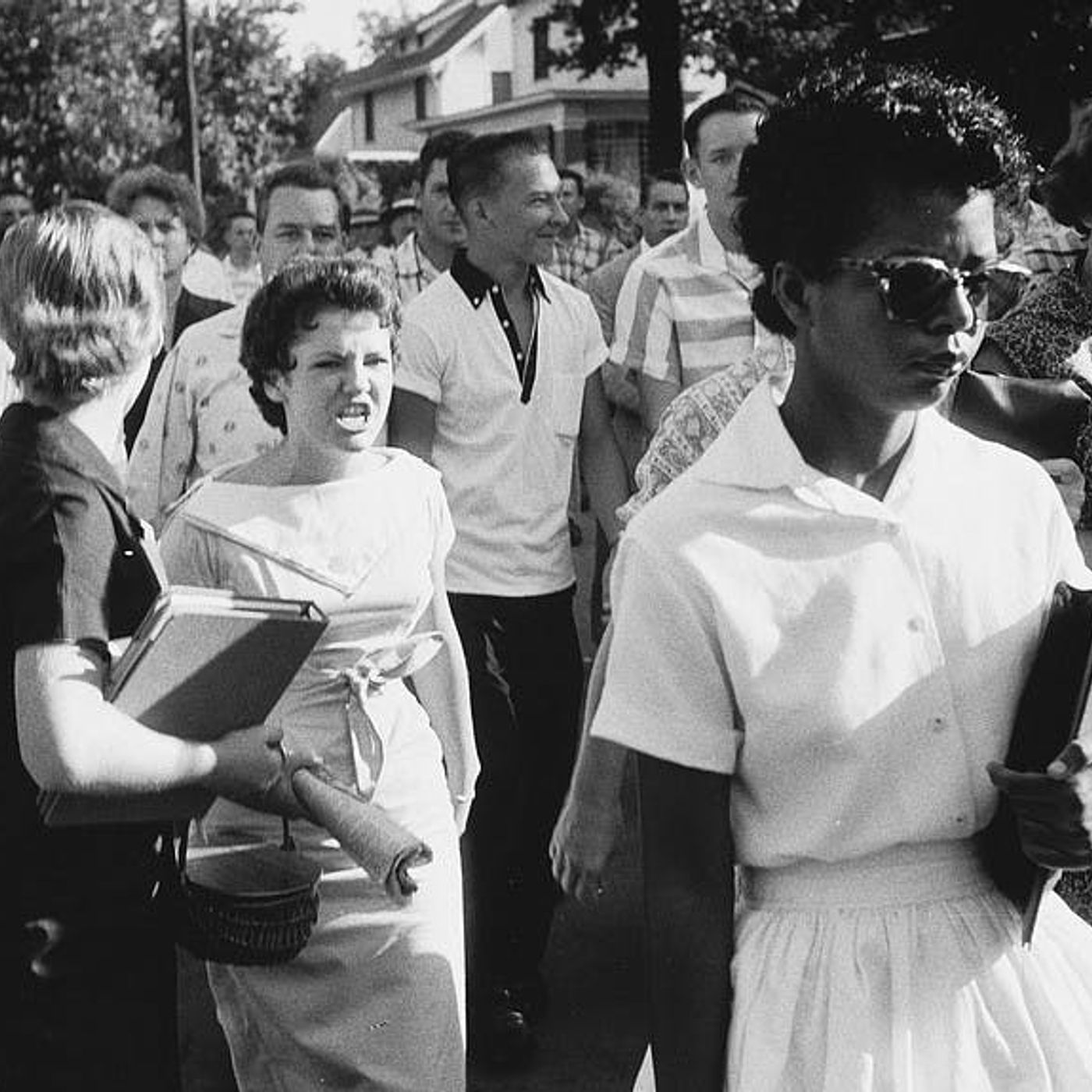
Decolonizing Praxis episode artwork

EPISODE · Oct 23, 2023 · 23 MIN

Decolonizing Praxis

from High Theory · host High Theory

In this episode of High Theory, Erin Pineda talks about decolonizing praxis. Black American activists in the 1950s and 1960s used strategies of civil disobedience and nonviolent direct action as part of a broader anticolonial movement, and reading their story in an international context can help us rethink the narrative of the US civil rights movement enshrined in American political theory. In the episode Erin references Jack Halberstam’s concept of “low theory” which derives from the work of Stuart Hall, and appears in the book, The Queer Art of Failure (Duke UP 2011). She also references several mainstream liberal political philosophers who set the terms of the debate about “civil disobedience” in the US academy in the 1970s, John Rawls Theory of Justice (Harvard UP, 1971), Hugo Bedau, “On Civil Disobedience” (Journal of Philosophy 58, no. 21 (1961): 653-665) and Carl Cohen, Civil Disobedience: Conscience, Tactics, and the Law (Columbia University Press, 1971). Pineda writes against this tradition. The American activists she studies developed a different set of theoretical commitments to civil disobedience that are a bit less polite, and have a bit more potential for actual revolution. Erin Pineda is the Phyllis Cohen Rappaport ’68 New Century Term Professor of Government at Smith College. She teaches courses in the history of political thought, democratic theory, race and politics, social movements and American political thought. Her research interests include the politics of protest and social movements, Black political thought, race and politics, radical democracy and 20th-century American political development. If you want to learn more about the topics she discusses in this episode, read her book! It’s called Seeing Like an Activist: Civil Disobedience and the Civil Rights Movement (Oxford UP, 2021). The image for this episode is a famous photograph of Black student Elizabeth Eckford being jeered by white student Hazel Bryan as she attempts to enter Little Rock Central High School, taken by Will Counts on 4 September 1957, one of the more famous images of school desegregation from the US Civil Rights Movement. This digital version came from wikimedia commons. Learn more about your ad choices. Visit megaphone.fm/adchoices

In this episode of High Theory, Erin Pineda talks about decolonizing praxis. Black American activists in the 1950s and 1960s used strategies of civil disobedience and nonviolent direct action as part of a broader anticolonial movement, and reading their story in an international context can help us rethink the narrative of the US civil rights movement enshrined in American political theory. In the episode Erin references Jack Halberstam’s concept of “low theory” which derives from the work of Stuart Hall, and appears in the book, The Queer Art of Failure (Duke UP 2011). She also references several mainstream liberal political philosophers who set the terms of the debate about “civil disobedience” in the US academy in the 1970s, John Rawls Theory of Justice (Harvard UP, 1971), Hugo Bedau, “On Civil Disobedience” (Journal of Philosophy 58, no. 21 (1961): 653-665) and Carl Cohen, Civil Disobedience: Conscience, Tactics, and the Law (Columbia University Press, 1971). Pineda writes against this tradition. The American activists she studies developed a different set of theoretical commitments to civil disobedience that are a bit less polite, and have a bit more potential for actual revolution. Erin Pineda is the Phyllis Cohen Rappaport ’68 New Century Term Professor of Government at Smith College. She teaches courses in the history of political thought, democratic theory, race and politics, social movements and American political thought. Her research interests include the politics of protest and social movements, Black political thought, race and politics, radical democracy and 20th-century American political development. If you want to learn more about the topics she discusses in this episode, read her book! It’s called Seeing Like an Activist: Civil Disobedience and the Civil Rights Movement (Oxford UP, 2021). The image for this episode is a famous photograph of Black student Elizabeth Eckford being jeered by white student Hazel Bryan as she attempts to enter Little Rock Central High School, taken by Will Counts on 4 September 1957, one of the more famous images of school desegregation from the US Civil Rights Movement. This digital version came from wikimedia commons. Learn more about your ad choices. Visit megaphone.fm/adchoices

NOW PLAYING

Decolonizing Praxis

0:00 23:19

No transcript for this episode yet

We transcribe on demand. Request one and we'll notify you when it's ready — usually under 10 minutes.

Chewing the Fat with WorkForge WorkForge Bite-Sized Conversations for Building a Stronger Workforce Welcome to Chewing the Fat, a podcast delving deep into the world of food manufacturing. Dive into real conversations around critical topics like staffing, retention, onboarding, and career development in this essential industry. Subscribe now to gain insights from your peers, subject matter experts and more on the biggest issues facing food manufacturers today: -Hiring and retaining employees -Addressing the challenges of the Silver Tsunami -Improving time to productivity of new employees -Engaging employees from hire to retire And more... Tune in to Chewing the Fat, a WorkForge podcast, and join the conversation on how to build and sustain a resilient, high-performing workforce in food manufacturing. Sermons | Countryside Bible Church Countryside Bible Church At Countryside Bible Church, we equip believers to joyfully live holy lives, to serve one another, and to share the gospel of Jesus Christ, all to the glory of God. We are committed to a high view of God, and a high view of Scripture. IT IS WHAT IT IS with SHALLZ - SHALLY ZOMORODI Shally Zomorodi What?  "It is what it is" with ShallZ – Shally ZomorodiWhen? WeeklyHow long? 35 minutesEvery week, Mother of 4, wife, morning TV news anchor and ultimate hostess, Shally Zomorodi talks about life - its up's and downs and how to stay on track in her weekly podcast, ‘It is what it is.’  Known for her high energy, infectious smile and ability to see the cup as half full Shally talks about all things in life and how to work through its challenges. From parenting, marriage, friendships, current events to how to smile when it just seems impossible ‘It is what it is’ is the perfect podcast to help inspire you to dance through the rain. The Syndicate Blogcast: Startups | Startup Investing | Tech News | Angel Investors | VC | Venture Capital | Private Equity | Crowdfunding | Fundraising Matt Ward - Serial Entrepreneur | Angel Investor | Startup Advisor | Amazon Ecommerce The Syndicate Blogcast show is an extension of The Syndicate podcast, featuring long form articles on the future technology, ecommerce, business and life. The mini-sodes deconstruct high level startup, business and tech issues to help investors and operators better understand and win the market. Recurring topics include: Facebook, Google, Amazon, Apple, Ecommerce, Blockchains, ICOs, Cryptocurrencies, Marketing, Fundraising, Venture Capital, Startup Challenges, Business Development and more. The Blogcast comes in addition to The Syndicate - the place where investors and startups combine to create crazy businesses and even crazier returns. The Syndicate podcast is a deep dive on the angel investors and VCs behind the big name startups. We interview the best and brightest investors, syndicate leads, GPs, limited partners and startup founders to create an original, off the cuff discussion on startup investing.

Frequently Asked Questions

How long is this episode of High Theory?

This episode is 23 minutes long.

When was this High Theory episode published?

This episode was published on October 23, 2023.

What is this episode about?

In this episode of High Theory, Erin Pineda talks about decolonizing praxis. Black American activists in the 1950s and 1960s used strategies of civil disobedience and nonviolent direct action as part of a broader anticolonial movement, and reading...

Can I download this High Theory episode?

Yes, you can download this episode by clicking the download button on the episode player, or subscribe to the podcast in your preferred podcast app for automatic downloads.
URL copied to clipboard!