This episode is brought to you by Accenture. When you're advertising operations, Fallout of Sync, everything else follows. Spotify and Accenture are working together to reinvent the rhythm of ad sales, using automation, analytics, and smarter workflows to simplify campaign delivery and access better data across the business. The result?
Less time spent on operations, more time connecting brands with the moments and fandoms that matter most. Learn more at accenture.com slash Spotify. Welcome to Future Files, the post-class exploring technologies that are changing the way we live, work, and play. We've had a little bit of a break for Christmas, but we're back now and we're going to get into it.
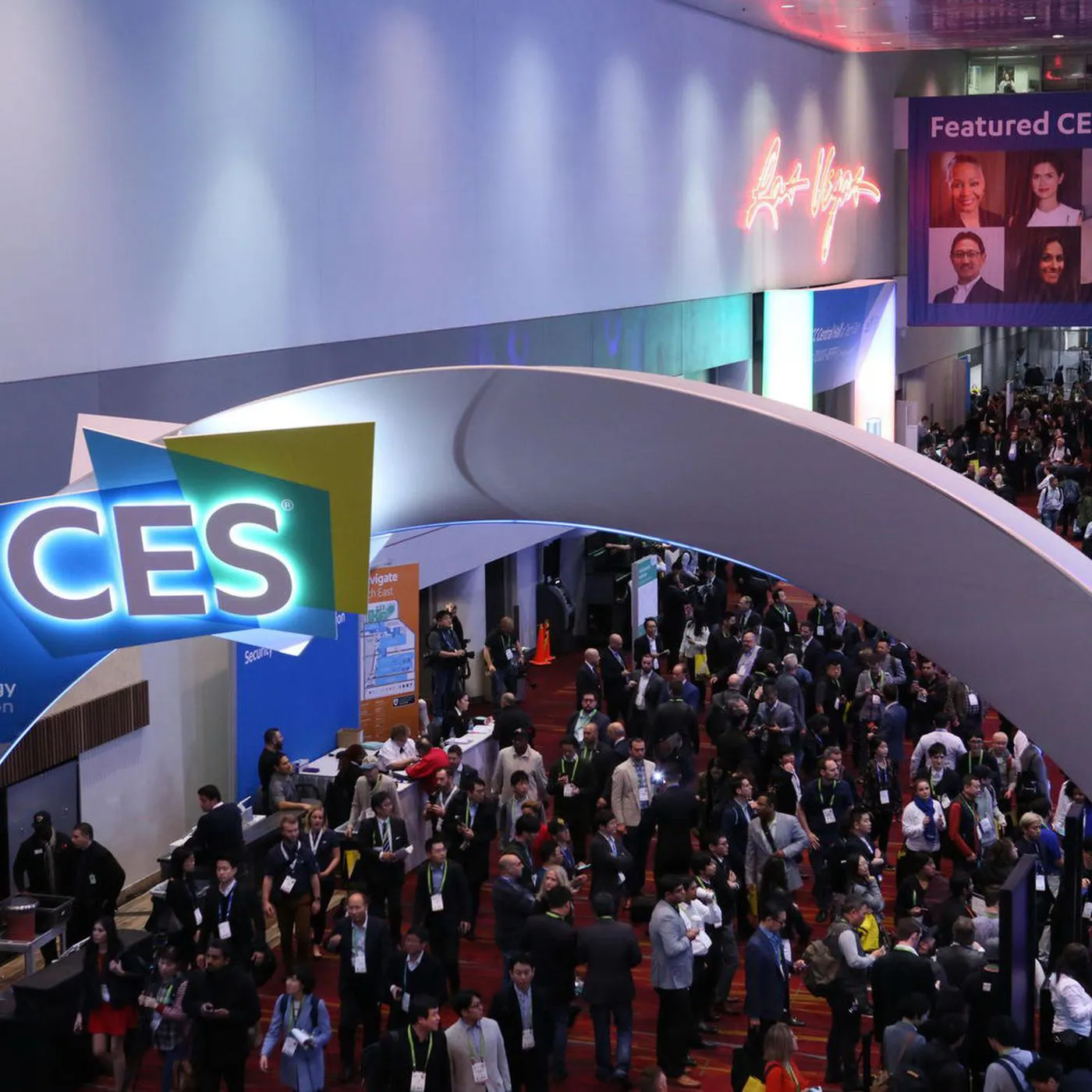
Today, we'll be talking about the Consumer Electronic Show, what it is, what it means, and the clues that it gives us about the kind of tech trends that we'll be seeing for the next year. I'd also like to take a moment to introduce my new co-host, Shavali Best is the latest member of the MiraTech team. She'll be joining me from now on to share her expertise with the rest of us. Hello, thank you very much for letting me join.
I'm not so sure about my expertise, but I'm excited to be doing a podcast. So yes, as you mentioned, we were talking about CES today, which is now one of the world's biggest tech conferences that takes place in January in Las Vegas every year. Amazingly, actually, it's been going on for over 50 years now. So it started in 1967 in New York.
And since then, it has just gone from strength to strength. Over the years, some of the biggest announcements in tech have been made at CES. So in 1970, the first VCR prototype was shown by Sony. In 1981, the first CD player was shown there.
In 1960, these many of you sound pretty retro now. Yeah, and then more recently, in 2010, the first Android tablet was shown there. So it just continues to grow. Yeah, and numbers have also been getting bigger and bigger.
So in 1967, it had just hundreds of exhibitors. But this year, we've seen almost 4,000 exhibitors. So it's absolutely a huge deal. Wow.
I mean, it's just massive. I mean, I've never actually been. No, neither. But I've covered it for years now.
And it just sort of keeps growing. And you hear the reports, and it's just taking over Las Vegas. The Las Vegas Convention Center is sort of the main hub. And that's just this gigantic indoor arena.
It's sort of the size of several football fields. All rammed with kind of stands and displays and people milling around. You've got journalists, industry experts. You've got investors.
People trying to sort of plug there. Then you gadget, then your product. It's just this gigantic hub of industry activity. And yet, as you said, it's one of the biggest in the world.
Yeah, it's a bit of the nightmare to get around as well. Vegas itself is huge. And then trying to get to different shows. I think it's going to be the nightmare.
Yeah. And it's right after Christmas as well. And yeah, so people just sort of been chilling out and having a nice break. And then they got an upstick.
So it just sounds like a marathon. Yeah, quite glad I'm not. I'm not. I'm not.
I'm not. I'm not sure. We want to cover it sort of from the relative comfort of the office here in London. Yeah, I think because it is held in January here as well, it really does set the tone for the year.
So some of the biggest trends often appear at CES and then continue to appear throughout the year. So things like 4K TVs and I think this year as well VR was one of the big things. So there's a lot of new VR headsets appearing, which I think are now going to be popping up throughout the year. Yeah, yeah, it definitely does, doesn't it?
It's sort of, you know, in the early days, it sort of started as a, well, it really was an industry conference. And it was based a lot around the audio, visual, consumer electronics, like you mentioned VCRs and TVs and stuff like that. But it's just, it's a wide range of technologies now that are kind of all just looking for attention. But yeah, you do pick out a couple of the trends that you think are going to kind of really take hold in the years.
I mean, no VR, we've had it for a couple of years and we were sort of going, is it going to be mainstream yet? We had the PlayStation VR that came in a couple of years ago. The Oculus Rift was probably the biggest name and it's just sort of waiting for it really to latch on. And yeah, again, bigger, bigger CES this year.
Yeah, definitely. So should we bring it up to speed and talk specifically about what we saw this year and what we liked and yeah, bring it right up to 2080. There was a lot to choose from. I said there was almost 4,000 exhibitors.
So there's a lot of stuff to pick from, but I have with a lot of them down. Yeah, I picked out a couple of ones that sort of I like the look of. And more for me, not what the actual technology is right now, but as ever what it promises to be down the line. I really like kind of looking at this, these shaky prototypes that are, you know, maybe not quite ready for a demoing yet, but they get them out anyway.
I look at it and I try to see the best in it. I try to see, you know, where this is going to be in 5, 10 years. Yeah. That's really like, that really appeals to me.
Like, try and look past just the nuts and bolts of it as to what it's promising. Yeah, everything starts with the brush types. Exactly. Exactly.
So we've seen this in 5, 10 years. Exactly. So for me, let's see, I really liked. So there was the first one that caught my eye was this.
And we covered it on the mirror is this roll up TV from LG. So I'll set the scene for you. It's a flexible display, an OLED 4K display. So, you know, sharp colors, really good display technology, but flexible.
So it's quite hard to explain it, but it's mounted on a motorized spindle, which is set in a rectangular box that is sort of mounted onto the wall. So picture the room and there's this big kind of box, almost like a sound bar, so it bolted onto the wall. And then at the touch of a button, you'll see this sort of screen unfurl itself from the box. And again, LG are saying this is not for commercial use this year, though.
They won't be able to get it out. It's just a prototype. But what it speaks to me is flexible displays, which are kind of that minority report future of people sitting on the train or the tube and reading like a paper. But it's a story.
Yeah, it kind of reminded me of the newspapers in Harry Potter. Yeah. Kind of like animated. Exactly.
Very strong reference there. We will get there one day. And this is the tiniest first sort of step towards that. So I saw that roll up TV and I thought, yeah, I'm not sure I'll be having that in my front room anytime soon.
But I really liked the idea that we're kind of getting towards that sci-fi vision. Have you said how long it will be until? They've said that they might get it out in 2019. So maybe you'll get a commercial version in 2019.
For 3 million pounds. Exactly. It's not going to be one thing that we can just want to down to like curries and pick one up for a couple of hundred quid and off for some time yet. And even so, because of the way a TV works is you've got to have all the ports and all the connections and things.
You can't just have a screen. That's why you need the box. Because you've got to have someone to sort of plug in all your everything you bits and pieces and stuff. It will take a really kind of wireless feature I think before we can just hold a screen and have whatever we want kind of streamed directly to it.
I question what the quality is like as well. If you can fold a screen how is the picture going to look on it? Yeah, and durability as well. I don't know if it has any of the broken TV screen in my life.
In my rock and roll tech journalism life. I've only ever broken. I've never broken many of them screens. I've never done in a TV screen.
I saw that and thought, okay, this is kind of a kind of gimmicky kind of cool product to show off and obviously it's always been a lot about screens. So that one fit right in. But I like to think that it's a little bit towards the future. I go into the future of how we will be kind of watching and taking a minute.
Because TV now is everyone's people are watching Netflix. You can TV is great. It's a great time to watch TV. You've got four channels and you have to sit and watch whatever is programmed by someone else.
You can find almost anything you want. Imagine being able to just have tablets and phones and stuff but just unrolling a screen. You look pretty cool on TV with you. Love it.
So for me that was one of the this year that I thought I liked. Actually I suppose I should just mention this isn't specifically the first year that a flexible screen has been shown. We've seen them before but it comes around again. And LG has been talking about doing it for so long.
In so many rumors pieces about them. So it's nice to actually see them bringing a prototype to see. Exactly. I think that's kind of what the CES can be good for as well.
You hear the rumors and the snippets of things that people may be working on behind the scenes. And then it's an opportunity we get finally to see some sort of tangible, physical prototype or whatever. And that's great. So that was number one for me.
And continuing my idea of looking vastly into the future passenger drones. This is very cool. So this idea of Jetson style future where we all have a little flying car in our driveway. I can't wait for that.
I can't wait for that to come. I want to just be able to walk out my front door, pop in my little personalized flying drone and be whisked away to the office. Or wherever. I don't know.
I do not know. That's not. I wonder when I'm one trying to say that's the first thing I think of is I've got to go to work. So yeah.
What are you parking at work? Yeah. That's true. Parking traffic.
We're going to have to figure all these things out. But irrespective of that at CES this year we had a couple of sort of personalized kind of quadcopters. Think gigantic drones. You know, the ones you fly around with your phone.
But these are sort of scaled up ones that you'd actually sit in and get taken around in. So there's one, there was one that was called the Volocopter. It was from a German made company. It's got 18 rotors.
It can take two people. And they hope, hope to be operating. This company hopes to have these drones operating in Dubai as kind of like personalized taxi services in the next three or four years. Yeah.
I've seen them throughout the year. They revealed one in Dubai last year. Yeah. Right.
So that was one. Another one was a company called Surefly. They'd kind of made a two person hybrid electric diesel drone that can, they say has a range of about 113 kilometers or 70 miles. Again, I don't think that was actually tested.
But it was unveiled. We saw it. It's there. They built it.
And we're talking right the very baby steps of this kind of thing. Yeah. One day. How would you actually fly it though?
Would you be in the controls inside it? Or would it be flying like its own? I think they will be automated controls. So it'll be a central flight controller like this sort of, you see with a lot of planes now.
It can be kind of remote, almost remotely flying. And you'll get in, put your navigation destination into the navigation system and just kind of be taken where you want to go. That's the ideal future. I think right.
Because they can't have us all be going to pilots go camping. No, exactly. Because that'll be the beginning. Right.
All these ones now. Even the pro types that they are flying around. You have to have a private pilot's license before they let you get in and fly around with it. Obviously in case anything goes wrong.
Yeah. So yeah. I don't know if we'll ever get to a sort of Jetson style flying car existence while I'm still alive. I would like to think we do.
There's a lot of people working on that. Even Uber is trying to develop their own things called Uber Air. That would be like a taxi service you can just call and fly across the city. It'd be pretty cool.
It'd be pretty cool, isn't it? Yeah. Obviously you actually get there first to get the first ones going. Yeah.
And again, the cost will have to come down a little bit. I don't think that. We can't be talking about cost all the time today. You're right.
You're right. You're right. This is lovely future gazing. So let's not be saddled with relative details like how much it's going to cost.
So those are a couple of things that I saw and fired up my techno lust I suppose for the conference. What did you call your eye? So first one that I really liked was Samsung's new TV called The Wall. Which they're describing as the screen of the future.
And this is basically the one I haven't displayed is a 146 inch TV. That essentially is just a wall in your house. Right. Just a gigantic wall screen.
A massive TV. Who needs a home cinema when a whole wall is a TV? So one of the coolest things about this is that it doesn't have to just be the 146 inch size. They can keep making it bigger and bigger without losing quality.
Right. Okay. So they have these things called micro LEDs inside them. Each one emits its own light.
So instead of having to backlight the whole thing or have some kind of filter on it, you can just keep adding more and more micro LEDs and the quality will be as good. So I would love to have a whole wall in my flat as a TV. Not sure my tiny flat would cope with that. But I have to fight for the best spot in the couch because you're just looking at the entire wall.
Yeah. Pretty cool. Again, no idea of course. I'm sure it's very expensive to make.
But yeah, imagine the future that everyone having one of those now is is I guess the way you start out with that is my sort of looking at corporate buyers and you use it for businesses and things like that. Yeah. You know, think of like I suppose like the giant screens at Piccadilly in London or things like that. And then gradually, gradually we can have a wall of screen and odd.
Well, if you look back, like I remember when the first big flat screen TV coming came out and they were a massive novelty and one of my friends had them on me all the love to go around their houses, whereas this could be that in a few years. You're actually right, TV is so sorry. They dropped quite quickly. I was amazed earlier this year when I was looking at, because around Christmas time, some people like that.
I think, oh, the Christmas movies are all looking into going to TV in the January sales for example. And you know, there's sort of 55 inch TVs. You can buy some pretty decent walls now. Yeah, you can just go to Cisco now and get like a nice little cheap one.
That's crazy. Anyway. Maybe we'll be doing that in 10 years with a wall TV. I mean, it's your local Tesco.
Yeah. I just felt my wall of that wall TV. Yeah, perfect. Okay.
So that's my first one. Good choice. My second one is slightly different. And this was a thing called my special Aflak Duck.
Okay. It looks a little bit naff. I'm not going to lie. It looks like a little stuffed toy, but it has a great kind of meaning behind it.
So it's basically a robotic duck designed for children with cancer to act as a companion for them. So it has really realistic movements. I've seen a video of it and it is quite cute. So it can kind of nuzzle into them and quack.
And it's basically designed to kind of go through their whole treatment journey with them. So say they're getting a cannula put in or something. The duck can get like a mini one put in as well. And one of the nicest things I think is that I think often children find it quite hard to express how they're feeling.
So kids are given different cards with different emotions. And they can hold it up to the duck and then the duck will convey it. So say they're in pain. They can hold the pain card up to the duck and the duck will act in a certain way so the doctors can then know how the child's feeling.
So I think it's really cute. And one, a best of CES awards. Obviously it has got some quite high tech stuff behind it. Yeah.
It's not just a little gimmick. I'm not sure when it's going to be ready or if they're using them yet. But I think it's a really cute idea. I think that's a great idea.
Nice to have something that's a little bit more, I don't know, pure I suppose. Trying to solve a problem I think. I think CES maybe often gets accused of and I suppose you can farm this out of the wider technology industry at the moment a little bit. Trying to solve problems that don't really exist.
It's a TV. It's a bigger TV. It's got more pixels. Yeah, okay.
It's great. And we love it. That sounds like it's trying to have a bit of an impact and really kind of help people in a very vulnerable situation. I think putting technology inside a duck is quite a cute idea.
Instead of having like a little robot that actually looks like a robot. It's quite nice. It's fluffy. It's a fluffy little duck.
It's quite cute. It's cute. I really like that one. What do you think?
It's just a duck. Apparently the Aflak duck is an actual symbol of his company. Okay. So they tried to bring it to life I think.
Interesting. That's my other favourite one. There were some very bizarre things announced at CES this year. I think every year there are some weird things which get a lot of coverage because they're so weird.
We love a weird story. There's some of my favourite weird ones where this thing called Helite Hip Air. Do you see the airbags for the hips? I did see this.
Basically these are inflatable bags to be worn on the hips for elderly people. If they do fall it protects them. It's like a bag in a car. Who is using that?
I don't. I'm not trying to get an older person to wear this bizarre belt every day in case they fall. In the middle of the night you're going to get up before you go to the toilet. Grab your belt.
You're going to grab your belt. That was a weird one for me. I see where they're going with it. The sentiment is there.
The sentiment is there. I see the thinking behind it a little bit but maybe not quite the application. Anyway. That was one of my favourite weird ones.
That was a weird one. That was a weird one. I can't think of any weird ones. I saw those.
One of the most horrible weird ones I saw was this mirror which you look at every day. It analyzes your skin and tells you where your wrinkles are, where your spots are, and which products you should be using to make them go away. What horrible way to start your day? Imagine.
I've got all your flaws. Here are the flaws. I'll go enjoy your day. Perfect.
I don't see a huge amount of people queuing up to get one of those. I don't know. Maybe they'll do a roaring business for the Instagram crowd. Selfie lovers.
Yeah. Well, I mean, there are certain sort of trends. I think that seems to come back year after year. We did mention earlier, but there are a couple of other ones I picked up on this year.
Again, we've seen come back year after year, progress a little bit. One of the ones I saw was personalised robots. Aside from the docu that you mentioned, these little helpful robots that will talk to you or play media files or whatever, trying to really normalise the idea of having robots around. They say that on some of the stands at the show they will just have these robots doing all laps and circles around and people stop and take photos with them and things like that.
One particular one that called I was Sony. They go out there and they're a robot dog. It's called IBO. They've had it for years and they bring it out and let it run around.
Do you think we'll ever get used to having robots being just a normal part of society? I think so. I think that's the way it's going. They're becoming more and more mainstream and being used for a lot of tasks.
When hotels you can see robots now, I think we're else. You can see them. But I think in the future kids are going to have robots instead of real dogs. Right.
It's very black mirror. It's very black mirror. There's two sides to this because you could have a robotic companion that helps you through a particularly troubling time in your life. This is one that keeps coming up.
This idea of having a job taken away by a robot because it's cheaper and it doesn't need a salary. It just needs to be serviced every once in a while. It's charged up. It's a real divisive issue.
It's interesting to see it hyped up so much at really industry techy events like CES. Then see that disconnect when it comes out of the bubble of the tech sphere and the tech industry and here's the real world. With real people who have real time commitments and families and jobs and worries and concerns and all that sort of stuff. Interestingly though, two of the personal robots that were shown at CES failed on stage.
So Sony's IBO failed and I think it was LG's Chloe. Both of them during presentations didn't respond but they should be. I'm not sure if the technology is actually keeping up with people's vision yet. Yes.
That's awkward isn't it? Such an awkward experience. It's a brand new robot. Just watching the video made me feel awkward.
So if you haven't seen that video, check it out. On our website. On our website. That's right.
We did cover it. So let's make sure you go to the tech section of the mirror and check that out. Another trend that I didn't really see going away this year was smart assistants. So both Amazon's Alexa and Google Assistant were appearing in a lot more devices this year.
So things like smart glasses and headphones and then also a smart toilet I think had Google Assistant which is bizarre but yeah they are popping up everywhere. Well not the toilet. There's smart assistants. So a smart assistant equipped toilet.
Yeah. Well I don't really want to know why you'd need that on the toilet. Solving problems that maybe aren't there. Yeah.
I don't know. Maybe you need to order some more toilet roll and went back to do it. Yeah. So yeah.
I think there's a conversation as well to be had and it crops up year after year is CES. This gigantic trade show where everybody who's everybody wants to be there. You know, like I said all those exhibitors, all those attendees. Is it relevant still?
Is it in a time when we can kind of happily kind of get the gist of it from here in London? You know, do we need to? Is it still relevant? I don't know.
I'm not sure. I've never been and I feel like I've been able to cover most of the big announcements from London. And interesting I think is that Apple has never goes. They just do their own thing.
I wonder if that will be the future that different companies just start doing their own announcements separately. Right. Yeah. You get to a certain point where you're big enough where it just doesn't matter to your Apple as well.
You mentioned Microsoft doesn't really have a present there as far as I'm aware. Google this year was at the show mostly to hype the assistant as you said. But you're right. You can get to a certain level where you're big enough named brands that you don't have to mix it in with everyone else.
It's maybe still relevant. If you're a small company, you want to try and be where all the industry people are. And there's still a reason to go if you approach it the right way. But even so, there's so many people.
Unless you're an out-of-the-s thing, you're going to be able to do that. It's a very interesting show. I would like to go one year. I think to experience it.
We're both saying, I don't know if it's going to go on or if it's relevant. But we'd still like to go. I would do it maybe once. Yeah.
We haven't done some of the other ones. I don't know if I'll stress what it can be. So maybe once. Right.
So there we go. If you didn't know what CVS was, you've never heard of it before. Hopefully you've given you a window into what it is. It's this big trade show that will set the time for some of the tech that you'll probably be seeing covered around or maybe some of it will appear in the shops over the next few months.
There are other trade shows throughout the year and tech is always innovating and new things are coming out. But CVS is usually the big one. So I think that's probably about what we've got time for. Thanks very much for listening.
Shavali, thanks for joining us. Thank you very much. And as always, please leave us a review. Drop us some suggestions for other topics you might want us to cover in the future.
Don't forget to check out all the coverage that we do on the mirror.co.uk. Just go to mirror.co.uk forward slash tech and you'll find all the latest technology news. So thanks again and we'll see you at the next one.