Demystifying the unreasonable effectiveness of online alignment methods
from Best AI papers explained Hosted by Enoch H. Kang
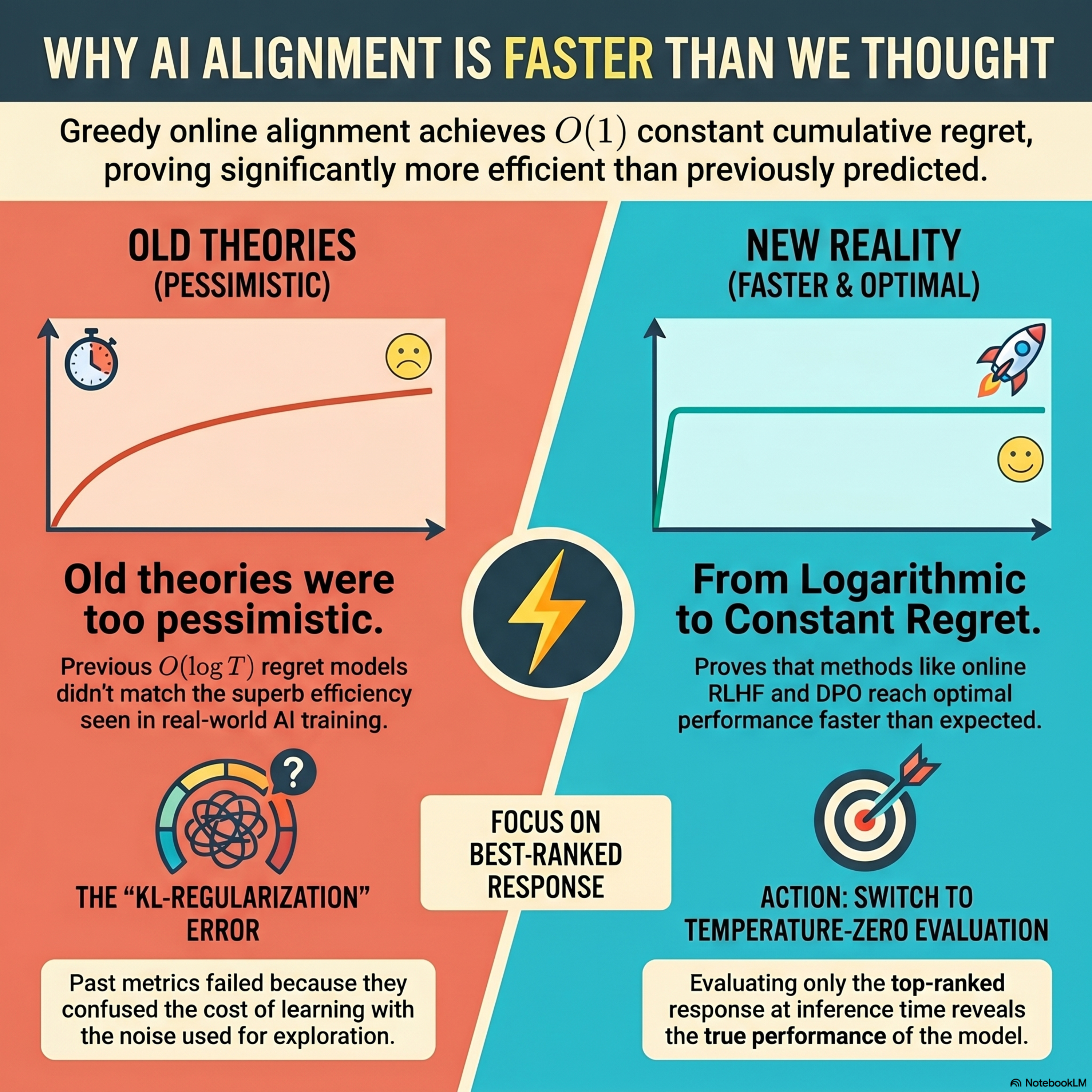
This research paper investigates why online alignment techniques for language models perform significantly better in practice than older mathematical theories suggested. The author argues that previous metrics were flawed because they confused the statistical difficulty of learning with the random noise required for exploration during training. By applying a more precise decision-centric evaluation, the study demonstrates that popular methods like RLHF and DPO actually achieve a much higher level of efficiency. Specifically, the paper proves that these greedy algorithms reach optimal performance levels more consistently than once believed. Ultimately, these findings provide a stronger theoretical foundation for the remarkable success seen in modern artificial intelligence fine-tuning.
Embed this episode
No transcript yet.