
EPISODE · Aug 5, 2025 · 21 MIN
Design Dataverse Data Models for Complex Business Apps
from M365.FM - Modern work, security, and productivity with Microsoft 365 · host Mirko Peters - Founder of m365.fm, m365.show and m365con.net
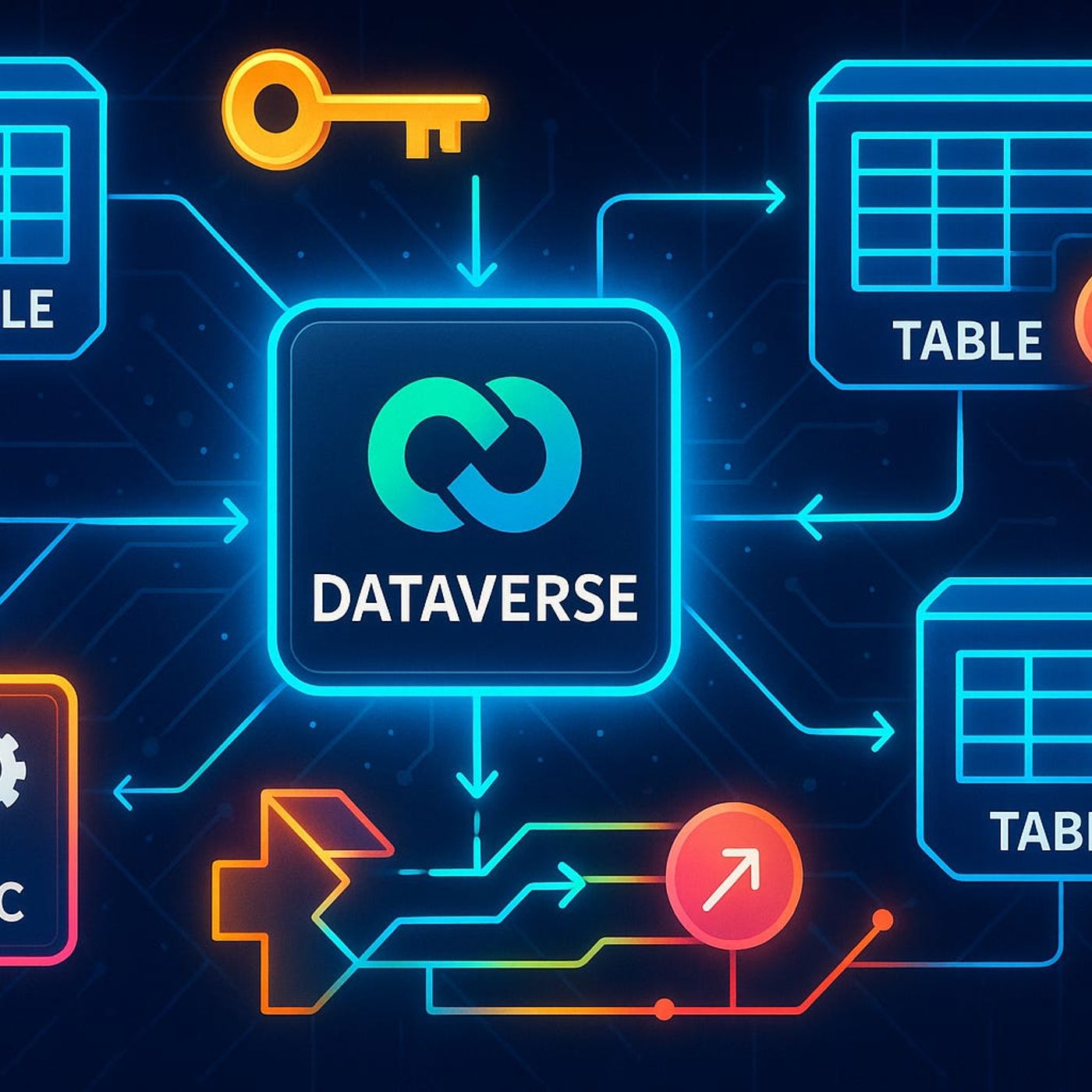
Building Dataverse apps that survive real-world scale is not about adding more tables and fields—it is about designing relationships, custom logic, and automation that can handle thousands of records, hundreds of users, and constantly changing business rules. In this episode, we break down how to move beyond the “spreadsheet mindset” and architect Dataverse so your Power Apps don’t collapse the moment the business asks for more data, more automation, and more reporting.You will hear why simple Dataverse builds often crumble once data volumes grow and new requirements pile up: from slow screens and broken views to fragile Power Automate flows and manual workarounds in Excel and Teams. We walk through real-world scenarios where quoting, approvals, and integrations turned into a spaghetti monster of ad-hoc logic—and show how a stronger Dataverse foundation would have prevented the chaos.We dig into the advanced pieces that make Dataverse resilient: well-structured relationships, calculated fields, alternate keys, and centralized business logic that lives in the data model instead of being scattered across random flows and scripts. You will learn how to treat custom logic like wiring and plumbing in a house—planned from the start, visible, and maintainable—so adding new rules or teams does not introduce unpredictable behavior.By the end of this episode, you will have a mental blueprint for Dataverse apps that actually grow with your organization: clear relationships, predictable automation, and logic that behaves the same whether data comes from users, APIs, or background processes. If you are tired of firefighting weird bugs, duplicated records, and performance issues, this conversation will help you build Dataverse environments that stay fast, stable, and understandable as your business scales.WHAT YOU LEARNWhy Dataverse apps with a “spreadsheet mindset” break as data, users, and requirements grow.How poor relationships, scattered Power Automate flows, and missing logic create performance and reliability issues.Which advanced Dataverse components (relationships, custom logic, calculated fields, alternate keys) make apps scalable and robust.How to design business logic as part of the Dataverse model instead of bolting it on with ad-hoc automation.How to turn fragile, duct-taped apps into maintainable business systems that support growth instead of blocking it.CORE INSIGHTThe core insight of this episode is that Dataverse does not break because of features you are missing—it breaks because the foundation is shallow. When relationships, custom logic, and automation are designed as first-class parts of your Dataverse model, your Power Apps stop behaving like overgrown spreadsheets and start acting like real business systems that can handle complexity, scale, and change.WHO THIS IS FORPower Apps makers who feel their Dataverse apps are getting slower and harder to change.Solution architects responsible for designing scalable Power Platform and Dataverse environments.Business and IT leaders who rely on Dataverse for critical processes like quoting, approvals, or case management.Developers and admins who are constantly patching flows, scripts, and workarounds to keep existing apps alive.ABOUT THE HOSTThis episode is hosted by Mirko Peters, a Microsoft 365 consultant and creator of M365.FM, who helps organizations turn Microsoft 365, Power Platform, and Dataverse into reliable business platforms instead of fragile prototypes. Drawing on real-world experiences with scaling Power Apps in complex environments, he focuses on practical patterns and architectures that reduce firefighting, improve performance, and keep business logic transparent and maintainable over time.Become a supporter of this podcast: https://www.spreaker.com/podcast/m365-fm-modern-work-security-and-productivity-with-microsoft-365--6704921/support.
Embed this episode
NOW PLAYING
Design Dataverse Data Models for Complex Business Apps
No transcript for this episode yet
Similar Episodes
No similar episodes found.
Similar Podcasts
No similar podcasts found.