
EPISODE · Jul 15, 2020 · 24 MIN
Designing effective health risk messages for COVID-19 for MSU students
from MSU Today with Russ White · host Russ White
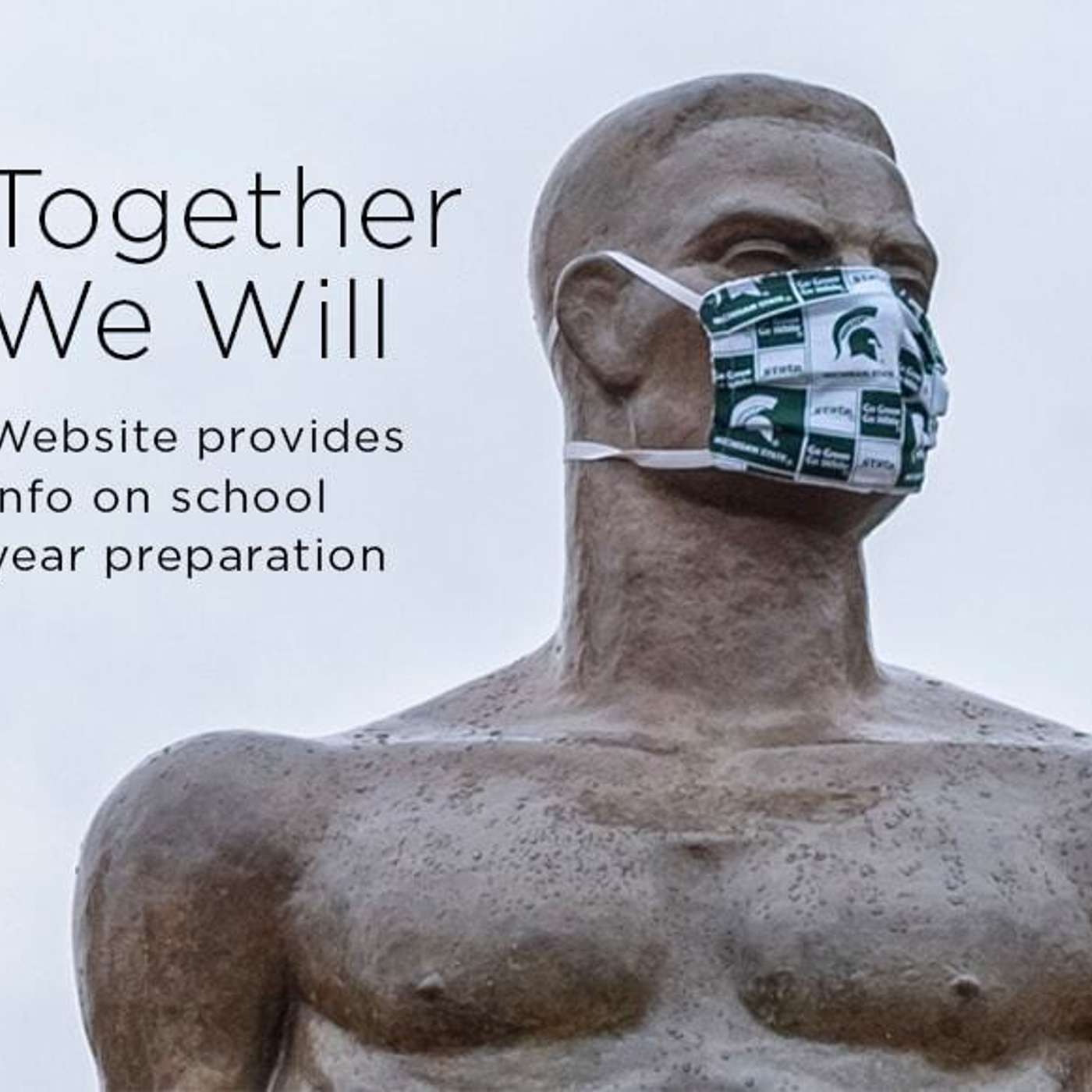
It's always my pleasure to welcome Dennis Martell to the MSU Today microphones. Dennis is executive director of the National Social Norms Center and is in the Health Promotion Department at MSU. And it's great to welcome Monique Mitchell Turner to MSU Today for the first time. Dr. Turner is professor and chair of MSU's renowned Department of Communication. “What's challenging about this situation, Russ, is that in my 35 years of being at MSU, I've never had a situation where we're constantly chasing an ever-changing pandemic that's affecting an ever-changing population, which is then affecting reactions from administration for ever-changing policies and mandates,” says Martell. “In order for us to get an idea of how this will all play out in the fall, we needed to do a survey of students on and off campus related to these issues. The effect of health risk messages is a concept that we need to study with the students, and also understand even from our own point-of-view, what is the best way to help the university reopen and have the students follow the protocols that will keep them safe.” “There are some important differences between the COVID-19 response on campus and the kinds of risk messaging we've been doing for decades,” adds Turner. “On college campuses, it's pretty normal to have messaging about binge drinking, smoking, depression, mental health generally, etc. And when students’ behaviors are what we would call risky, then we can focus on the impacts that they're having on themselves in the main. When you smoke, you're hurting yourself. When you're drinking, you're hurting yourself. Certainly there are effects on their friends and families as well. “But COVID-19 is really interesting because these students' risk behaviors might not have a substantial effect on their own health because of their age, but they will have a substantial effect on a number of people around campus, including the immunocompromised, older adults, etc. And so here we are faced with an issue where students risk behaviors are affecting other people on campus, and we've never really had to message something quite like that. We really haven't had cases where we've had to work quickly in a dynamic and changing environment to communicate about infectious disease.” Turner and Martell discuss the characteristics that define Generation Z and how knowledge of those characteristics helps define effective messages for them. And they talk about data from the National College Health Assessments from the American College Health Association and U-Celebrate 2019 and what the data reveal. “What these data reveal is just how community-oriented our students are and how collectivistic they are,” Turner says. “And that gives us a great window into the kinds of communication we can have with them. Certainly you hear people talking about mask-wearing behaviors and physical distancing behaviors and how people aren't thinking about other people. Maybe that's true. I don't know. But what we do know is that students do greatly care about each other. And so if our message can really make that salient and point it out to people, it seems as though that would really resonate with our audience. And so I think that that is a great ray of hope for us coming into reopening.” The duo discusses how pride in MSU can inspire desired behavior. “I'm a proud Spartan alumna with three degrees from this fine university,” Turner continues. “And no matter where I've gone in this country, or even internationally with my Spartan gear on, I find another Spartan crossing the street to let me know that they too went to MSU. Spartans take a great deal of pride in this university and what it stands for and it being a land grant university. And that's something that can compel people to engage in behaviors that protect other Spartans. “Oftentimes, we have messages that just tell people what to do but maybe forget to tell them why to do it. I argue that this is a very special place with a special mindset, and we should really talk to people about how thwarting COVID-19 is also about protecting this university.” Martell and Turner have a new survey in the field now. “Much like the surveys that Dennis and his team have collected previously, what we really want to understand is the psychological mindset of the student body,” adds Turner. “Do they perceive COVID-19 to be a threat? Do they feel it's severe? Do they feel susceptible? Do they think other people are susceptible? How common do they think it is to wear a mask or engage in physical distancing? How are they experiencing these behaviors emotionally? Do they make them nervous or angry? We also want to understand how oriented they are toward being a member of a group. We really want to understand what they think would work. We want their voice. And that's what the survey is attempting to gain.” “What we're trying to do, too, is advise upper administration on how to go about the messaging,” Martell adds. “The social norms part of this is really important; social norms are a really positive approach. We advise the university not to tell students what to do. Social norms don't tell you what to do. They tell you what you do. In other words, if it's normative to wear a mask, we tell the students it's normative to wear a mask. One of the tenets here is that we're not about correcting the students. We're about connecting with the students. We connect with them and tell them what their peers think. If 90 percent of students approve of wearing masks in the classroom, then we just tell them that. Those are the data we're trying to look at and trying to advise the university on as to how best to create their messages so that we can reopen.” “When you're designing risk messages for the college-aged group, the most important thing is to not be reactive, not to be finger wagging at them or be condescending, or assume you know what they're thinking,” adds Turner. “Those strategies are regretfully used all over this nation, but Dennis and I would never do that. We respect our students. We care about their voice. We care about their health. What we're trying to do is develop messages that connect with them in a way that will make them engage in the safest behaviors possible.” “The challenge here is somehow getting the students to know that we're not wearing a mask necessarily to protect ourselves,” says Martell. “We're wearing a mask to protect others and that they need to protect those people who are most vulnerable. You may not experience the symptoms and severity of it. But you have a responsibility to protect your mom, your dad, your grandparents, your step-parents, faculty and staff, and people who may be more vulnerable than you. This is what I think we can do with MSU because of the connectivity and the way MSU students think about the pride of being a Spartan. I can say that now is a time more than ever to raise your shield and actually wear that mask to protect and keep the university open.” MSU Today airs every Sunday morning at 9:00 on 105.1 FM, AM 870, and your smart speaker and connected devices.
Embed this episode
What this episode covers
In the wake of the COVID-19 outbreak at Harper's in East Lansing and attempts by universities like MSU that are trying to open with in-person on-campus instruction in the fall, let's talk about effective health risk messages that might resonate with college students.
Ready to play
Designing effective health risk messages for COVID-19 for MSU students
No transcript for this episode yet
Similar Episodes
No similar episodes found.
Similar Podcasts
No similar podcasts found.