
EPISODE · Feb 16, 2026 · 23 MIN
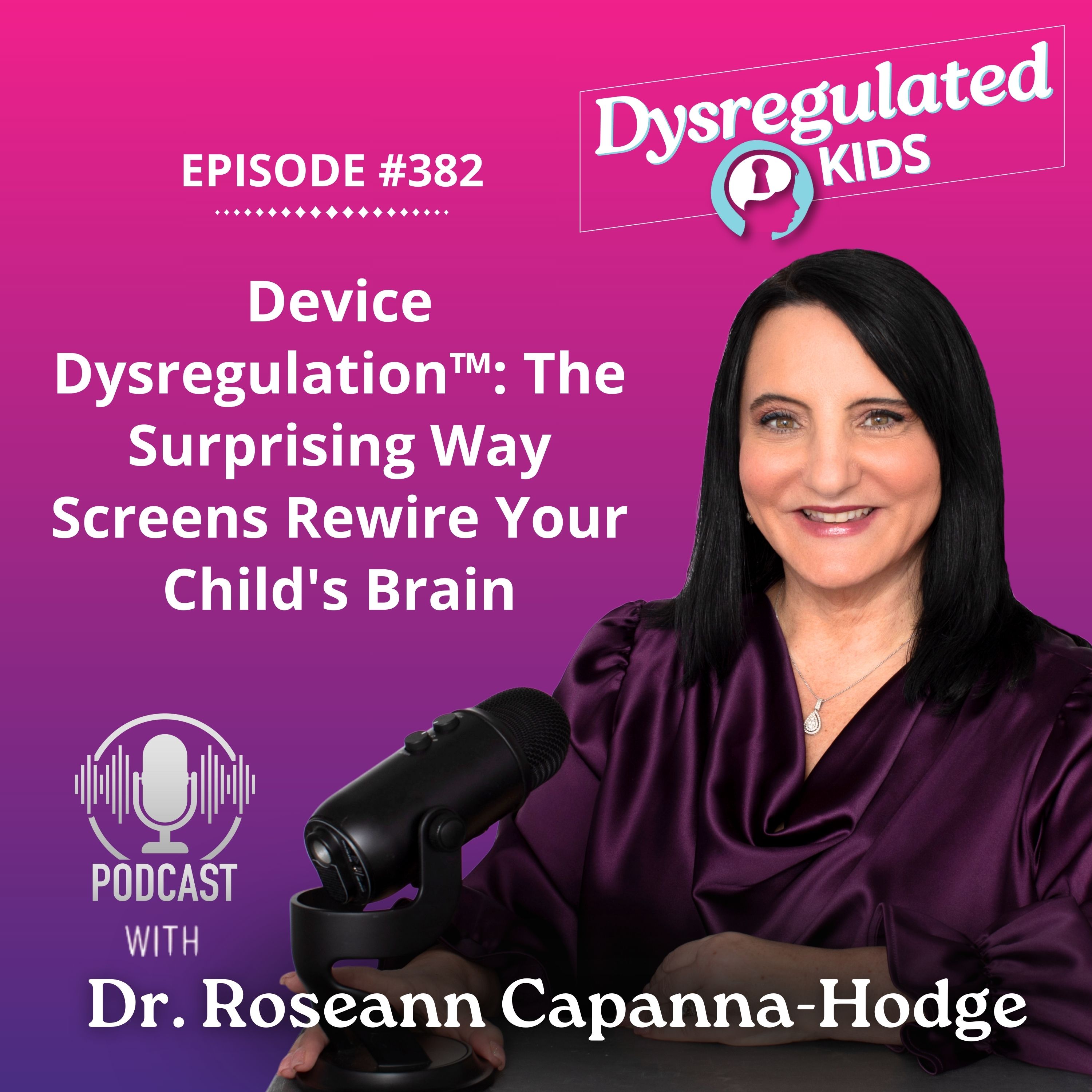
Device Dysregulation™: The Surprising Way Screens Rewire Your Child's Brain | Emotional Dysregulation | E382
from Dysregulated Kids: Science-Backed Parenting Help for Behavior, Anxiety, ADHD and More
Device Dysregulation™ can leave children overstimulated, anxious, and struggling to calm their brains after screen use. In this episode, Dr. Roseann Capanna-Hodge, expert in Regulation First Parenting™, explains how screens impact emotional regulation and shares strategies to help kids reset and thrive.Parenting with constant screens can feel overwhelming. You’re not alone. Post-pandemic, many kids became overstimulated from online learning and social media, leaving parents unsure how to help.Device dysregulation isn’t just screen time—it’s a brain stuck in high alert, craving dopamine, and losing tolerance for calm.In this episode, you’ll learn why kids get stuck in device dysregulation, how to prevent emotional dysregulation, and concrete strategies for transitions, boundaries, and sensory resets that make real change possible.Why does my child meltdown when I ask them to put the device down?Meltdowns aren’t defiance—they’re the nervous system signaling overwhelm. Rapid-fire entertainment, dopamine spikes, and addictive social media can keep the brain in a constant high alert, often leading to emotion regulation difficultiesand maladaptive emotion regulation strategies.These challenges affect children’s emotional responses, increase negative emotions, and in some cases can mimic symptoms seen in mental disorders or contribute to problematic internet use.Tips for parents:Co-regulate first: Model calm so your child can borrow your regulation and practice healthier emotion regulation strategies.Avoid personalization: Their reactions aren’t about you—they’re dysregulated.Predictable boundaries: Set device limits before the screen is on to reduce conflict and support consistent, regulated emotional responses.Real-Life Example: Eli, a 12-year-old, became irritable and anxious post-pandemic. Consistent screen limits and calm parental cues helped him power down without daily battles.How can I help my child regulate after excessive screen time?Transitions from screens are tricky because the brain is overstimulated. Without grounding, kids and young adults can struggle with emotional awareness, executive functioning, and attention, increasing the risk of temper tantrums, negative emotional states, and experiencing negative emotions.Practical strategies:Sensory transitions: Jumping jacks, cold water, a sensory snack, or barefoot walks reset the nervous system.Model coping: Show how you unplug and shift focus calmly.Gradual transitions: Use timers and warnings for device cutoff to reduce experiencing negative emotions and prevent meltdowns.If you’re tired of walking on eggshells or feeling like nothing works…Get the FREE Regulation Rescue Kit and finally learn what to say and do in the heat of the moment.Become a Dysregulation Insider VIP at www.drroseann.com/newsletter and take the first step to a calmer home.What is device dysregulation and how does it affect my child’s brain?Device dysregulation is more than screen time—it’s emotion dysregulation fueled by dopamine, blue light, and constant novelty. Kids may appear lazy, flat, or bored, but their nervous system is overloaded.Social media addiction and internet gaming disorder can worsen negative affective states, impacting mental health and leading to negative consequences in daily functioning. Emotion regulation scale highlight these challenges, and future research continues to explore how digital stimulation shapes emotional regulation over time.Key points:Rapid scrolling = mini dopamine hits, long-term depletionDisrupted sleep = suppressed melatoninHeightened impulsivity, difficulty planning, emotional distress🗣️ “It’s not bad parenting—it’s a dysregulated brain. The more we stay calm, the more our kids can step into calm too.”— Dr. RoseannGet instant tools to calm your child’s nervous system with Quick CALM—helping meltdowns stop before they take over your day.How do I set healthy device boundaries without constant battles?Predictable, consistent limits reduce conflict and support emotion regulation strategies.Try this:30-minute device windows: Set a timer together, enforce gently.Transition warnings: 10 minutes, 5 minutes, then cutoff.Collaborative problem-solving: Allow negotiation within boundaries; it builds emotional intelligence.Takeaway & What’s NextDevice dysregulation isn’t a moral failing—it’s a nervous system needing guidance. By modeling calm, setting predictable boundaries, and using sensory transitions, parents can help children manage intense emotions, reduce tantrums, and improve focus.Small, consistent steps now strengthen your child’s emotional resilience and cognitive emotion regulation strategies for life.Help your child find calm with The Dysregulated Kid—a science-backed guide to regulating the nervous system and managing intense emotions.FAQsWhat are the signs of device dysregulation in children?Irritability, emotional flatness, sensory overload, focus problems, and difficulty transitioning from screens.How can sensory transitions help kids after screen time?Jumping, stretching, or tactile activities ground the brain, reducing overstimulation and improving emotional clarity.Why do predictable boundaries reduce screen-time meltdowns?Consistency signals safety to the nervous system, helping children follow rules without emotional outbursts.Is device dysregulation linked to ADHD?Overstimulation may mimic ADHD symptoms, but it’s often an overactive stress response, not a clinical disorder.When your child is struggling, time matters.Don’t wait and wonder—use the Solution Matcher to get clear next steps, based on what’s actually going on with your child’s brain and behavior.Take the quiz at www.drroseann.com/help
Embed this episode
NOW PLAYING
Device Dysregulation™: The Surprising Way Screens Rewire Your Child's Brain | Emotional Dysregulation | E382
No transcript for this episode yet
Similar Episodes
No similar episodes found.
Similar Podcasts
No similar podcasts found.