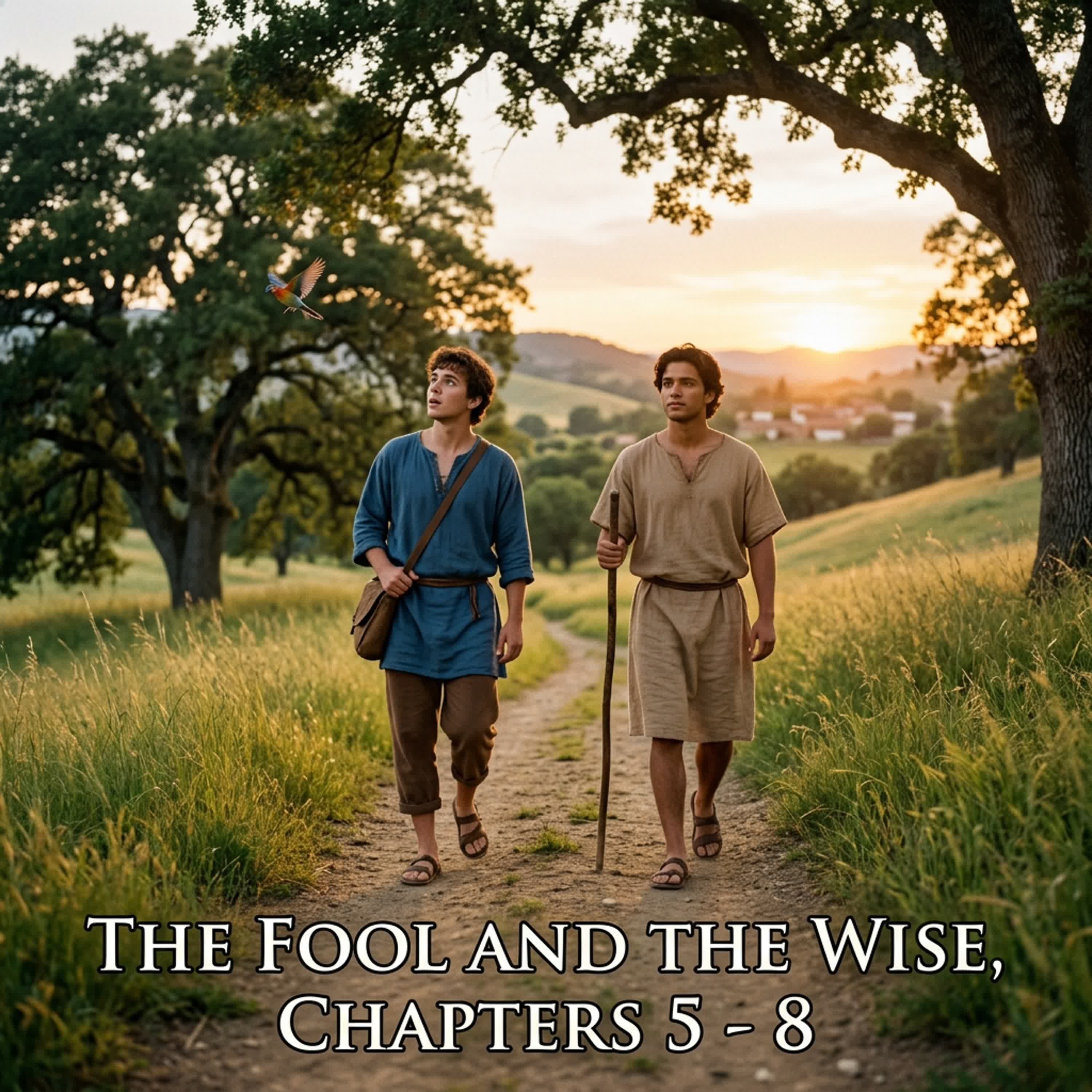
Dhammapada - 2 - Chapters 5-8
from Wisdom for the Present: Eastern Wisdom Literature Hosted by Kanu Emeruwa
What if the most profound obstacles to our happiness are not external circumstances, but the very things we spend our entire lives striving to control? The Dhammapada, an ancient Buddhist scripture written over two thousand years ago, serves as a timeless, uncompromising psychological mirror for the modern mind. Long before modern clinical psychology emerged, this text mapped the root causes of our chronic suffering, anxiety, and the exhausting, daily struggles of the ego. By looking into this ancient mirror, we are forced to confront our deepest delusions and examine whether we are truly living, or merely sleepwalking through our existence. This episode dives deep into Chapters 5 through 8 of the Dhammapada, beginning with its stark and diagnostic framing of "the fool". In this tradition, foolishness is not a measure of intellectual capacity, cognitive deficit, or IQ, but a severe lack of self-awareness coupled with a heavy reliance on toxic attachments. The text specifically targets the universal human torment of drawing mental boundaries around people, possessions, and reputations and desperately claiming them as "mine". We learn that this illusion of ownership—whether trying to control our children, our wealth, or even our own bodies and intrusive thoughts—is a guaranteed recipe for chronic anxiety. Moving beyond diagnosis, we explore how our modern habits mirror these ancient patterns of performative validation and consumerism. We compare the Dhammapada’s classic metaphors of the impermeable "spoon" and the porous "tongue" to how we consume information in the digital age. In a world saturated with self-help content, podcasts, and algorithms designed to curate our identities, it is easy to mistake proximity to wisdom for actual self-transformation. If we merely collect quotes or engage in performative, public displays of discipline—much like the ancient ascetics who fasted for social validation—we become like metal spoons submerged in soup, remaining entirely unchanged by the nutrients around us. To navigate the inevitable storms of life without succumbing to emotional chaos or confirmation bias, the text introduces the dual metaphors of the solid rock and the deep lake. While a wise person is "unshaken" by the winds of blame and praise, this does not advocate for robotic apathy or emotional dissociation. Rather, it is about maintaining structural integrity. Just as a deep lake experiences choppy waves on its surface during a storm but remains profoundly still and undisturbed fifty feet down, we can allow ourselves to feel surface-level emotions without letting external validation or criticism drop an anchor into our core identity. Ultimately, reclaiming our agency requires us to pick up the tools of the fletcher or the carpenter and do the active, sometimes painful work of "fashioning" our own minds. This means transitioning toward the state of the "venerable"—the Arhat—who subdues their wild impulses and glides through the sky like a bird, leaving no track or messy, ego-driven wake. By letting go of the exhausting, futile urge to force a legacy or accumulate endless vanity metrics, we realize the radical truth of Chapter 8: a single day lived virtuously, wisely, and fully awake is infinitely more valuable than a hundred years of mindless, sleepwalking accumulation. In This Episode * Redefining the Fool: Foolishness is not an intellectual deficit, but a profound lack of self-awareness combined with toxic attachments. * The Illusion of Ownership: True suffering arises when we attempt to claim ownership over things we cannot control, such as wealth, children, or even our own thoughts. * Spoons vs. Tongues: Proximity to wisdom or information is not the same as embodying it; we must allow truth to penetrate our defenses and change us from within. * Performative Virtue: Public rituals of discipline—whether ancient extreme fasting or modern "humble bragging" about cold plunges on social media—are often hollow efforts to gain false reputation and social clout. * The Physics of Reality: Ego-driven or harmful deeds may feel sweet "like honey" initially, but their consequences smolder like buried coals, leading to inevitable long-term suffering. * The Deep Lake Metaphor: True inner peace is not about emotional deadness, but maintaining core stillness and structural integrity beneath the surface waves of external blame and praise. * Quality Over Volume: A single day spent fully awake, present, and self-restrained outweighs a century of idle, sleepwalking, metric-driven existence. Practical Reflection In what area of your life are you acting like an impermeable "spoon"—consuming endless advice, books, or content without letting it actually change your behavior? When you receive criticism or praise, does it disturb the depths of your "lake," or are you able to witness the surface ripples without letting them define your core worth? Where are you currently exhausting yourself trying to leave a "footprint" or force a legacy, and what would it feel like to glide through that situation quietly, focused purely on the present moment? Suggested Substack Excerpt Discover how a 2,500-year-old psychological mirror can dismantle modern anxiety, help you break toxic habit loops, and reveal why a single day lived fully awake is worth more than a century of sleepwalking. AI Disclosure This episode was created using Google NotebookLM Audio Overview, based on human-curated source material, structured guidance, and editorial review. AI is used as a tool for clarity and delivery, not as a replacement for thoughtful study or engagement with the original texts. Copyright © 2026 Wisdom for the Present / Kamashcu Production Studios. All rights reserved. This is a public episode. If you would like to discuss this with other subscribers or get access to bonus episodes, visit wisdomforthepresent.substack.com
Embed this episode
No transcript yet.