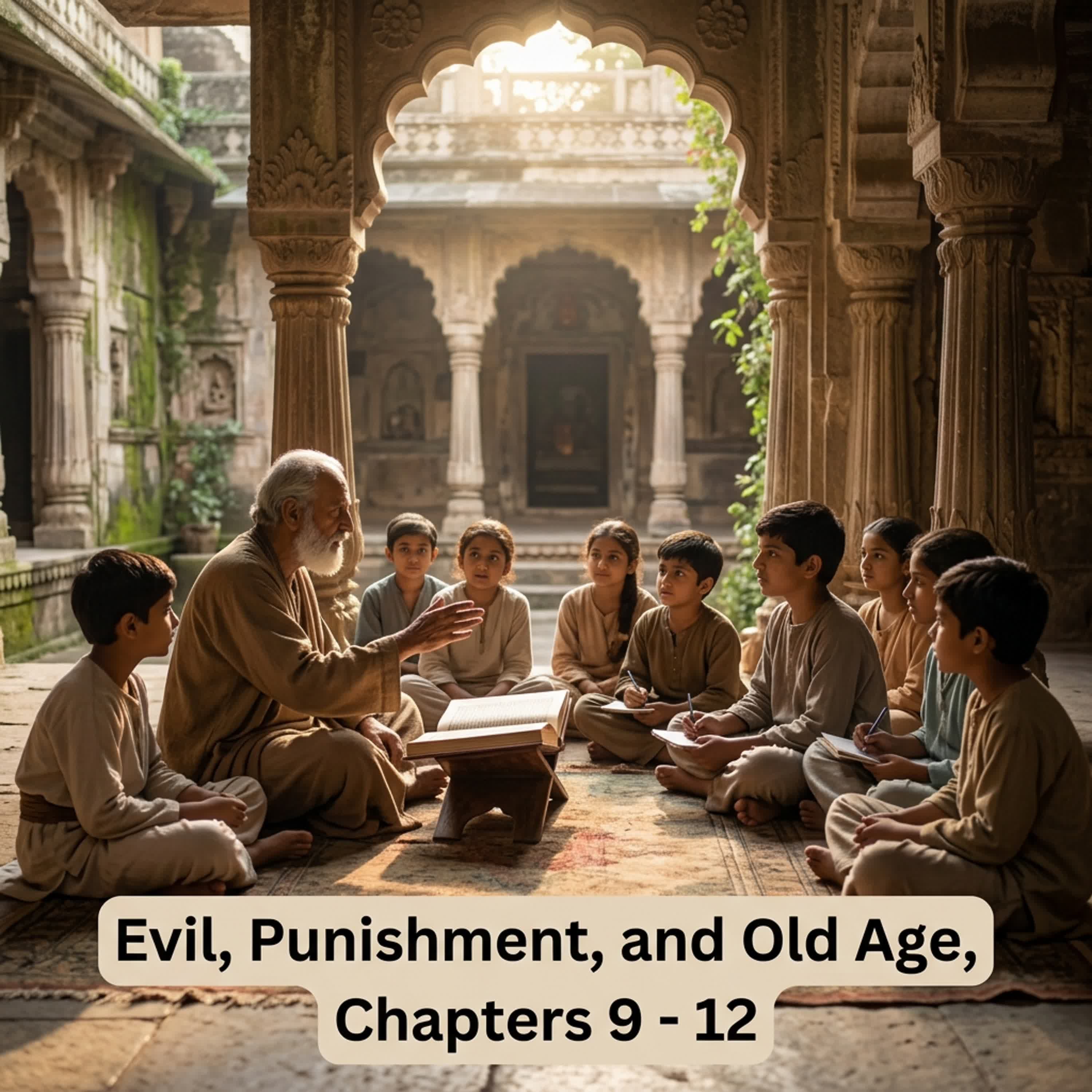
Dhammapada - 3 - Chapters 9-12
from Wisdom for the Present: Eastern Wisdom Literature Hosted by Kanu Emeruwa
In our hyper-accelerated digital age, we find ourselves performing on a virtual stage, constantly seeking validation through likes, notifications, and immediate social feedback. Yet, this relentless quest for external approval mirrors the exact psychological struggles documented thousands of years ago in the Dhammapada, an ancient Buddhist philosophical text. Far from being a relic of the past, Chapters 9 through 12 of this text serve as a timeless mirror for the modern psyche, offering a radical blueprint for self-responsibility that challenges our obsession with outward performance. By looking inward rather than outward, this ancient wisdom provides a master class in navigating the internal drama of our own minds, urging us to find stability amidst the noise of the 21st century. The conflict begins with the "circus of outward performance" and virtue signaling. In ancient India, people engaged in public displays of asceticism—starving themselves, lying on bare earth, and wearing their spirituality on their sleeves—much like today's digital virtue signaling and moral posturing. The Dhammapada stages a profound rebellion against this superficial theater, completely dismissing external rituals and moving the battleground directly into the human mind. This text strips away the comforting illusions we construct to avoid ourselves, introducing the delayed and inescapable physics of karma. It reminds us that our choices are like seeds: the consequences do not always ripen immediately, and this delay often breeds a modern cynicism where we mistakenly believe we have escaped the moral trajectory of our actions. Our modern world is algorithmically designed to exploit our deepest insecurities, driving engagement by provoking outrage and dragging us into infinite loops of digital combat. The Dhammapada provides a sophisticated psychological defense against this manipulation through the metaphors of the "wound on the hand" and the "shattered gong". Just as poison cannot enter a hand that has no open wound, external malice and online insults cannot infect our minds unless we possess an internal wound of insecurity or ego to receive them. Furthermore, when struck by harsh speech, our natural instinct is to vibrate with indignation and pass the blow along; however, the text challenges us to be like a shattered gong that does not ring out. By choosing non-reactivity, we absorb the strike, break the cycle of rage, and ground the electrical current of conflict. When the storms of life hit, we suffer from a cognitive dissonance that leads to a slow, imperceptible degradation of character. We tell ourselves "tiny white lies" or commit small, selfish acts, suffering from a confirmation bias that whispers, "It will not come nigh unto me". But the text warns us that just as a water pot is filled drop by drop, our character is compounded little by little by our daily decisions. When our lives eventually collapse under the weight of chronic stress, isolation, and bad habits, we often attempt a "geographic cure"—changing zip codes, jobs, or backpacking across the world to escape our chaos. Yet, we inevitably take our own nervous systems and unhealed resentments with us; there is no cleft in the mountain or depth of the sea where we can outrun our own minds. To reclaim our agency, we must embrace the ultimate DIY project: fashioning ourselves. Just as a fletcher bends an arrow or a carpenter shapes wood, we must actively carve the raw material of our own minds rather than attempting to micromanage and purify those around us. True liberation requires us to confront the "maker of our tabernacle"—our own blind cravings and egoic attachments that construct our suffering. By recognizing these inner structures and sundering the "ridge-pole" of our deepest insecurities, we collapse the fortress of anxiety and look out at the open sky of genuine freedom. Ultimately, the Dhammapada leaves us with a stark, empowering truth: self is the lord of self, and only by healing our own minds can we begin to live with true integrity and clarity. In This Episode * Radical Self-Responsibility: Understanding that no external force, ritual, or person can purify us; we are the sole architects of our own suffering and growth. * The Delayed Ripening of Karma: Realizing that consequences of actions are like seeds that take time to mature, demanding patience over immediate gratification. * The Water Pot Principle: How character degrades or grows through the power of compounding, where tiny daily choices fill our psychological pot drop by drop. * The Illusion of the Geographic Cure: Learning that moving to a new location cannot heal internal chaos because we carry our own nervous system and unresolved patterns wherever we go. * The Wound on the Hand: Discovering that external toxicity and insults can only hurt us if we provide an open psychological wound of insecurity for them to enter. * The Shattered Gong: Practicing absolute non-reactivity by absorbing harsh speech and choosing not to reverberate or pass the cycle of anger forward. * Sundering the Ridge-Pole: Identifying and breaking the core desires or insecurities holding up our structures of anxiety and suffering. Practical Reflection Are you aging like an ox? Have you accumulated chronological years, status, or assets while your emotional intelligence and self-knowledge remain stunted? Where is your open wound? The next time you feel deeply offended or angered by someone, what does that reaction reveal about your own unhealed insecurities or fragile ego? Are you using someone else's duty as a distraction? Are you exhaustively trying to manage or "purify" another person's chaotic life to avoid opening the closet of your own messy room? Suggested Substack Excerpt Explore the radical, ancient psychology of the Dhammapada and discover why your greatest struggles aren't caused by your circumstances, but by the unhealed wounds within your own mind. Learn how to reclaim your agency, practice true non-reactivity, and step into the freedom of absolute self-responsibility. AI Disclosure This episode was created using Google NotebookLM Audio Overview, based on human-curated source material, structured guidance, and editorial review. AI is used as a tool for clarity and delivery, not as a replacement for thoughtful study or engagement with the original texts. Copyright © 2026 Wisdom for the Present / Kamashcu Production Studios. All rights reserved. This is a public episode. If you would like to discuss this with other subscribers or get access to bonus episodes, visit wisdomforthepresent.substack.com
Embed this episode
No transcript yet.