
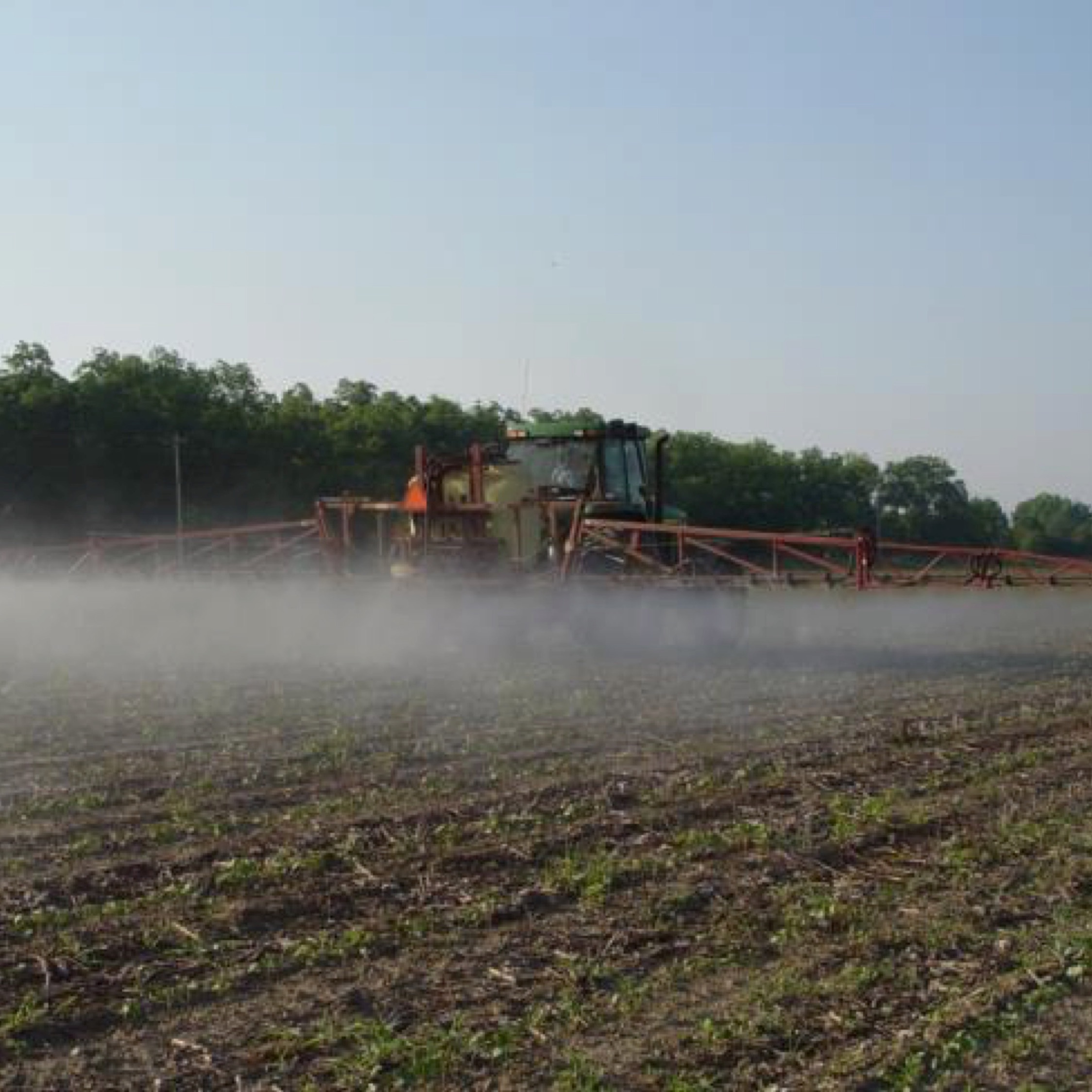
In some parts of the mid-south, Dicamba is a four-letter word. Will a newly approved version of this herbicide be a blessing or a curse? This is Agcast, brought to you by the University of Tennessee Institute of Agriculture. For some time now, herbicide resistant weeds have plagued farmers.
UT Extension Week specialist Larry Steckel. Palmer Amaranth has been our biggest problem in cotton and soybean production for, I guess, almost a decade now. When Roundup stopped being effective, we started moving to Liberty and Cotton, and to Flexstar Blazer and Soybean in the last two or three years, Flexstar's lost its effectiveness. We've got a lot of resistance issues now to Flexstar and Roundup across the state.
So that's no longer an option that makes basically Roundup ready. Soybean's no longer an option in many of our fields, so they've got to use a different herbicide or not going to raise the crop. And I think that was maybe one of the untold stories, or least amount of total stories that we had this past year. If that was one of the reasons I think a lot of folks got desperate and used Dicamba off-label.
Off-label Dicamba used calls quite the uproar in 2016. Dicamba tolerant soybeans and cotton run you to the market and offered desperate farmers a shot at sustainable weed control. However, the herbicide that was designed to be used with this new seed technology was not approved in time. Instead, some farmers used older versions of the Dicamba herbicide to control weeds in these crops.
This off-label used resulted in massive damage to neighbors' crops. 35,000 acres damaged in Tennessee alone. We sat down with Dr. Stekel to better understand what happened.
Dr. Stekel, Dicamba is not a new product. It has been used by farmers for some time. Why did it call so much damage this year?
The biggest difference was the use pattern. It was a new use pattern. We've been using it for burn-down in March and in April when it's cold and at lower rates. A lot of farmers were using in-crop.
And you start using them when you start getting into the 90s. Temperatures in the 90 degrees, triple digit, Hinging index like we had all through June and July. It can get up and move a long way. And I didn't realize quite how far it would move, but it can move miles.
And we saw it in a number of fields unfortunately this past year. So that wouldn't be a big deal if susceptible soybeans and vineyards and tomatoes and tobacco wasn't sensitive. It just crazy low rates. Seems a lot of people were surprised at the situation and then a lot of people got angry.
We've seen numerous lawsuits filed, a lot of bad blood created, which are taking the emotion this third. Yeah, there was a lot. It was really a emotional hot budget issue for a lot of folks. And it came in the year when we weren't controlling pigweeds with the traditional herbicides.
And commodity prices were down, so folks were stretched pretty thin. And we started getting drift on a wide scale and a lot of areas. And folks were concerned about how much it was going to hurt their yield. So just to find out we saw it was a lot more very upset and a lot of aspects.
I can't blame them. It seems like things are getting a little better now as people got through harvest and some farmers work some things out between each other. Which is what we hope they'll pretty much all will do. Despite the bad publicity, the EPA approved the new version of Dicamba for 2017.
And farmers will get the chance to use the technology as it was designed. But with 2016, still fresh on producers minds, there are many doubts and fears about Dicamba. We asked Dr. Stechle how the newly approved herbicides will be different from the versions of Dicamba that call so much drift damage this year.
Yeah, the new formulations that are coming out, ones already got a label extended to Max from Monsanto and Genia, which is from BASF is another formulation. Those two are less volatile than the traditional things we've been using. In other words, the banville and clarity a lot of our growers were using, this came as a surprise to them. And it did to me too in aspect.
Those older formulations, you can spray them and do a good job spraying them. But 20 hours after you spray it, they can pick up and move as a gas and with the slight breeze go a long way. And as sensitive as a lot of other people's soybeans are or any other broadleaf crop, you're going to see injury. These newer formulations are a lot better at staying put after you spray them.
If you do a good job spraying them, get them on target. They're not as likely to get up and move hours after you've left the field with the sprayer. So hopefully this next year with training and these better formulations, we won't have these issues. Tune into our next AgCast.
As Dr. Stechkel explains the rules and requirements for farmers using Dicamba formulations in 2017. For the UT Institute of Agriculture, I'm Ginger Rousey. For more real life solutions provided by the UT Institute of Agriculture, go to our website at ag.tenacy.edu.