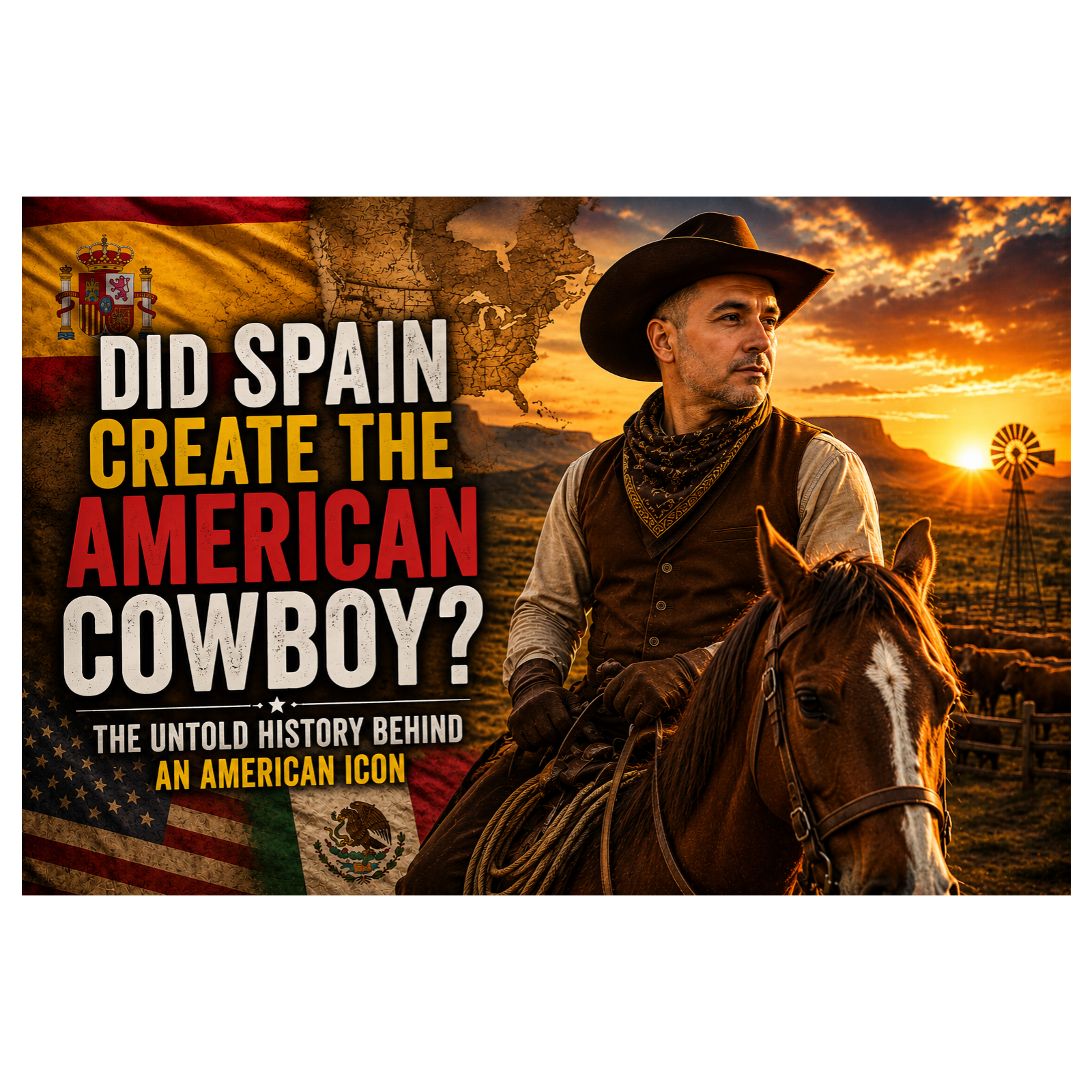
Did Spain Create the American Cowboy?
from Puerto Rico Open Your Eyes
Your voice matters! Leave a voice message of up to 60 seconds. / ¡Tu voz cuenta! Deja un mensaje de voz de hasta 60 segundos. When we think of the American cowboy, images of Texas ranches, the Wild West, cattle drives, and Hollywood movies often come to mind. Yet few people realize that the roots of this iconic figure can be traced back to Spain. It was the Spanish who reintroduced the horse to the Americas, brought cattle ranching traditions, and established the first horseback livestock operations across vast territories of the New World. From these traditions emerged the vaquero, whose name comes from the Spanish word vaca (cow), and who became the direct predecessor of the American cowboy. Over time, Mexico further developed and refined this vaquero culture, adding techniques, clothing, and customs that were later adopted by Anglo-American settlers throughout the American Southwest. The result was a cultural transformation that turned the cowboy into one of the most recognizable symbols of the United States. The story of the cowboy, therefore, does not belong exclusively to one nation; it is the product of a shared heritage that began in Spain, evolved in Mexico, and achieved worldwide fame in the United States. It is a fascinating reminder that cultures travel, adapt, and leave lasting influences in places where many people least expect them.
Embed this episode
No transcript yet.