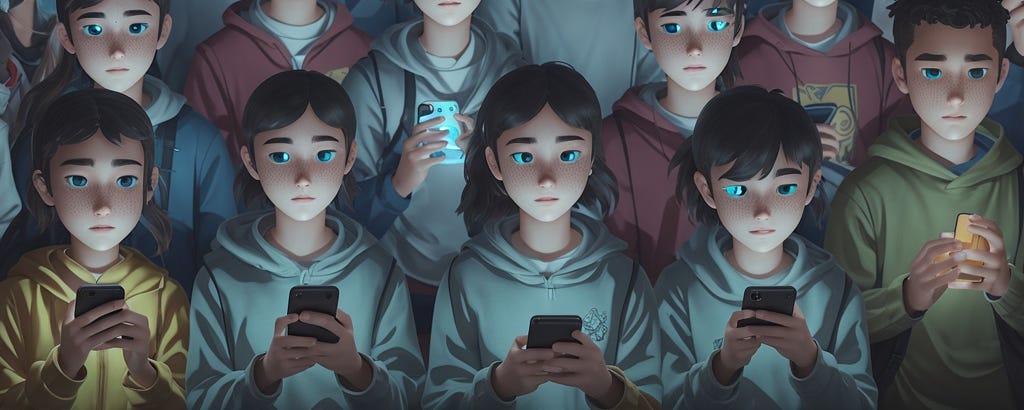
Digital Addictions
from Ralph Nader Radio Hour Hosted by Ralph Nader
Ralph welcomes Sherry Turkle, Professor of the Social Studies of Science and Technology at MIT and an expert on culture and therapy, mobile technology, social networking, and sociable robotics to talk about our addictions to screens and how to break out of them. Plus, our resident constitutional scholar, Bruce Fein, opens the program with everything you need to know about the latest Trump indictment. Bruce Fein is a Constitutional scholar and an expert on international law. Mr. Fein was Associate Deputy Attorney General under Ronald Reagan and he is the author of Constitutional Peril: The Life and Death Struggle for Our Constitution and Democracy, and American Empire: Before the Fall. I think it’s important for the audience to recognize that 100% of the incriminating evidence was supplied by Trump appointees or supporters. No Democrat made a cameo appearance. There was no incriminating evidence from any opponent of Donald Trump. It’s all his own people. And therefore, when you think about the indictment, the idea that it’s a witch hunt by Trump’s political enemies is facially lunatic. Bruce Fein These expressions by Trump were not good-faith belief that there may have been a few blunders someplace or other. And [they demonstrate] that the whole goal was to defraud the American people out of the right to have a peaceful transition of power based upon a free and fair count of the electoral votes. Bruce Fein Sherry Turkle is Professor of the Social Studies of Science and Technology at the Massachusetts Institute of Technology, and the founding director of the MIT Initiative on Technology and Self. Professor Turkle is a sociologist, a licensed clinical psychologist, and she is an expert on culture and therapy, mobile technology, social networking, and sociable robotics. She is the author of several books, including Reclaiming Conversation: The Power of Talk in a Digital Age, Alone Together: Why We Expect More from Technology and Less from Each Other, and The Empathy Diaries: A Memoir. That’s really what you’re fighting— this ethos that says, “When technology makes a problem, technology will solve that problem. In a friction-free manner. It will not involve changing capitalism, changing the structures of power, or saying that science and engineering need to be dethroned as the moral and cultural arbiters for the society we live in.” So, I think that the resistance movement has to come from politics and really has to come from political organization. Sherry Turkle [If I were king in this domain,] you absolutely have legislation that treats generative AI as though it were nuclear energy. In other words, do not say, “Well, there’s kind of an analogy. Maybe there’s an analogy because it’s very powerful.” But to really say, “This is going to disrupt us, it’s a national security threat, and it’s certainly a threat to our elections…” So, it can wreak havoc— unless you’re extremely vigilant and the thing is controlled— with every aspect of our democracy. Sherry Turkle There’s always a big-time gap between the damage of new technology and accountability catching up with it, or public awareness. Ralph Nader Hi everybody, Steve Skrovan here. This is halfway between a shameless plug and some useful information. As some of you may know, I have my own Substack page called Bits & Pieces. It’s mainly funny stories and essays. I wanted to alert you specifically to the last piece I wrote concerning the Writers’ Guild Strike. It’s funny but also packed with a lot of information for those of you who are interested. Some of you may think writers and actors striking is not a big deal, but our strike is emblematic of what is going on across many industries where the corporations are trying to turn us all into gig workers. On the RNRH, we have talked a lot about AI for instance, especially on the program you just heard. The writers and the actors have a chance to be the first entities to address regulating AI in a meaningful way. We are on the cutting edge of what people are calling the Hot Labor Summer. So, check it out at steveskrovan.substack.com. That’s s-t-e-v-e-s-k-r-o-v-a-n dot substack dot com. We’ll link to it on the RNRH page also. Feel free to subscribe. It's free! Thanks. In Case You Haven’t Heard with Francesco DeSantis 1. Senator Bernie Sanders and Representative Bobby Scott announced that they have introduced a new bill to raise the minimum wage. To account for the rising cost of living, this new bill would raise the wage not to $15 per hour, but $17. Sanders and Scott note that “If the minimum wage had increased with productivity over the last 50 years, it would be $23 an hour today. If it had increased at the same rate that Wall Street…bonuses have increased, it would be more than $42 an hour.” 2. USA Today reports that the Houston Independent School District in Texas has decided to “eliminate 28 school libraries,” and use at least some of those spaces as “discipline centers.” This article further notes that “The Houston Independent School District is the largest district in Texas and serves more than 189,000 students at its 274 campuses…[and that] The once- independent district was recently taken over by the Texas Education Agency.” 3. The Intercept reports that, amid the strikes roiling Hollywood, Senator John Fetterman of Pennsylvania has introduced the Food Secure Strikers Act of 2023. This bill would “repeal a restriction on striking workers receiving SNAP benefits, protect food stamp eligibility for public-sector workers fired for striking, and clarify that any income-eligible household can receive SNAP benefits even if a member of that household is on strike.” This bill would provide a crucial lifeline to striking workers, particularly as the Hollywood bosses have made clear that they are willing to see workers lose their homes before coming back to the negotiating table. 4. A new report in Reuters alleges that employees at Elon Musk’s Tesla Motors “had been instructed to thwart any customers complaining about poor driving range from bringing their vehicles in for service.” The company even went so far as to create a “Diversion Team” with orders to “cancel as many range-related [service] appointments as possible,” in order to stifle consumer complaints that the automobiles range on a single charge was far below advertised. According to the report “some employees celebrated canceling service appointments by putting their phones on mute and striking a metal xylophone, triggering applause from coworkers who sometimes stood on desks.” 5. Bloomberg reports that the Abraham Accords – Trump’s middle east peace plan which rested on inducing Arab states to recognize Israel by offering them money, weapons, or whatever else they desired – seem to be coming apart at the seams. The numbers are stark. While the agreements never enjoyed majority support in any Arab state, support has declined considerably – from 47% initially in the UAE, to just 27%, from 45% to 20% in Bahrain, and 40% to 20% in Saudi Arabia. This last drop is most significant, as the underlying purpose of the agreements were to align Israel and Saudi Arabia against Iran. The Saudis now plan to extract further concessions from the United States. 6. Listeners may recall a story from North Carolina about Tricia Cotham, a Democratic state legislator from a safe blue seat who switched parties, giving Republicans a super-majority in the state House – and cast the deciding vote to override the Democratic Governor’s veto and impose a 12-week abortion ban. Now, a New York Times report sheds light on why she made the switch: “Lacey Williams, a former advocacy director at the Charlotte-based Latin American Coalition who considered Ms. Cotham a friend for years, said Ms. Cotham “felt she did not get the gratitude or spotlight that she felt she deserved,” and added, “she was jealous that other Democrats were getting…adulation from the party.” This report also suggests that she was working hand-in-glove with Republican leadership… Get full access to Ralph Nader Radio Hour at www.ralphnaderradiohour.com/subscribe
Embed this episode
No transcript yet.