
EPISODE · Jul 17, 2026 · 37 MIN
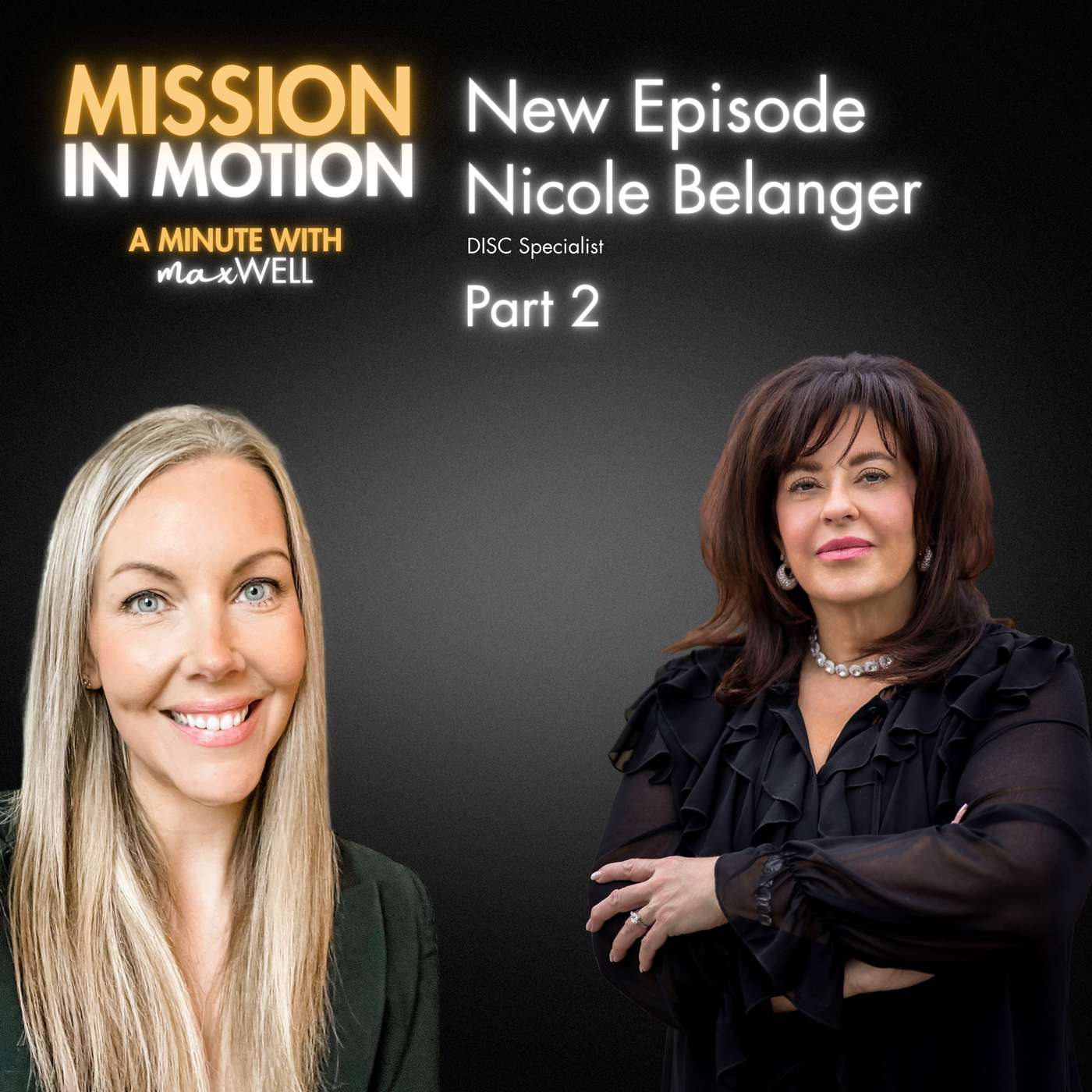
DISC and the people side of care Pt. 2 | Nicole Belanger
from Mission in Motion: A Minute With Maxwell · host Maxwell Management Group
In this second part of our conversation with Nicole, host Heather Maxwell welcomes back Nicole Belanger, a DISC and leadership development specialist, to explore how positionality, bias, and the Wheel of Power and Privilege intersect with DISC to shape how leaders show up at work—especially in senior living, long-term care, and healthcare.Nicole introduces the Wheel of Power and Privilege, a framework widely used in academic research to help people examine how their life experiences, identity, and unearned advantages influence the way they interpret situations. She explains concepts like positionality—“how my life experience shapes my perspective”—and Peggy McIntosh’s idea of the “invisible knapsack” of unearned advantages we all carry. Unlike DISC, which produces a clear behavioural profile, the wheel is a self-reflection tool that asks leaders to locate themselves across factors like race, gender, education, and socioeconomic status, and to notice where they experience power, privilege, or barriers.Building on that, Heather and Nicole connect the Wheel of Power and Privilege to the realities of multigenerational, multicultural teams in today’s workforce, where up to five generations may be working together. They share practical examples of how two leaders can observe the exact same behaviour —such as an employee asking a lot of questions or a younger leader bringing a laptop into a meeting—yet interpret it in radically different ways based on their experiences. Through these stories, Nicole illustrates how combining DISC (how people communicate) with the wheel (why people see the world the way they do) can reduce conflict, increase empathy, and improve engagement, retention, and psychological safety.Listeners also hear why self-awareness is a non‑negotiable leadership skill that can’t be outsourced to AI. Nicole references research by organizational psychologist Dr. Tasha Eurich, whose work suggests that while 95% of people believe they’re self-aware, only about 10–15% actually are. Together, Heather and Nicole encourage leaders—especially those in relationship‑driven sectors like senior living and healthcare—to use DISC and the Wheel of Power and Privilege as accessible, free tools to: question their assumptions, recognize bias in decisions (such as hiring), and shift from “Do I like this person?” to “What evidence suggests this person can succeed and contribute to our mission?” The episode closes with a strong call for leaders to embrace humility, reflection, and curiosity as the foundation for inclusive, high-performing teams.About Maxwell Management Group:This podcast is brought to you by Maxwell Management Group, a national executive search and education firm specializing in the continuing care and healthcare sectors. For nearly two decades, they’ve partnered with organizations to build values‑driven leadership, vibrant workplace cultures, and purpose‑led employer brands.Learn more: maxwellmanagementgroup.comChapters:0:00 – Intro, welcome back & Nicole’s expertise 0:32 – Why talk about bias, culture & generations in today’s workforce 1:20 – What is the Wheel of Power and Privilege? 2:39 – Positionality explained in simple terms 4:10 – Peggy McIntosh and the “invisible knapsack” of unearned advantages 5:30 – Walking through the wheel (Government of Canada version) 7:06 – How the wheel is used: self‑reflection vs. comparison 9:10 – Key reflection questions for leaders using the wheel 11:10 – Generational and cultural diversity in senior living teams 12:55 – Example: Two leaders, one behaviour, very different interpretations 14:45 – From automatic thinking to intentional, reflective leadership 15:42 – Sponsor message: About Maxwell Management Group 17:08 – How the Wheel of Power and Privilege connects to DISC 18:25 – DISC: how people communicate; the wheel: why they see things differently 19:50 – Story: Families, prior healthcare experiences, and cultural expectations 21:35 – Using these tools to build empathy with residents, families, and staff 23:15 – Bias in leadership: from “Do I like them?” to “What evidence do I have?” 24:16 – Why positionality matters now for healthcare and senior living leaders 25:40 – Dr. Tasha Eurich’s 95/15 paradox of self‑awareness 27:05 – Blind spots, assumptions, and misinterpreting situations at work 28:40 – Practical takeaway: How leaders can start with DISC and the wheel 30:10 – Self-reflection, humility, and moving beyond “my way is the benchmark” 32:05 – Final thoughts: Why we can’t outsource self-awareness to AI 33:11 – Heather’s closing summary, key takeaways & invitation to listeners 34:08 – Call to action: Subscribe, share, and connect with Maxwell Management Group
Embed this episode
Ready to play
DISC and the people side of care Pt. 2 | Nicole Belanger
No transcript for this episode yet
Similar Episodes
No similar episodes found.
Similar Podcasts
No similar podcasts found.